
Navigating the complex world of Amazon FBA pallet requirements can make or break your e-commerce success. Have you ever faced costly shipment refusals due to improper palletization? Understanding Amazon's strict pallet guidelines is crucial for avoiding such pitfalls. From precise dimensions and exclusive reliance on wooden GMA Standard Pallets to strict ISPM-15 compliance, each detail plays a critical role. In this article, we delve into these essentials to help you ensure seamless FBA shipments and maintain your competitive edge in the Amazon marketplace.
Understanding Amazon FBA Pallet Requirements
Pallets play a crucial role in Amazon FBA shipments by facilitating efficient handling and transportation. They ensure that shipments are organized, protected from damage, and compliant with Amazon's logistics processes. Proper palletization minimizes the risk of shipment delays and refusals, which can significantly impact inventory availability and sales performance for sellers.
Amazon has specific guidelines for pallets that must be adhered to. Pallet dimensions are required to be 48″ x 40″, with the total height including the pallet not exceeding 72″. Only wooden pallets are accepted, and these must meet the GMA Standard Pallets criteria, specifically Grade B or higher. Additionally, compliance with ISPM-15 regulations is mandatory. This means pallets must undergo heat treatment or fumigation to prevent the spread of pests and diseases. These stringent requirements ensure that pallets are robust and suitable for international shipping and handling.
Compliance with Amazon FBA pallet requirements is essential to avoid costly shipment refusals. Non-compliance can lead to shipments being rejected at fulfillment centers, incurring additional fees, and causing significant delays in getting products to market. Working with a specialized freight partner like QG Horizon can help sellers navigate these requirements seamlessly, ensuring all guidelines are met and minimizing the risk of refusals. Request a fast and free quote at QG Horizon to streamline your logistics process.
How to Palletize Freight Correctly for Amazon FBA
Proper palletization is essential for ensuring that Amazon FBA shipments are handled efficiently and accepted without issues. The foundation of effective palletizing techniques for FBA involves placing the heaviest boxes at the bottom to create a stable base, which prevents tipping and potential damage during transport. Utilizing stretch wrap is crucial to securing boxes to the pallet; it should cover the entire pallet to maintain stability and ensure that labels remain visible. This method not only protects the products but also aligns with Amazon's strict packaging methods, minimizing the risk of refusals at fulfillment centers.
| Step | Description |
|---|---|
| 1. Base Layer | Place the heaviest boxes at the bottom to ensure a stable foundation. |
| 2. Stack Evenly | Align boxes to avoid overhangs and maintain a uniform shape on the pallet. |
| 3. Secure with Wrap | Wrap the entire pallet from bottom to top with stretch wrap to secure boxes. |
| 4. Label Visibility | Ensure labels are visible on all sides of the pallet for easy identification. |
Employing professional packing services can significantly enhance the palletization process. These experts are equipped with the knowledge and tools to ensure that all packaging methods are compliant with Amazon's guidelines. Their expertise in how to palletize freight correctly can save time and reduce the likelihood of costly refusals, allowing sellers to focus on other critical aspects of their business.
Avoiding Common Amazon Pallet Refusals
Amazon pallet refusals can significantly disrupt shipment timelines, impacting overall inventory availability and sales. When pallets fail to meet Amazon FBA requirements, shipments are delayed, leading to potential stockouts and lost sales opportunities. The repercussions don't stop there; sellers may also incur additional fees to rectify non-compliant shipments. Ensuring compliance with Amazon's specific pallet requirements, such as correct pallet types, dimensions, and 4-way entry capabilities, is crucial for maximizing shipment success. An often-overlooked aspect is overhanging boxes, which can cause damage during handling and lead to refusals. Avoiding these errors not only streamlines the logistics process but also ensures that products reach Amazon fulfillment centers promptly.
-
Incorrect pallet types or sizes: Use only 48″ x 40″ GMA Standard Pallets (Grade B or higher) to comply with dimensions and materials.
-
Non-compliance with 4-way entry requirements: Ensure pallets are accessible from all four sides for easy handling.
-
Overhanging boxes: Align boxes properly to prevent overhangs that can lead to damage during transit.
-
Inadequate pallet stability: Secure boxes with stretch wrap and stack the heaviest boxes at the bottom for a stable base.
-
Improper labeling: Attach visible labels on all four sides of the pallet for clear identification.
Engaging a specialized freight partner like QG Horizon can help sellers avoid these common pitfalls. Their expertise in handling FBA shipments ensures compliance with Amazon's stringent requirements, reducing the risk of refusals. With reliable logistics solutions and proactive support, sellers can maintain smooth operations and focus on growing their Amazon FBA business. Request a fast and free quote at QG Horizon to enhance your shipping strategy.
Comprehensive Labeling Requirements for FBA Pallets
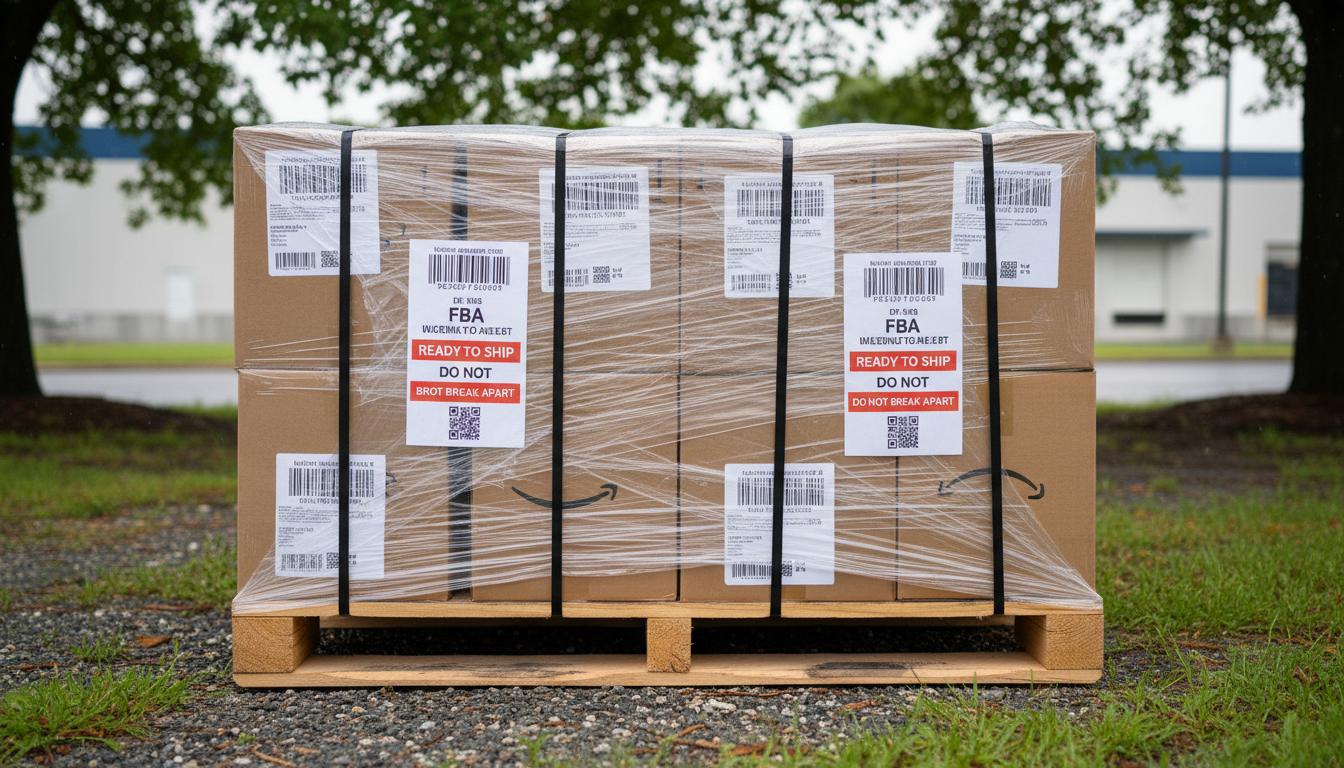
Proper labeling is a critical aspect of packaging compliance for Amazon FBA shipments, directly impacting shipment tracking and acceptance. Labels serve as the primary means of identification and documentation, ensuring each pallet is processed correctly at Amazon fulfillment centers. A unique FBA label for each pallet can be generated and printed from the Seller Central account, crucial for compliance documentation. Accurate and visible labeling prevents misplacement and delays, facilitating smooth inventory management and reducing the risk of costly refusals. Ensuring that labels are securely attached and visible on all four sides of the pallet is paramount for efficient handling and identification.
-
Each pallet must have a unique FBA label generated from the Seller Central account.
-
FBA labels should be attached securely to all four sides of the pallet for visibility.
-
Labels must not be covered by stretch wrap or other obstructions.
-
Include all necessary shipment information, such as carrier details and FBA Box ID.
Utilizing digital tools for label management offers significant advantages, enhancing accuracy and efficiency in the labeling process. These tools streamline the generation and printing of labels, ensuring compliance with Amazon's guidelines and reducing manual errors. Leveraging technology not only simplifies the logistics process but also enables sellers to maintain organized and effective shipment tracking.
Choosing the Right Freight Partner for Amazon FBA Shipments
Selecting the right freight partner is crucial for maximizing shipment success in Amazon FBA operations. Specialized freight partners offer invaluable expertise in navigating the complexities of international shipping, ensuring compliance with Amazon's stringent requirements. Third-Party Logistics (3PL) warehouses, for instance, are proficient in correctly packing and stacking pallets, aligning with Amazon’s guidelines to prevent costly refusals. Additionally, these partners provide comprehensive support, from customs clearance to real-time tracking, enhancing the overall efficiency of the supply chain. By leveraging Amazon’s Partnered Carrier program, sellers can also benefit from significant cost savings in both Small Parcel Delivery (SPD) and Less Than Truckload (LTL) shipments due to negotiated discounted rates. This strategic collaboration not only minimizes the risk of delays but also optimizes the logistics process.
-
Expertise in handling Amazon FBA shipments ensures compliance with all requirements.
-
Comprehensive support services, including customs clearance and tracking, streamline operations.
-
Cost savings through Amazon’s Partnered Carrier program for SPD and LTL shipments.
Working with a specialized freight partner like QG Horizon empowers sellers with reliable logistics solutions tailored for Amazon FBA. Their industry knowledge and proactive approach mitigate risks and enhance supply chain efficiency. Sellers are encouraged to request a fast and free quote at QG Horizon to optimize their shipping strategy and ensure seamless fulfillment center deliveries.
Final Words
Navigating Amazon FBA pallet requirements is critical for successful shipment acceptance. Correctly palletizing freight, adhering to Amazon's stringent guidelines, prevents costly refusals. Proper stacking, using quality materials, and ensuring comprehensive labeling are non-negotiables for compliance.
By avoiding common errors, FBA sellers can streamline their logistics process, enhancing shipment delivery. Choosing a reliable freight partner like QG Horizon offers an additional layer of support, ensuring your operations run smoothly. Mastering these elements elevates your Amazon FBA experience, making it more efficient and cost-effective.
FAQ
What Are the Pallet Requirements for Amazon FBA in the USA?
Amazon FBA pallet requirements in the USA specify that pallets must measure 48"x40" and have a maximum height of 72", including the pallet. Only wooden pallets meeting GMA Standard B grade or higher are accepted.
What Are the Box Size Limits for Amazon FBA?
Amazon FBA box size limits dictate that individual boxes should not exceed 25 inches on any side. Overly large or heavy boxes may incur additional fees or be refused at Amazon fulfillment centers.
What Are the Master Carton Requirements for Amazon FBA?
The master carton requirements for Amazon FBA include ensuring that cartons meet specific dimension and weight guidelines, are securely sealed, and have clear labeling for identification and tracking.
How Can Freight Be Palletized Correctly for Amazon FBA?
Correctly palletizing freight for Amazon FBA involves stacking heaviest boxes at the bottom, fully wrapping with stretch film, and adhering to size and stability guidelines to prevent shipment issues.
What Are Common Errors Leading to Amazon Pallet Refusals?
Common errors such as using the wrong pallet size, lacking 4-way entry, and overhanging boxes can result in Amazon pallet refusals. Ensuring compliance with guidelines is crucial for successful delivery.
What Are the Comprehensive Labeling Requirements for FBA Pallets?
FBA pallets require distinct, visible labels on all four sides, printed from Seller Central. Compliance with labeling ensures efficient tracking and acceptance at Amazon fulfillment centers.
How to Choose the Right Freight Partner for Amazon FBA Shipments?
Choosing a reliable freight partner for Amazon FBA shipments involves selecting a company with expertise in compliance, cost-effective solutions through Amazon's Partnered Carrier, and exceptional service.
Leave a Reply