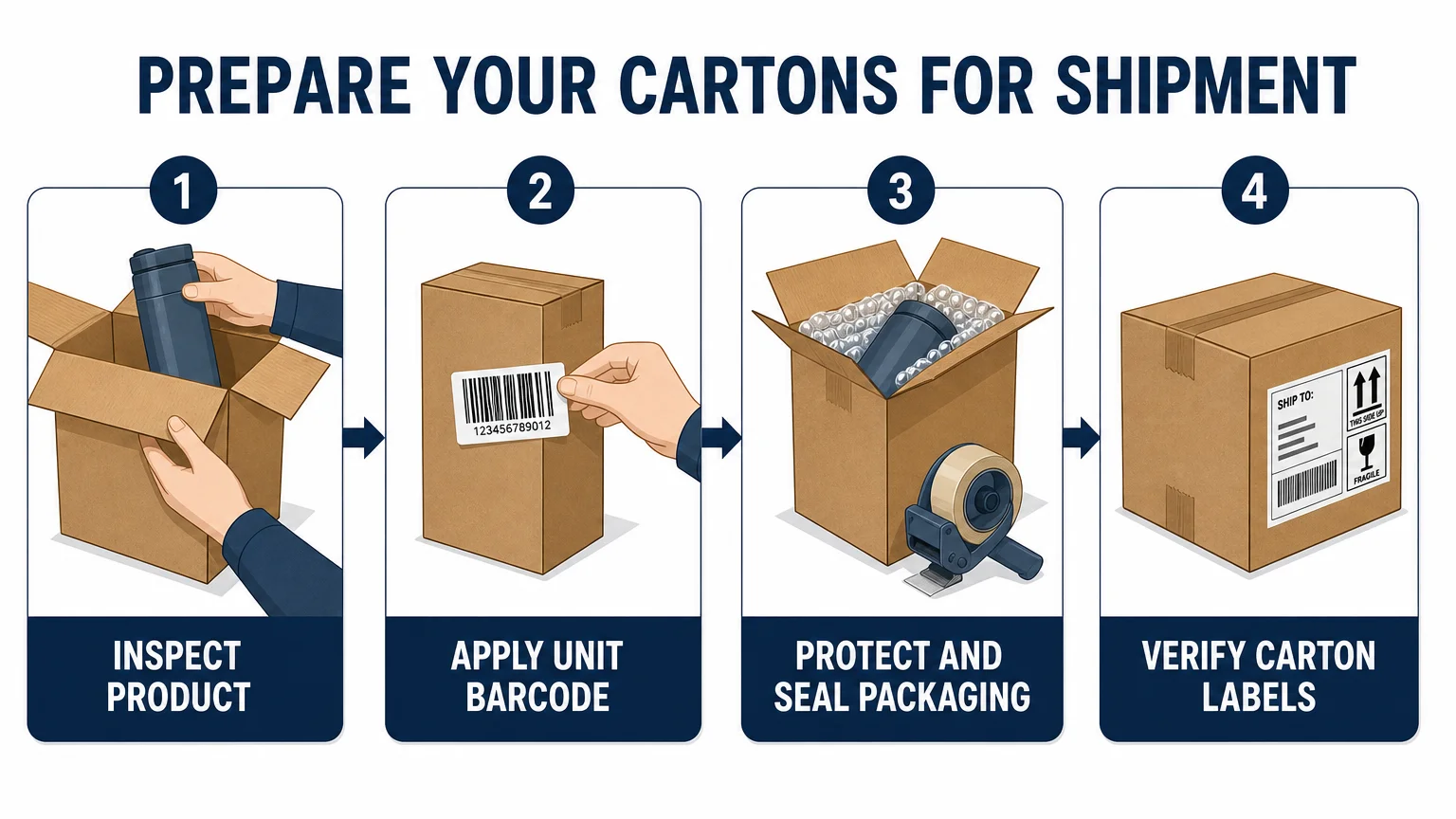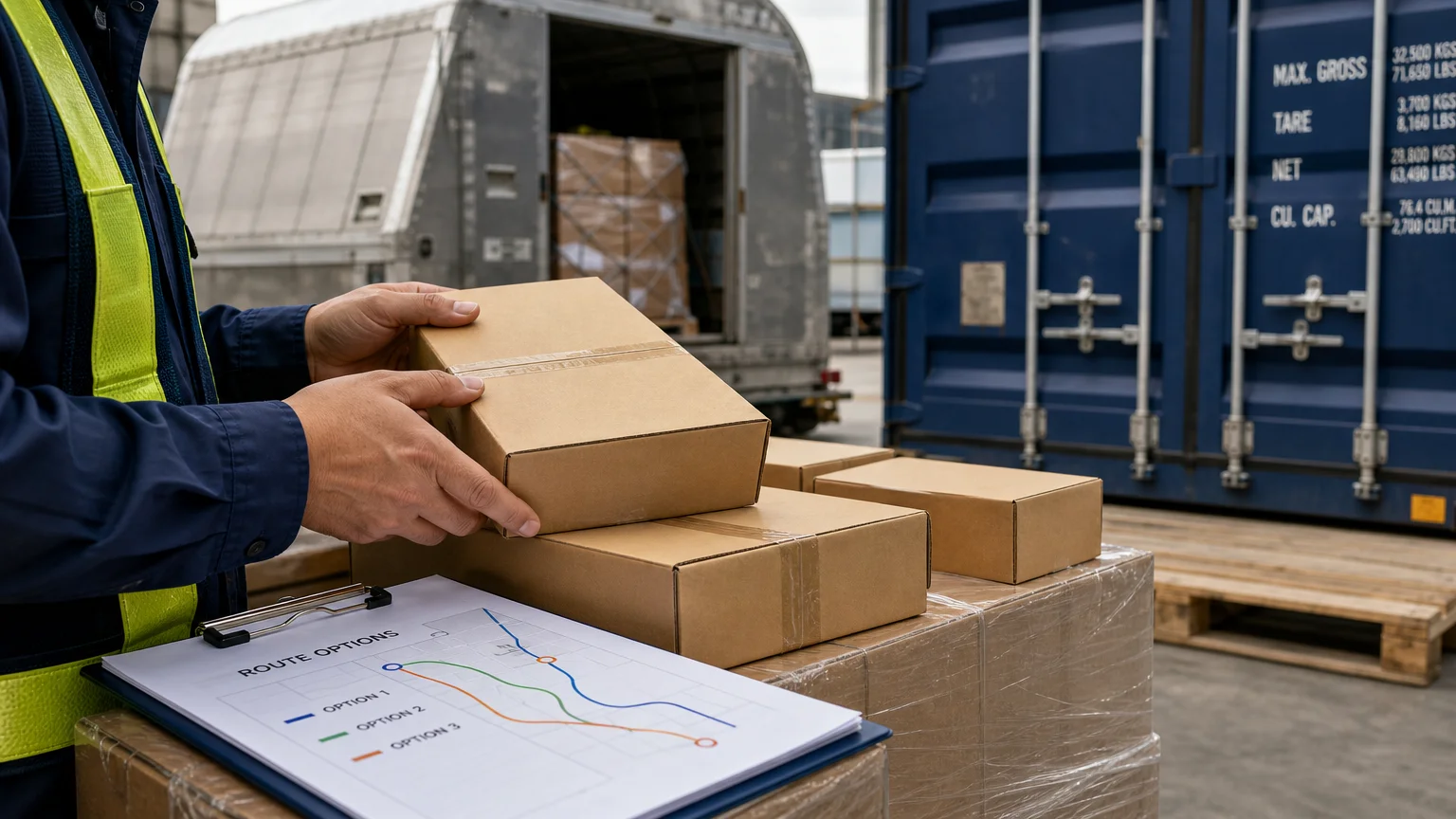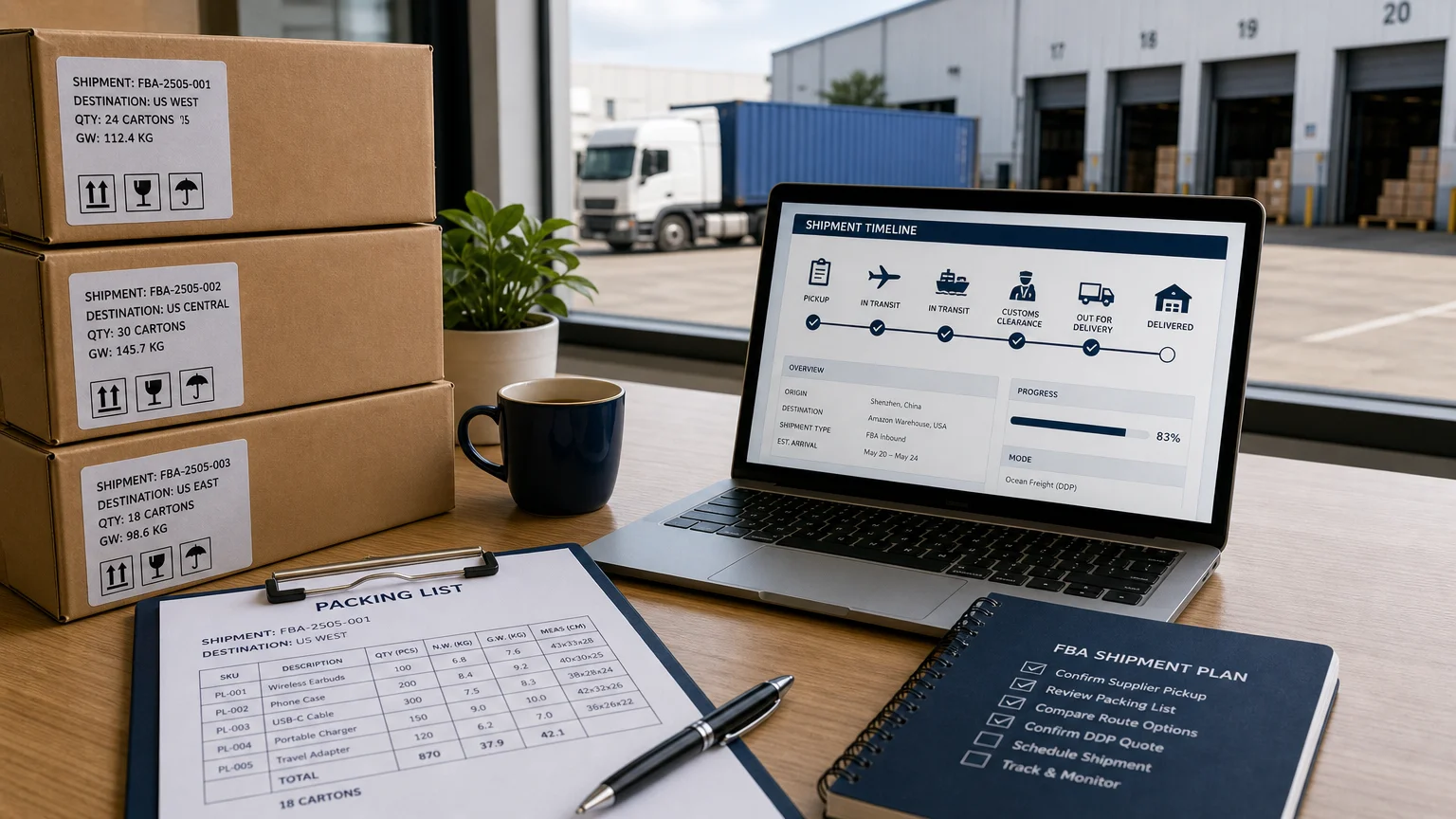
Category: Blog

Your blog category

  • Is One Shipping Partner Worth It for FBA Sellers in 2026?

    Is One Shipping Partner Worth It for FBA Sellers in 2026?

    Summary: Usually, one shipping partner is worth it when your inventory moves from China to Amazon regularly, involves customs, or requires several freight modes. A reliable partner can reduce handoffs, clarify landed costs, coordinate DDP delivery, and improve shipment visibility. However, you should still compare quotes, test performance, and keep a backup plan for urgent or specialized freight.

    One missed delivery appointment, customs hold, or labeling error can cost more than the savings from a low freight quote. If you are asking, is one shipping partner worth it for FBA sellers?, the practical answer is yes when that partner manages the entire inbound workflow rather than simply selling transportation.

    Amazon’s US help materials list a 3.5% fuel and logistics related surcharge on FBA fulfillment fees beginning April 17, 2026, which makes cost visibility even more important. The right partner should help you model the full shipment cost, select a suitable route, and protect inventory availability without removing your control.

    When does one shipping partner make sense?

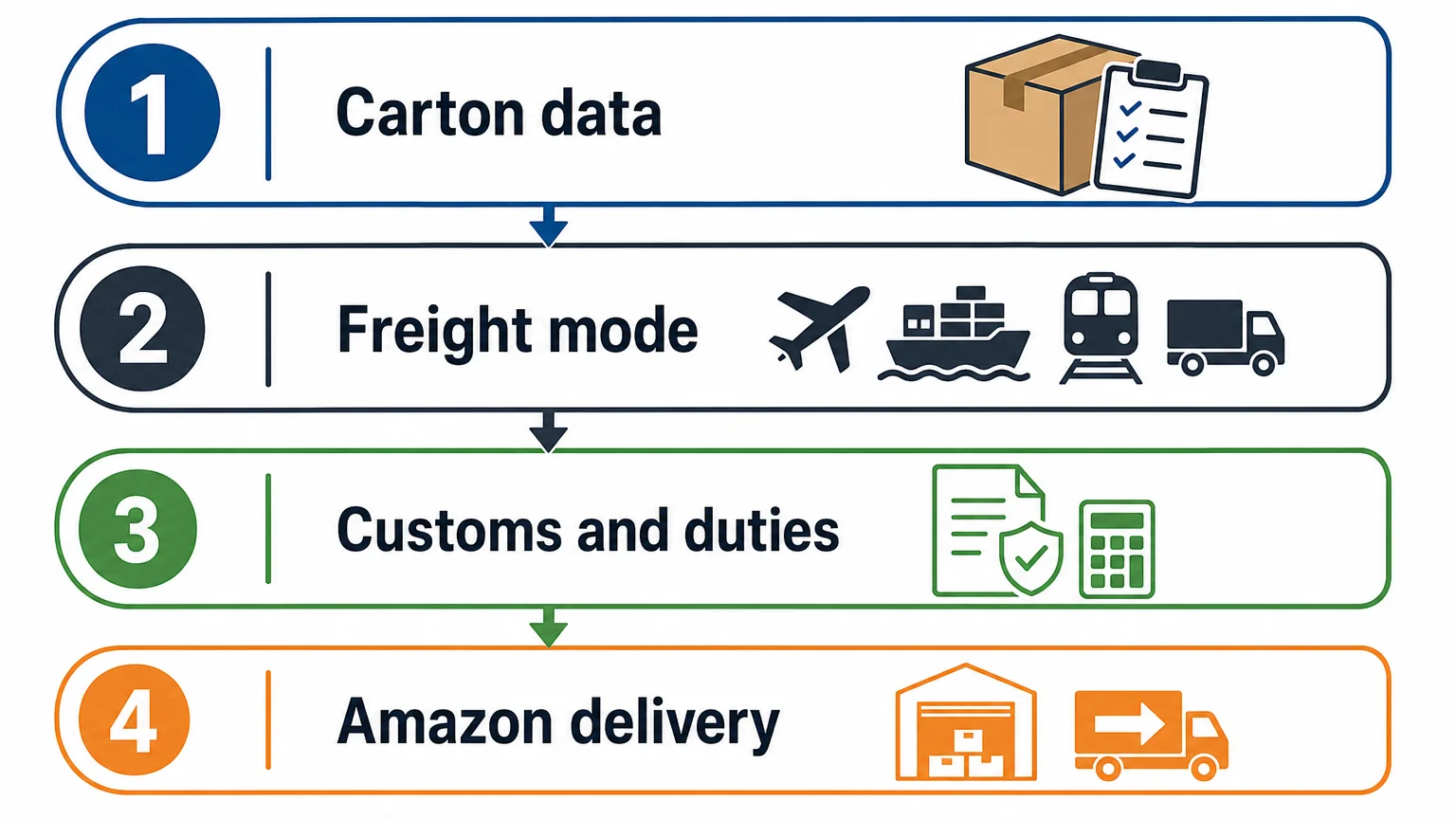
    One shipping partner usually makes sense when your logistics process contains several connected stages. These may include supplier pickup, export documentation, international freight, customs clearance, duties, final delivery, and Amazon receiving requirements. Managing each stage separately can work for an experienced logistics team, but it creates more handoffs and more opportunities for inconsistent information.

    The strongest case appears when you ship from China to Amazon warehouses on a recurring basis. A single partner can maintain your supplier details, product information, carton data, route preferences, and delivery expectations across shipments. That continuity is valuable when you manage regular replenishment, product launches, or multiple SKUs.

    One partner can also simplify accountability. If the supplier, carrier, customs broker, and final-mile provider are separate, it may be difficult to determine where a delay began. With one coordinated provider, you have a clear point of contact for exceptions, document corrections, tracking updates, and delivery questions.

    That does not mean every seller should use one provider for every shipment. A small, low-risk parcel may be simple enough to manage independently. A specialized product may also require a broker, inspection company, or prep provider with capabilities that a general freight forwarder does not offer.

    What does a single FBA shipping partner actually coordinate?
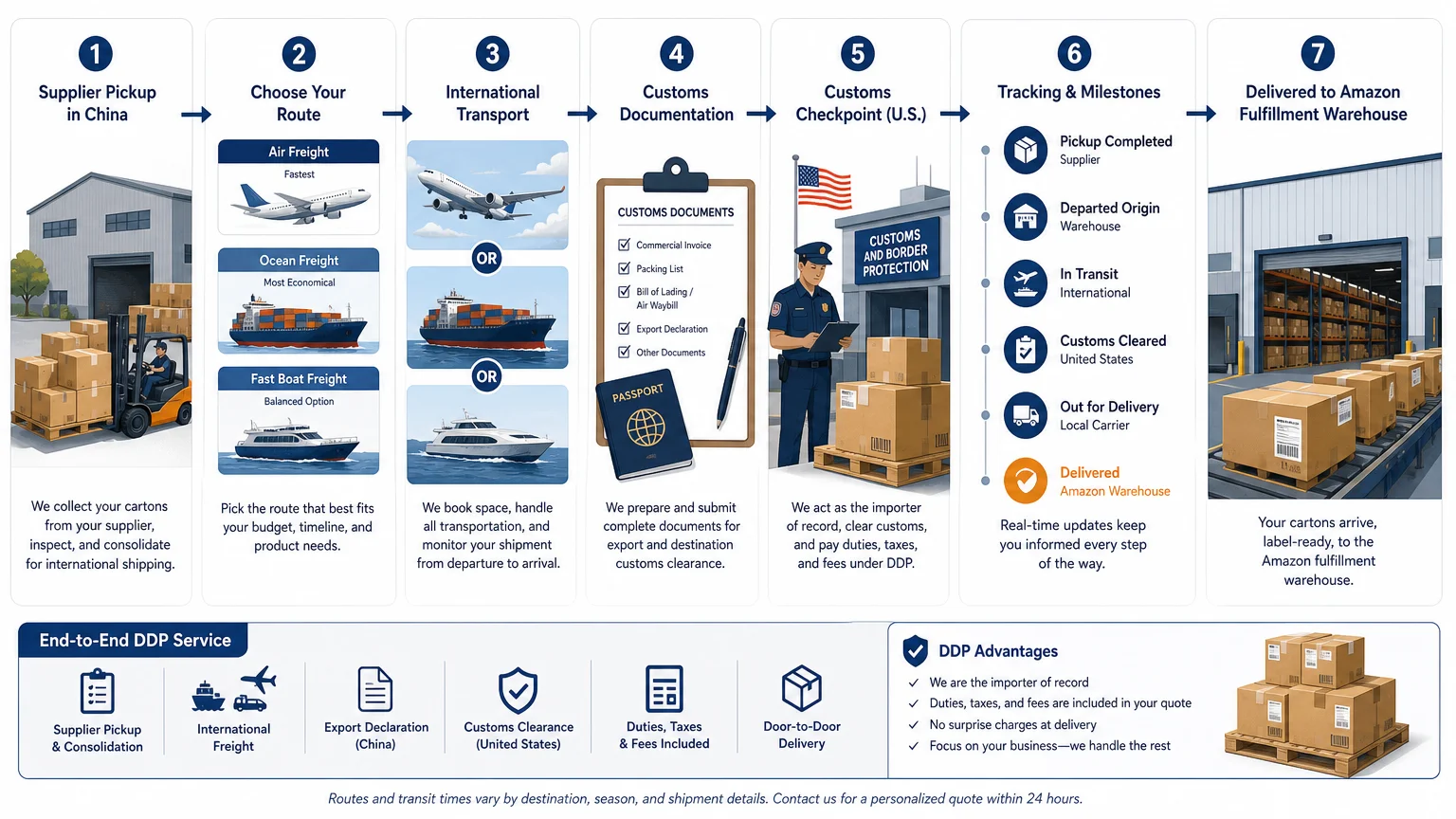
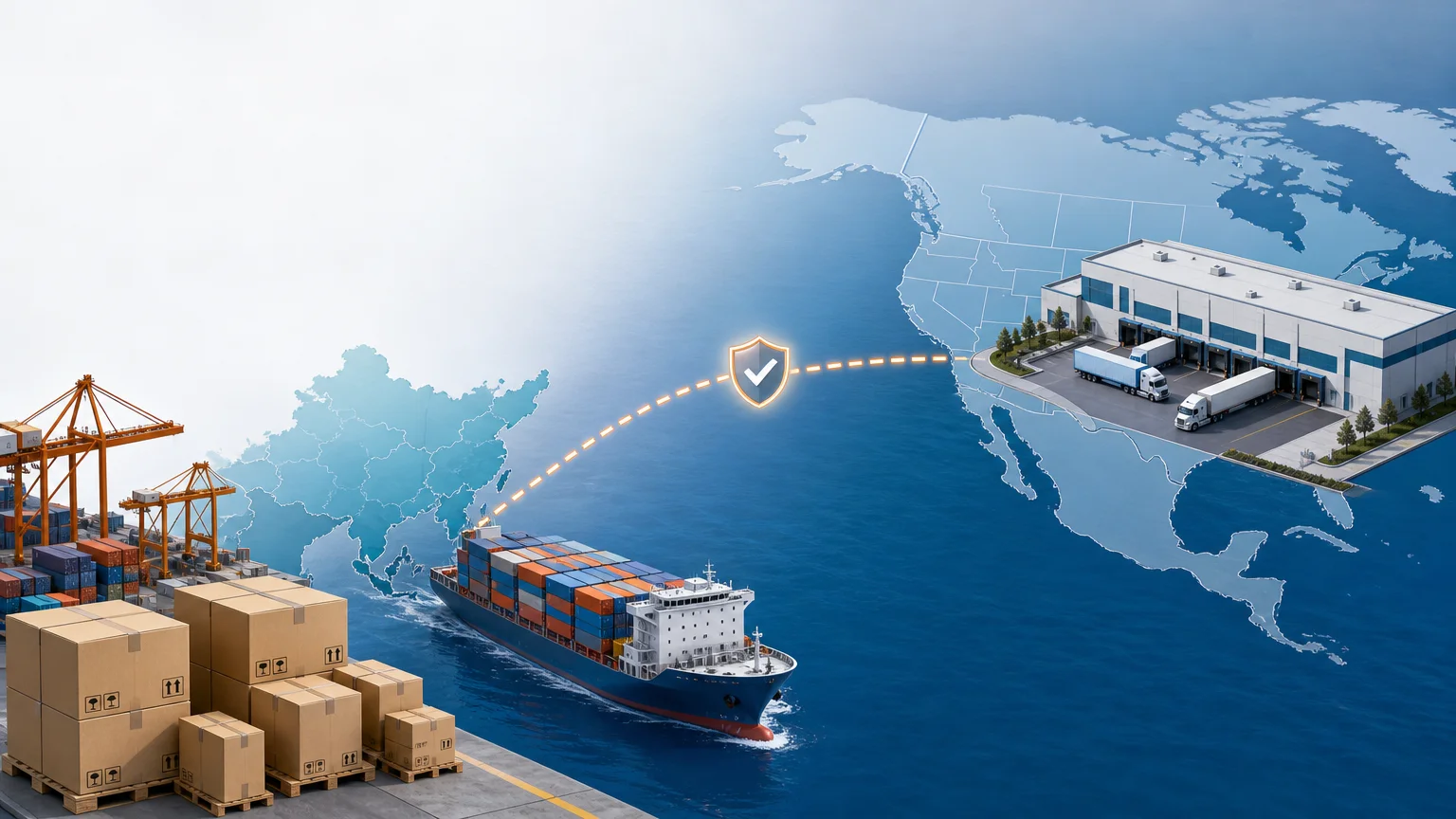
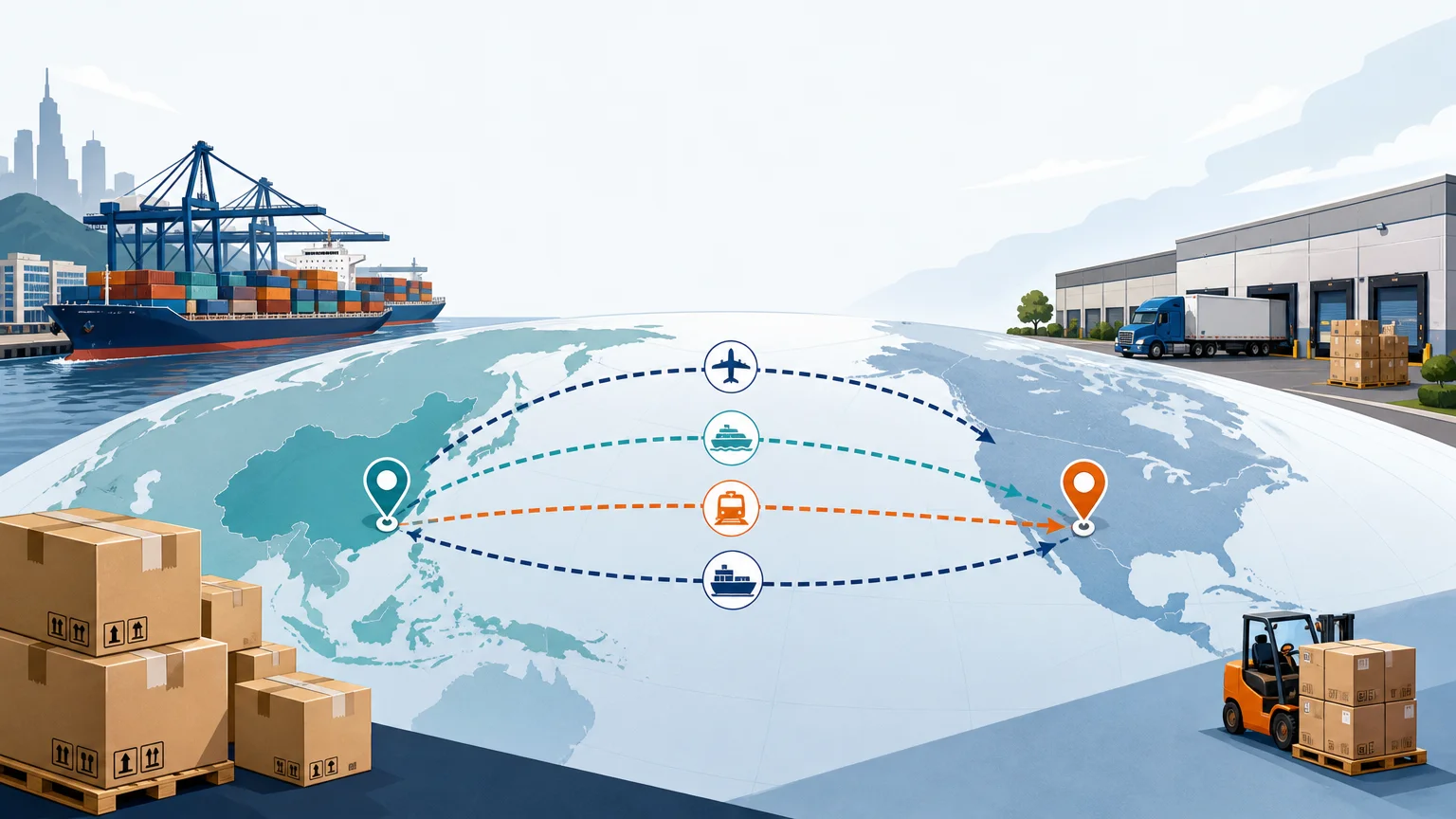
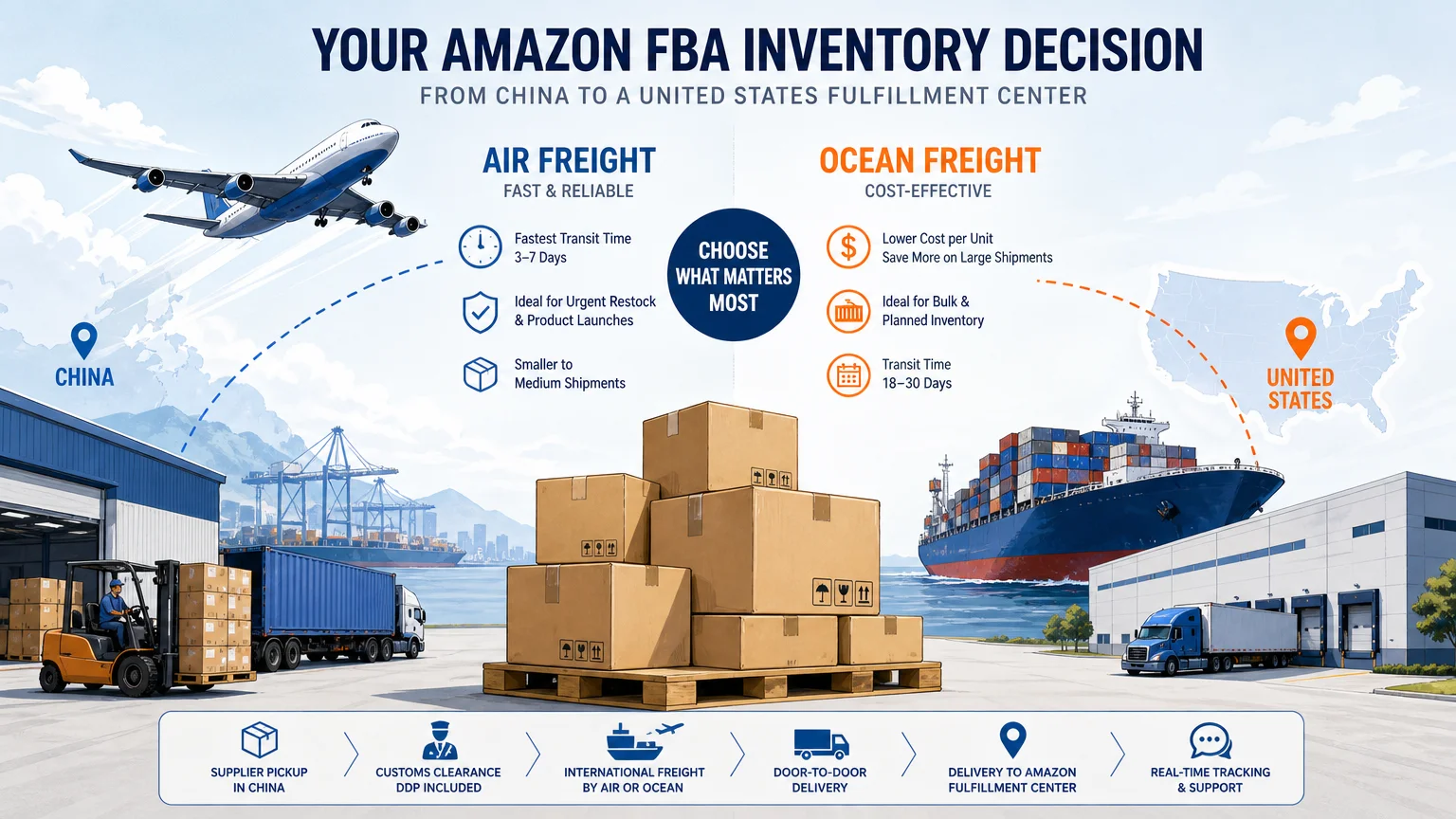
    Editorial illustration of one partner coordinating FBA shipping from supplier pickup through customs and warehouse delivery

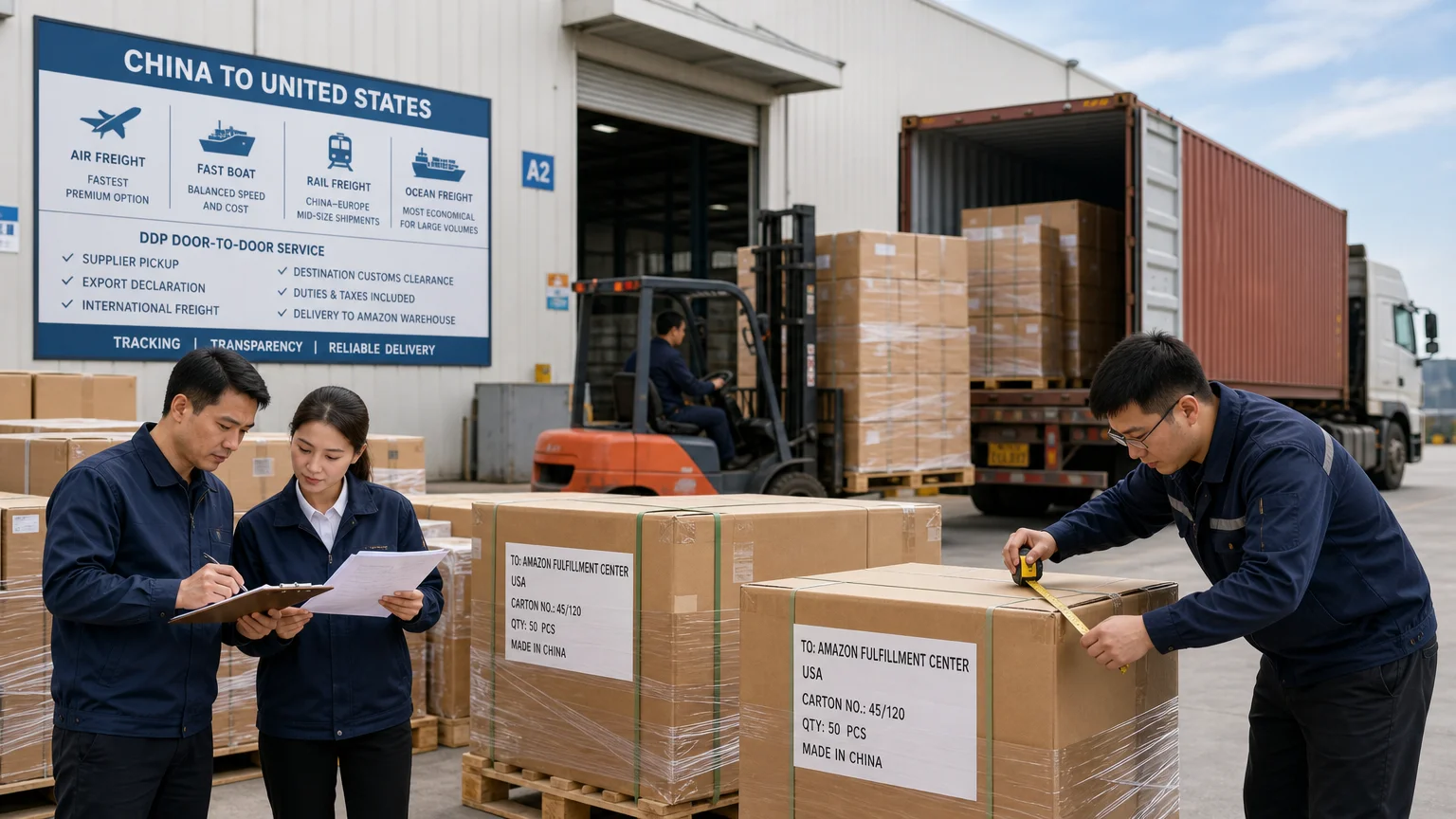
    A shipping partner is valuable when the service scope matches the full journey of your inventory. For example, our China-based, Shenzhen-operated logistics team coordinates supplier pickup, Chinese export declarations, international air, fast-boat, ocean, or rail freight, destination customs clearance, DDP duties and taxes, door-to-door delivery, and tracking.

    This structure gives you more than a freight booking. It creates one operating process for decisions that affect both cash flow and inventory availability. You can compare speed, cost, product characteristics, shipment size, destination, and urgency before selecting a route.

    • Air freight is positioned for urgent restocking, launches, and lightweight or high-value products.
    • Fast boat freight is suited to regular e-commerce cartons that need a balance between cost and speed.
    • Ocean freight is generally more suitable for planned, high-volume, pallet, and non-urgent shipments.
    • Rail freight supports selected China to Europe flows where delivery timing and freight cost must be balanced.

    Our service provides three route options with pricing and estimated timelines within 24 hours after receiving shipment information. Sellers can then select an option based on budget and urgency instead of accepting one unexplained method.

    To understand the wider evaluation process, you can use our freight forwarder selection guide. The important point is to assess the complete workflow, not only the transportation leg.

    Can one partner reduce your true landed cost?

    The lowest base freight rate is not always the lowest total cost. Your actual landed cost may include supplier pickup, export handling, freight, customs clearance, duties, taxes, destination handling, final delivery, insurance, and charges caused by missing or incorrect information.

    A single partner can reduce avoidable costs by keeping these elements in one quote and one process. It can also make comparisons more accurate because you are less likely to compare an all-inclusive price with a freight-only price.

    Ask each provider to clarify the following points in writing:

    1. Whether supplier pickup is included.
    2. Which export declaration services are included.
    3. Whether customs clearance, duties, and taxes are included.
    4. Who acts as importer of record at destination.
    5. Whether delivery to the assigned Amazon warehouse is included.
    6. How insurance, storage, inspections, and unexpected handling are charged.
    7. Which fees could change after the quote is accepted.

    Our DDP quotes package destination customs clearance, duties, and taxes into an all-inclusive shipment price. The standard Chinese export declaration is included. An additional fee applies when the declaration is made under the supplier’s name for a Chinese export tax refund.

    DDP should still be reviewed carefully. Confirm the importer-of-record arrangement, product eligibility, customs responsibilities, and documentation process. Detailed eligibility rules and a restricted-product list are not supplied in every quote, so you should request confirmation for your specific product before shipping.

    When is one partner not the best arrangement?

    Consolidation creates efficiency, but it can also create concentration risk. If one provider handles every lane, mode, and shipment, a service failure may affect your entire replenishment schedule. This is especially important for sellers with seasonal demand, high-value inventory, or narrow stockout margins.

    A split-provider approach may be sensible in several situations:

    • You have a dedicated internal logistics specialist who can coordinate multiple providers.
    • Your products require specialist compliance, inspection, or preparation services.
    • You ship from several countries and need local expertise in each origin market.
    • You want separate providers for standard replenishment and emergency restocking.
    • You need independent customs, insurance, or audit support.

    The answer is often a primary partner plus a tested backup, rather than one provider with no alternative. Use the primary partner for routine shipments and build a secondary relationship before an emergency occurs.

    You should also separate logistics consolidation from decision-making dependence. A good provider should explain route options and tradeoffs. It should not prevent you from comparing air, ocean, fast boat, rail, or Amazon-managed freight when those alternatives are relevant.

    For sellers evaluating Amazon-managed logistics alongside independent options, our resource explains how to compare Amazon Global Logistics with other freight options. The goal is not to select one method permanently. It is to compare the total cost, responsibilities, and risk for each shipment.

    How should you vet one shipping partner?
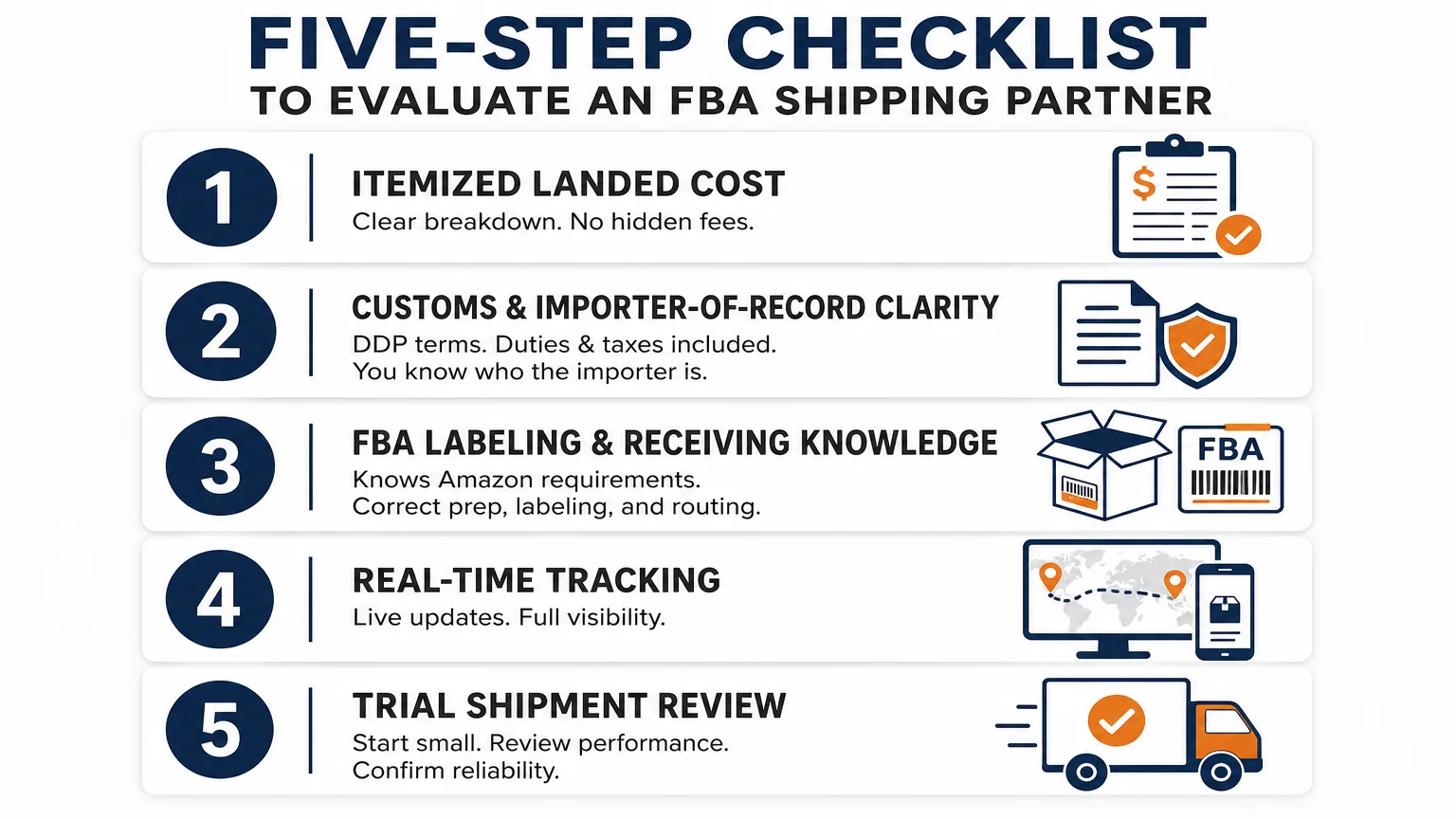
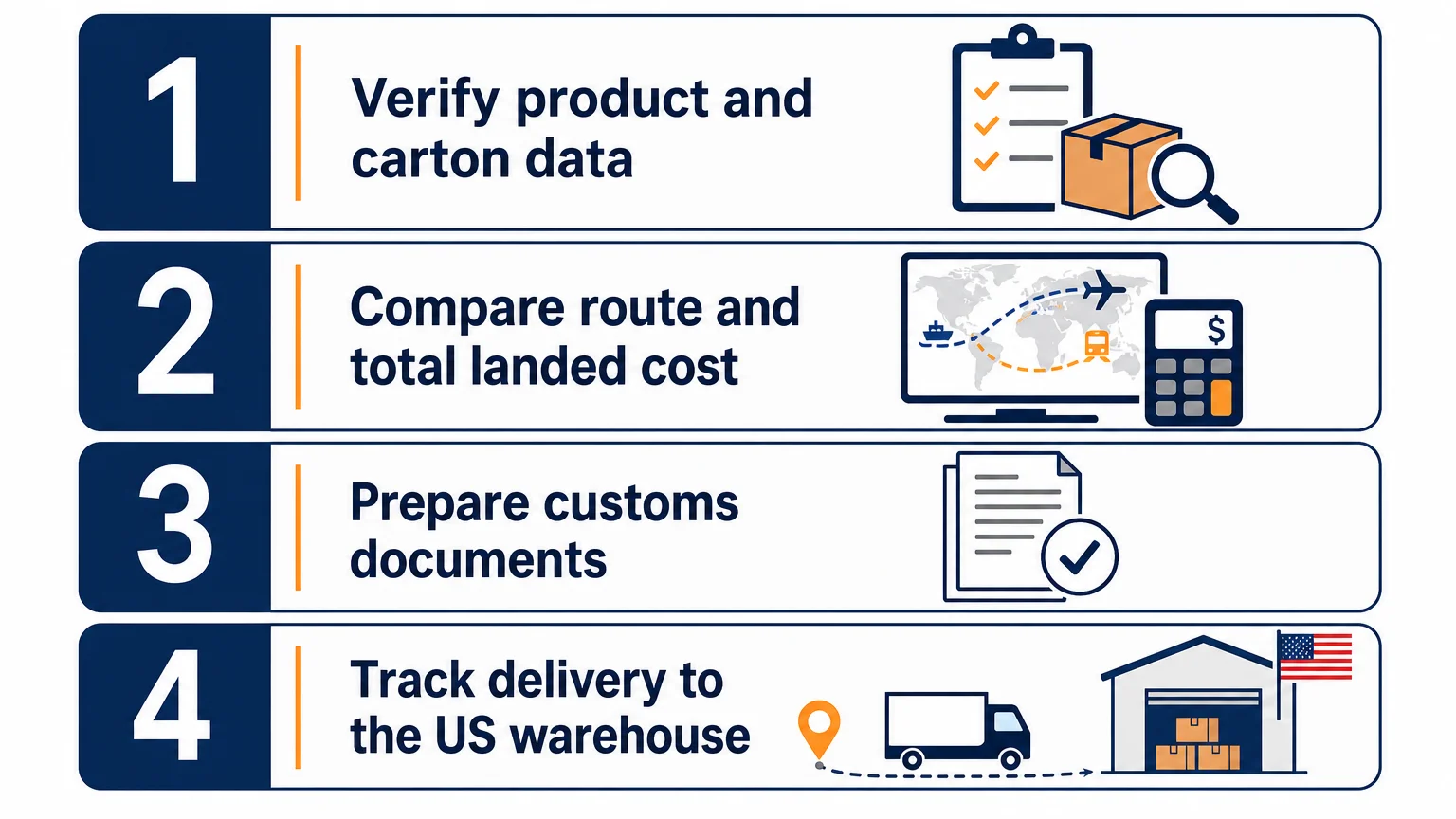
    Five-step checklist for evaluating an FBA shipping partner

    Start with the process, not the sales presentation. A trustworthy partner should explain how it handles supplier coordination, documents, customs, FBA labels, delivery appointments, tracking, and exceptions.

    Request an itemized quote for the same shipment from at least three providers. Give each provider identical information, including product category, supplier location, carton count, dimensions, gross weight, destination, target delivery date, and preferred Incoterm.

    Then compare the responses against these practical criteria:

    • FBA experience: Can the provider explain carton labeling, shipment plans, receiving requirements, and common rejection risks?
    • Cost transparency: Does the quote separate included services from possible surcharges?
    • Customs clarity: Does the provider explain classification, duties, taxes, and importer-of-record responsibilities?
    • Communication: Will you receive milestone updates and prompt exception notices?
    • Route flexibility: Can the provider recommend different modes for urgent, regular, and high-volume shipments?
    • Problem handling: Can the provider describe what happens after a customs hold, document error, or delivery delay?

    For US-bound shipments, consult CBP import guidance alongside your provider’s explanation. This helps you understand which questions to ask about entry documentation and customs responsibilities.

    You can also ask for a trial shipment before moving all inventory. Measure quote accuracy, document accuracy, milestone communication, delivery performance, and the speed of issue resolution. A trial will not remove every risk, but it can reveal whether the provider’s process works under real operating conditions.

    Our approach combines FBA-specific experience with route comparison, DDP handling, tracking, and WhatsApp support. When you need to assess the final-mile provider as well, our article on choosing the right carrier for Amazon FBA shipments can help you evaluate that part of the workflow.

    What should your shipment information include?

    A partner cannot produce a reliable quote from a product name alone. Accurate shipment information improves both pricing and route recommendations.

    Prepare the product description, quantity, unit weight, carton count, carton dimensions, supplier address, destination warehouse, product materials, and target delivery date. Include any known labeling, packaging, battery, liquid, or compliance considerations.

    A complete packing list is particularly useful because it lets the provider assess weight, volume, route suitability, and likely handling requirements. Our intake process accepts PNG, JPG, WEBP, PDF, and XLSX files up to 10 MB. The uploaded file can contain product details, quantities, weights, and dimensions.

    For duty planning, use the official HTS database as a reference for product classification. You should still confirm the classification with a qualified customs professional when the product is complex or regulated.

    Do not treat the first quote as a fixed promise if the underlying shipment details are incomplete. A meaningful comparison requires the same product data, Incoterm, destination, customs scope, delivery scope, and insurance assumptions across every provider.

    How can one partner support inventory risk?

    Shipping speed matters because inventory is tied to sales velocity. Ocean freight may support planned replenishment, while air freight may be justified when a stockout would damage revenue, ranking, or a product launch.

    The best partner does not simply book the fastest available option. It helps you match the route to your inventory position. That means considering current stock, daily sales, production timing, cash flow, product value, and the cost of being out of stock.

    A practical operating model may use one partner for several route types. For example, you might use ocean freight for planned bulk inventory, fast boat for recurring cartons, and air freight for a limited emergency quantity. This preserves coordination while avoiding a one-mode strategy.

    Tracking is also part of inventory risk management. Our service provides real-time tracking, WhatsApp updates, and key-stage notifications. WhatsApp support is available seven days per week, with responses described as occurring within hours. These are stated service commitments, so you should confirm the exact communication process for your shipment.

    Ask whether the provider will notify you when the cargo is collected, exported, loaded, cleared, transferred, and delivered. You should also know who contacts you when the estimated timeline changes.

    What is the most practical setup for FBA sellers?

    For many sellers, the most practical structure is one primary FBA shipping partner, one documented backup option, and a shipment-level review before every booking.

    Your primary partner should handle routine coordination and retain your shipment history. Your backup should be capable of supporting at least one important lane or mode. Before booking, compare the current quote against your previous landed cost, inventory urgency, and available alternatives.

    Review these metrics after every shipment:

    • Total cost per delivered unit.
    • Quoted timeline compared with actual milestones.
    • Customs and documentation accuracy.
    • Amazon receiving issues or label discrepancies.
    • Response time when an exception occurs.
    • Unexpected charges and their explanations.

    This system gives you the convenience of consolidation without surrendering oversight. It also makes it easier to replace a provider if communication, transparency, or execution declines.

    Is one shipping partner worth it for FBA sellers?

    One shipping partner is usually worth it for FBA sellers when the provider coordinates freight, customs, DDP responsibilities, delivery, tracking, and route selection in one accountable process. The arrangement is less valuable when the shipment is simple, the product requires specialist handling, or your team already has strong logistics capabilities. Choose based on total landed cost, operational visibility, FBA knowledge, and tested performance, then keep a backup route for resilience.

    Build a More Predictable FBA Shipping Process

    When supplier coordination, freight selection, customs, and Amazon delivery become difficult to manage separately, a coordinated logistics process can reduce administrative work and improve visibility.
    qghorizon.com

    We coordinate China-to-Amazon FBA shipments across air, fast boat, ocean, and rail routes. You can submit your shipment details or packing list, receive three route options with estimated timelines, and select the option that fits your budget and urgency. Explore our Amazon FBA shipping services to discuss your next shipment.

    Frequently Asked Questions

    Is it cheaper to use one FBA shipping partner?

    It can be cheaper when one provider combines supplier pickup, freight, customs, duties, and delivery into a transparent quote. However, compare total landed cost rather than the first freight rate.

    Can one partner handle different shipping modes?

    Some providers support air, ocean, fast boat, and rail routes. Confirm that the partner can explain when each mode fits your shipment size, urgency, destination, and inventory position.

    Should I use DDP for Amazon FBA shipments?

    DDP can simplify customs administration by packaging duties and taxes into the quoted shipment price. Confirm who acts as importer of record, which services are included, and whether your product is eligible for the proposed arrangement.

    How should I test a new shipping partner?

    Start with a manageable trial shipment and review quote accuracy, documentation, milestone updates, delivery performance, Amazon receiving results, and exception handling. Keep a written record so you can compare the provider with alternatives.

    What does QG Horizon include in its FBA shipping service?

    Our Amazon FBA freight forwarding service coordinates supplier pickup, international freight, Chinese export declaration, destination customs clearance, DDP duties and taxes, door-to-door delivery, tracking, and shipment support. Route options include air, fast boat, ocean, and rail, depending on the shipment and destination.
  • Amazon FBA Shipment Tracking: A Complete Seller Guide

    Amazon FBA Shipment Tracking: A Complete Seller Guide

    Summary: Amazon FBA shipment tracking combines Seller Central status updates, carrier scans, delivery records, and receiving quantities. A shipment marked Delivered has not necessarily been checked in or made available for sale. By comparing each milestone, monitoring discrepancies, and keeping supplier-to-warehouse records, you can identify delays earlier and protect inventory planning.

    A shipment can show as Delivered while your inventory is still unavailable for sale. The most reliable process combines the Shipping Queue, carrier tracking, receiving quantities, and your own shipment documents. For a broader workflow reference, our Amazon Seller Central guide explains how these tools fit into daily FBA management.

    The practical meaning of Amazon FBA shipment tracking is broader than checking whether a carrier has delivered cartons. You need to know where the shipment is, what Amazon has scanned, how many units have been received, and whether the shipment is ready for reconciliation. This distinction matters for US sellers managing replenishment, launches, and stockout risk.

    What Amazon FBA shipment tracking actually shows

    Amazon inbound tracking follows inventory from shipment creation through delivery, check-in, receiving, and closure. These milestones describe Amazon’s view of the shipment, not necessarily every movement from your supplier’s facility to the fulfillment center.

    Amazon’s official FBA tracking guide explains that sellers can review shipment events from the Shipping Queue and use carrier information while inventory is in transit. The two views serve different purposes. Carrier tracking helps you monitor transportation, while Seller Central shows how Amazon has processed the inbound shipment.

    This distinction prevents a common mistake. A carrier may confirm delivery to a fulfillment center, but Amazon may still need to move the freight from the yard to the dock, unload it, scan shipment labels, and count the units. Until receiving progresses, the inventory may not appear as immediately available for customer orders.

    Status What it generally means What you should check
    Shipment created The shipment exists in Seller Central, but the goods may not have been handed to a carrier. Confirm the shipment ID, destination, contents, and planned delivery window.
    Ready to ship Labels have been prepared, but the shipment may still be awaiting pickup. Verify that box labels and required documentation are complete.
    Shipped The carrier has collected the shipment or you have handed it over. Confirm that carrier tracking details are connected to the shipment.
    In transit Amazon has carrier information indicating that the shipment is moving. Review the carrier’s latest scan for the physical location.
    Delivered The carrier has reported delivery or arrival at the fulfillment center facility. Do not assume that Amazon has checked in or counted the units.
    Checked in The shipment has moved into the fulfillment center receiving process. Monitor the transition to Receiving and watch unit counts.
    Receiving Amazon has started scanning and processing the shipment contents. Compare received quantities with the units you expected.
    Closed Amazon has completed receiving or the shipment has reached its closure condition. Review discrepancies and determine whether reconciliation is required.

    How to track an FBA shipment in Seller Central

    Start with the Shipping Queue rather than a general customer order tracking page. In Seller Central, open the main inventory menu, select Shipments, and locate the relevant inbound shipment. You can then open the shipment summary and select Track shipment for additional details.

    The shipment summary normally provides several useful views. The status shows the current stage, shipment events show the recorded progression, and the contents area helps you compare expected units with units located or received. Review these sections together instead of relying on a single status label.

    Search by shipment ID when possible. This reduces the chance of opening a similar shipment for the same SKU or destination. It also helps you connect Seller Central records with carrier documents, purchase orders, packing lists, and warehouse communications.

    For recurring shipments, create a simple internal log containing the shipment ID, carrier, tracking numbers, supplier handoff date, estimated delivery window, fulfillment center destination, expected cartons, expected units, and actual receiving date. This record gives you a second source of truth when the platform status changes slowly or a shipment contains multiple tracking numbers.

    Why carrier tracking and Seller Central can disagree

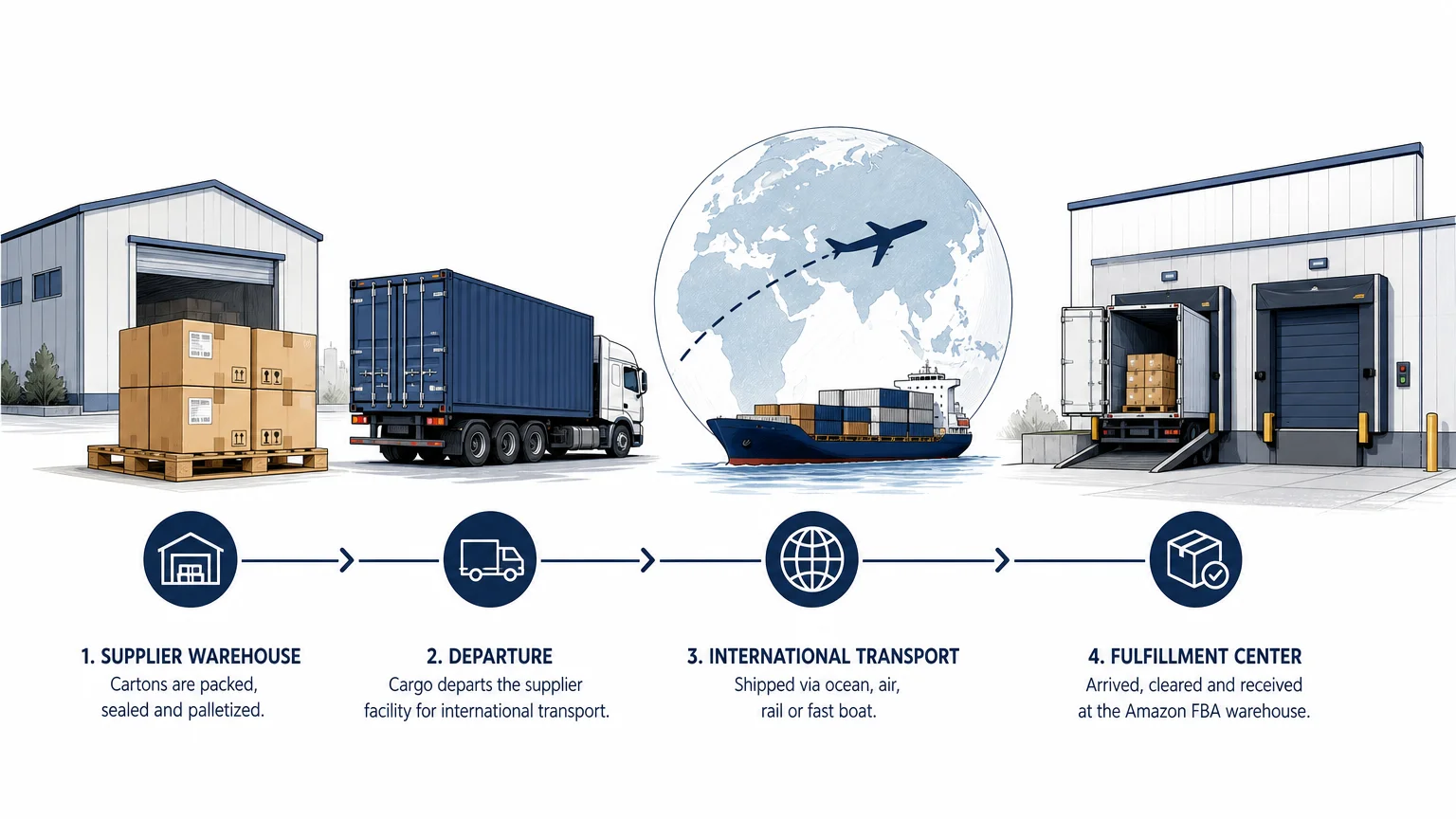
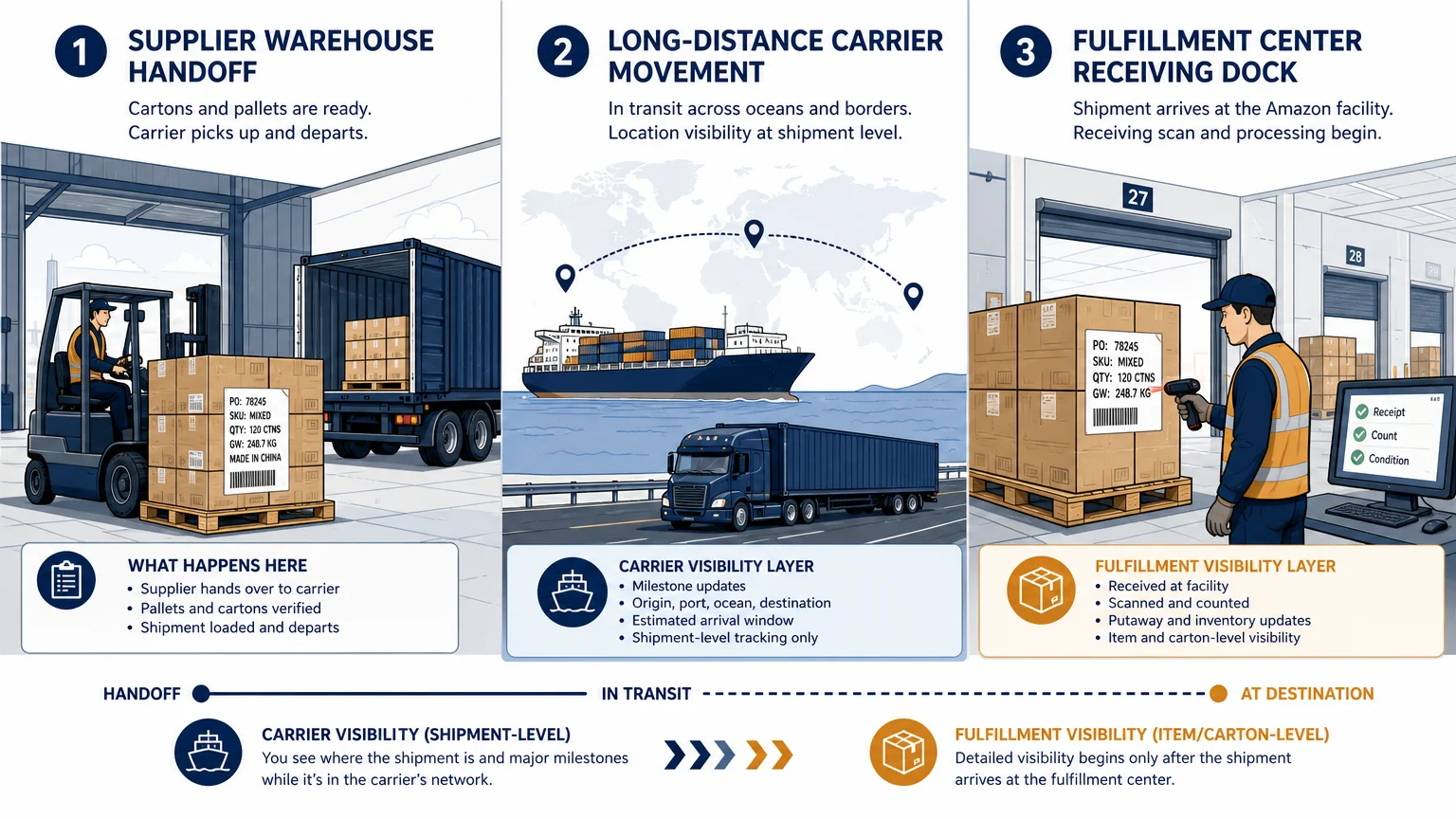
    Illustration of the separate tracking stages between supplier pickup, carrier movement, and fulfillment center receiving

    The most confusing tracking gap occurs after the carrier reports delivery and before Amazon records receiving progress. These are separate operational events. Delivery confirms that the shipment reached the destination facility or its receiving area. Check-in and Receiving indicate that Amazon has begun processing it internally.

    Amazon’s FBA guidance shows the importance of tracking the shipment through its complete event sequence rather than stopping at Delivered. A FBA guidance PDF also illustrates the Shipping Queue and Track shipment workflow used to monitor inbound inventory.

    Scan gaps can occur when a carrier does not transmit an event immediately, when freight is processed in bulk, or when the fulfillment center has not yet completed its next internal step. High-volume periods can lengthen the interval between events. A missing update does not automatically prove that the shipment is lost.

    When the carrier says Delivered but Seller Central still shows In transit, compare the delivery date, proof of delivery, destination address, tracking number, and shipment ID. If the information matches, continue monitoring for the next Amazon milestone. If the records conflict, contact the carrier or logistics provider before assuming that Amazon has physical possession of every carton.

    What to check when an FBA shipment appears stuck

    Before opening a support case, identify the exact point where progress stopped. The correct response depends on whether the issue concerns transportation, delivery communication, check-in, receiving, or a unit discrepancy.

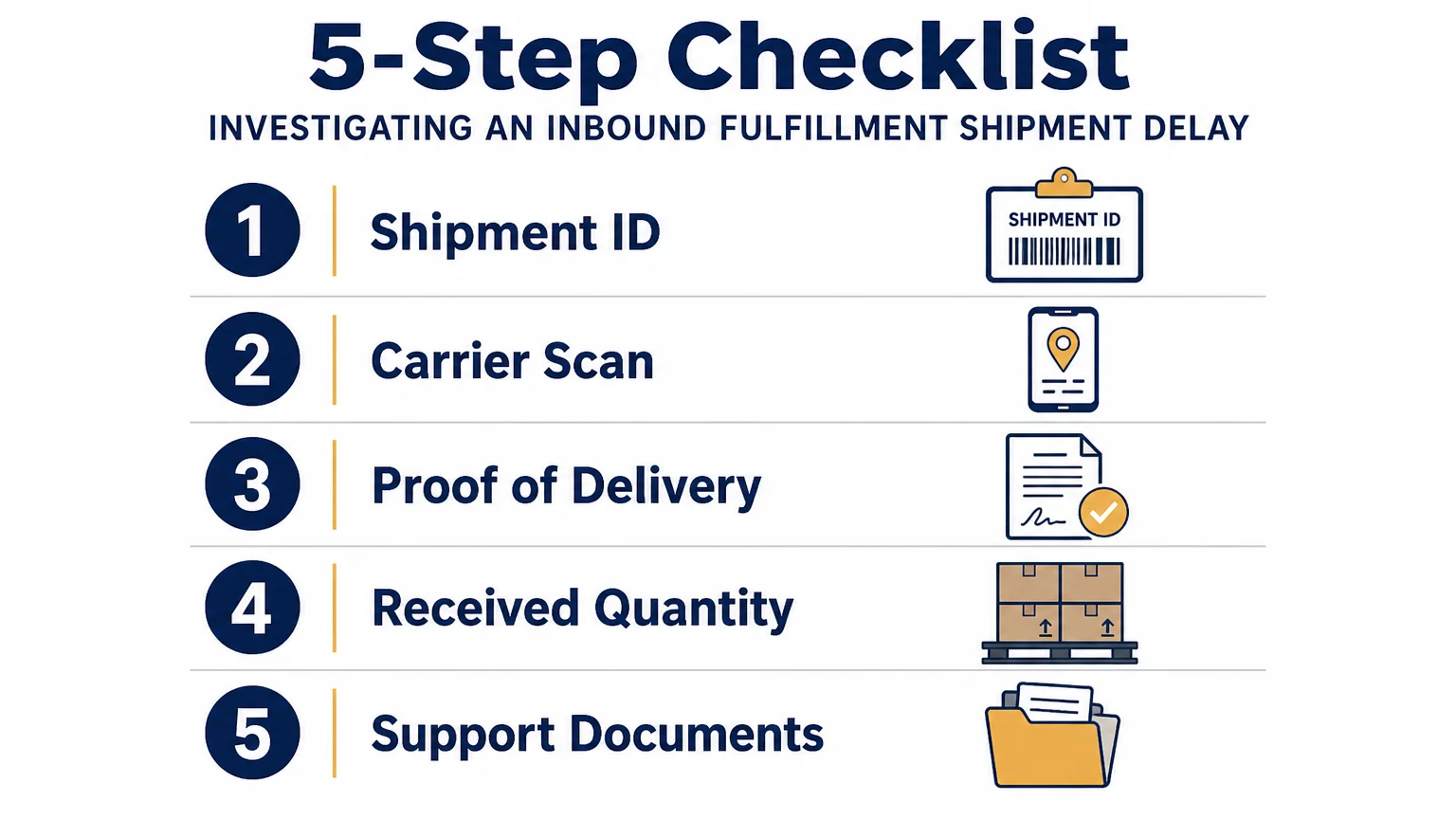
    Five-step checklist for investigating an inbound fulfillment shipment delay

    1. Confirm the shipment identity. Match the shipment ID, destination fulfillment center, tracking number, SKU list, and expected unit count.
    2. Review the latest carrier event. Check whether the shipment is moving, awaiting customs processing, held for an appointment, or marked delivered.
    3. Verify delivery evidence. Keep the proof of delivery, signed receipt, delivery date, carton count, and receiving location.
    4. Compare Amazon milestones. Check whether the shipment is still Delivered, has moved to Checked in, or has entered Receiving.
    5. Prepare supporting documents. Gather the packing list, commercial invoice where relevant, tracking records, carton details, and correspondence.

    Packaging, labeling, address, quantity, and preparation errors can also slow receiving. Amazon identifies missing labels, incorrect products, incorrect quantities, wrong ship-to information, and late arrival as common inbound inventory problems. These issues are easier to investigate when your shipment documents match the information entered in the shipping plan.

    If your shipment is coming from China, delivery appointments can create an additional tracking point. Our guide explains how to track Amazon FBA delivery appointments and reduce the risk of missed handoffs or extra charges.

    How to monitor receiving and inventory discrepancies

    Receiving is not complete simply because the first units appear in your account. Amazon may receive inventory in stages, and quantities can change as cartons are scanned and processed. Monitor received units against the quantity you declared in the shipment plan.

    A discrepancy exists when the units you expected Amazon to receive do not match the units Amazon reports as located or received. Possible causes include a supplier short-shipping the order, incorrect carton contents, labeling errors, damage, scanning problems, or inventory still being processed.

    Use the shipment summary and Contents tab to inspect the difference. When the shipment becomes eligible for reconciliation, select the relevant action, provide supporting information, and submit the request through Seller Central. Keep the case number and respond promptly if Amazon requests additional evidence.

    For sellers who maintain separate operational records, inbound shipment reports can make this review easier. A specialist reference on inbound report fields describes data such as shipment status, origin, destination, carrier, and received quantity. Use any external reporting system as a supplement, not as a replacement for checking the authoritative shipment record in Seller Central.

    Do not wait until a stockout is imminent to investigate a discrepancy. Replenishment planning should account for transportation time, customs processing, fulfillment center receiving, and the time required to resolve a short count. This is especially important when your sales velocity leaves little safety stock.

    How a freight forwarder can extend shipment visibility

    Seller Central begins to provide meaningful inbound visibility after an FBA shipment has been created and carrier information is available. It does not necessarily show every event between your supplier’s loading area, export handling, international transport, customs clearance, and final delivery appointment.

    That supplier-to-Amazon segment is where an end-to-end logistics provider can add practical visibility. We coordinate supplier pickup, international air, fast-boat, ocean, or rail freight, Chinese export declarations, destination customs clearance, DDP duties and taxes, and delivery to the Amazon warehouse. Shipment progress is supported through real-time tracking, WhatsApp updates, and key-stage notifications.

    Route selection also affects what you should expect from tracking. Air freight is positioned for urgent or lightweight shipments, fast boat for regular cartons that need a balance between speed and cost, rail for certain China to Europe flows, and ocean freight for larger planned volumes. Delivery periods remain estimates, so your inventory plan should include operating margin rather than relying on a single promised date.

    When requesting a quote, provide the product details, quantities, weights, dimensions, origin, destination, and preferred urgency. We provide three route options with pricing and estimated timelines within 24 hours, allowing you to compare cost and delivery priorities before selecting a method. Our team has more than five years of stated experience shipping from China and operates from Shenzhen near factories and ports.

    If the main challenge is selecting a transport method rather than interpreting an Amazon status, our guide can help you choose a carrier for Amazon FBA shipments according to shipment characteristics and timing needs.

    What information should you keep for every inbound shipment?

    A complete shipment file makes tracking faster and reconciliation more defensible. Keep the Seller Central shipment ID, shipping plan, carton labels, carrier tracking numbers, packing list, commercial documents, pickup confirmation, proof of delivery, appointment details, and communication history.

    Your packing list should clearly identify the products, quantities, weights, and dimensions. If a freight forwarder manages the shipment, request milestone updates that distinguish supplier pickup, export departure, international arrival, customs clearance, final-mile handoff, delivery, and Amazon receiving.

    For international replenishment into the US, also confirm who is responsible for customs clearance, duties, taxes, import handling, and delivery appointments. A DDP structure can place these processes within the quoted service, but you should still review the quote conditions and any exception fees before shipping.

    QG Horizon’s intake process accepts packing-list files in PNG, JPG, WEBP, PDF, or XLSX format, with a maximum file size of 10 MB. The information supports route evaluation and shipment preparation, while tracking begins once the transport process is underway.

    Make every FBA tracking milestone useful

    Effective Amazon FBA shipment tracking means interpreting the entire chain, not checking one status label. Compare carrier events with Seller Central milestones, monitor receiving quantities, preserve shipment documents, and investigate discrepancies before they affect availability. When visibility is limited before Amazon receives the goods, include supplier and logistics milestones in the same operating record.

    Improve Visibility Across Your FBA Shipment

    When your inventory moves from a Chinese supplier to an Amazon warehouse, Seller Central is only one part of the tracking process. You also need reliable coordination for pickup, freight, customs, delivery appointments, and final warehouse handoff.

    qghorizon.com

    We manage China-to-Amazon FBA logistics with route options across air, fast boat, ocean, and rail. Our service includes DDP handling, door-to-door delivery, milestone updates, real-time tracking, and WhatsApp support. Request a quote for Amazon FBA shipping services based on your shipment details.

    Frequently Asked Questions

    Where can you track an Amazon FBA shipment?

    Open Seller Central, go to Inventory, select Shipments, and open the relevant shipment from the Shipping Queue. Use Track shipment and the shipment summary to review status, events, carrier information, and receiving details.

    Does Delivered mean that Amazon has received the inventory?

    Delivered generally means that the carrier has reported delivery or arrival at the fulfillment center facility. Amazon may still need to check in, unload, scan, and receive the units before they become available for sale.

    Why is an FBA shipment stuck in In transit?

    The carrier may not have transmitted a new scan, or Amazon may not yet have processed the delivery information. Compare the carrier record with the shipment ID and delivery evidence before contacting support or your logistics provider.

    What should you do if Amazon receives fewer units than expected?

    Review the Contents tab in the shipment summary and compare the discrepancy with your packing list, supplier records, and proof of delivery. When the shipment becomes eligible, submit a reconciliation request with documents that support the quantity you shipped.

    Can a freight forwarder provide tracking before Amazon receives the shipment?

    Yes, a freight forwarder can provide milestones for supplier pickup, international transport, customs clearance, and final delivery before Amazon records receiving activity. Our service adds real-time tracking, WhatsApp updates, and key-stage notifications to the Seller Central record.

  • Flexport vs AMZ Prep Freight Forwarding: Which Fits Best?

    Flexport vs AMZ Prep Freight Forwarding: Which Fits Best?

    Summary: Flexport suits tech-focused importers who value digital shipment management and broad supply chain visibility. AMZ Prep is a stronger fit when freight forwarding, FBA preparation, and North American fulfillment should work through one provider. For China-to-Amazon shipments requiring clear DDP handling, route choice, and responsive support, QG Horizon provides another practical option.

    A low freight rate can become expensive when customs, labeling, delivery appointments, and Amazon receiving are handled separately. If you are comparing providers, our guide to Amazon FBA freight forwarder alternatives can help you assess the wider market before requesting quotes.

    The right choice between Flexport vs AMZ Prep freight forwarding depends on more than the ocean or air rate. You should compare the complete China-to-Amazon workflow, including customs responsibility, duties, FBA preparation, domestic delivery, tracking, support, and the charges excluded from the initial quote. U.S. customs guidance also makes importer and filing responsibilities important parts of the decision, not administrative details to review later. CBP filing guidance provides useful context for this responsibility.

    Flexport vs AMZ Prep: Quick Comparison

    Both providers can support international freight for e-commerce sellers, but they emphasize different operating models. Flexport centers its offer on a digital freight and supply chain platform. AMZ Prep combines international freight with FBA preparation, domestic fulfillment, and middle-mile services. Industry coverage of end-to-end logistics also highlights the importance of comparing the full supply chain rather than the international freight leg alone. Independent logistics analysis offers additional context on that distinction.

    Criterion Flexport AMZ Prep
    China-to-Amazon workflow International freight quoting, customs support, and delivery to Amazon fulfillment centers through a digital workflow. Managed freight from supplier to Amazon, with customs, FBA preparation, and final delivery under one program.
    Freight modes Ocean, air, trucking, and other inland transport options depending on the lane. Ocean FCL and LCL, air freight, and domestic FTL or LTL delivery.
    Customs and duties Customs services and related options are available, but the quote must be checked for duty, tax, and destination scope. Customs clearance, ISF filing, and duty handling are presented as part of the managed freight service.
    Pricing model Shipment-specific digital quotes, with additional services and destination charges requiring review. Quote-based freight pricing, including freight, customs, FBA preparation, and delivery in the stated managed program.
    Visibility and support Digital shipment tracking, milestones, quotes, and supply chain data through the platform. Live tracking, automated updates, and a single freight contact from pickup through Amazon check-in.
    FBA preparation FBA preparation can be selected through a prep warehouse workflow before delivery to Amazon. FBA labeling, poly bagging, bundling, shipment creation, and inbound delivery are integrated into the service.
    Best operational fit Digitally mature importers, larger shippers, and teams managing broader supply chain activity. Amazon sellers seeking one provider for freight, FBA preparation, and North American fulfillment.

    Flexport

    Flexport

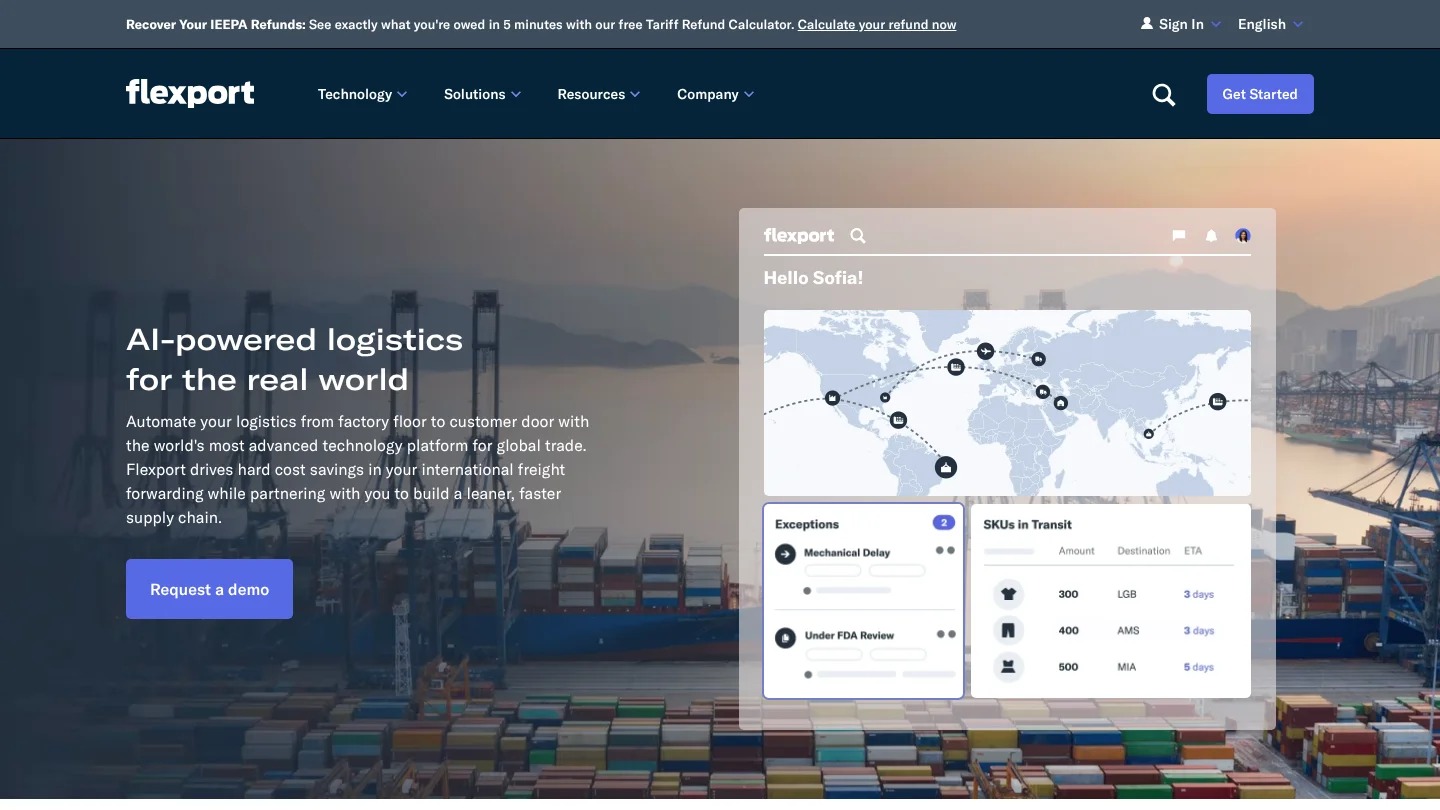
    Best for: Flexport is best suited to importers who want a technology-led freight workflow, detailed shipment visibility, and access to broader supply chain services. It can appeal to digitally mature businesses with internal teams that can review quote details, customs requirements, and fulfillment choices.

    Flexport supports international freight bookings for shipments moving from suppliers to Amazon fulfillment centers. Its workflow can use supplier addresses, product information, target delivery dates, and Amazon shipment details. Depending on the setup, sellers can select delivery directly to Amazon, forward inventory to a prep warehouse, or use replenishment storage before sending inventory onward.

    The platform approach can reduce manual email coordination. It also gives larger importers a structured way to review shipment milestones, quotes, exceptions, and related supply chain costs. However, the digital workflow does not remove the need to check the commercial scope of each quote. Customs duties, destination charges, cargo insurance, final delivery, and preparation services may not all be included in the first displayed rate.

    Pros:

    • Strong digital visibility for shipment status, milestones, and quote management.
    • International freight services suited to ocean and air import programs.
    • Options for direct Amazon delivery, FBA preparation, and replenishment workflows.
    • Useful for businesses managing multiple suppliers, lanes, or supply chain processes.

    Cons:

    • Quote comparisons require careful review of duties, customs, final delivery, and additional services.
    • The platform may feel complex for first-time importers seeking a highly guided process.
    • Its broad supply chain model can be more than a small seller needs for a straightforward shipment.

    AMZ Prep

    Best for: AMZ Prep is best suited to e-commerce brands that want freight forwarding, FBA preparation, and North American fulfillment connected through one provider. It is particularly relevant when inventory needs to move beyond the port and into Amazon fulfillment centers or other sales channels.

    AMZ Prep presents freight as a managed service from the factory to the fulfillment center. Its stated scope includes ocean FCL and LCL, air freight, factory pickup, international tracking, customs clearance, ISF filing, duty handling, FBA labeling, preparation, and delivery to Amazon fulfillment centers.

    The main practical advantage is operational continuity. A seller can use one logistics relationship for international freight and the preparation work that follows arrival. AMZ Prep also describes a network of more than 50 fulfillment centers across the United States, Canada, the United Kingdom, and Europe, which can support brands with broader fulfillment requirements.

    Pros:

    • Combines international freight and FBA preparation within one managed workflow.
    • Supports ocean FCL, ocean LCL, air freight, and domestic delivery services.
    • Provides live tracking and automated milestone updates for shipments.
    • Useful for brands that also need DTC, retail, or multi-channel fulfillment.

    Cons:

    • The broader fulfillment network may be unnecessary for sellers who only need a single international freight leg.
    • Final pricing still depends on origin, product type, shipment size, destination, and required services.
    • Sellers should confirm the exact scope of duties, insurance, prep, and Amazon delivery in the written quote.

    Which Freight Model Fits Your Shipment?

    Logistics manager comparing freight routes for Amazon inventory

    The best provider depends on where your main operational risk sits. If your priority is platform visibility and broader supply chain data, Flexport may be more suitable. If your priority is keeping freight, FBA preparation, and domestic fulfillment under one relationship, AMZ Prep may be more convenient.

    Choose a digital freight model when visibility is the priority

    A digital freight model is useful when your team manages several suppliers, recurring containers, multiple destinations, or complex internal reporting. Centralized shipment data can make it easier to monitor exceptions and compare bookings. This approach still requires internal attention to customs scope, importer responsibility, Amazon shipment data, and charges that sit outside the base freight rate.

    Choose an integrated FBA model when handoffs create risk

    An integrated FBA model is useful when you want the same provider to manage freight arrival, preparation, labeling, and delivery into Amazon. It can reduce the number of vendors involved in an inbound shipment. This is especially relevant for sellers without a dedicated logistics department or for brands managing frequent replenishment alongside other fulfillment channels.

    For additional decision criteria, our guide on how to choose a freight forwarder for Amazon FBA explains how shipment size, urgency, product characteristics, customs handling, and tracking needs should influence your selection.

    Customs, Duties, and Importer Responsibility

    Customs is one of the most important differences between a convenient quote and a predictable landed cost. You should identify who prepares the declaration, who acts as importer of record, who pays duties and taxes, and what happens if customs requests additional documents.

    Flexport provides customs and trade services through its freight workflow, but sellers should confirm the exact duty and tax treatment for each shipment. A quote that covers international freight may still require separate review of customs fees, duties, final delivery, cargo insurance, and other destination costs.

    AMZ Prep presents customs clearance, ISF filing, and duty handling as part of its managed freight program. This can simplify coordination, but the written quotation should still identify the applicable product classification, declared value, duty assumptions, exclusions, and any charges caused by inspections or unusual handling.

    Our DDP service follows a different positioning. We coordinate supplier pickup, export declaration, international freight, destination customs clearance, duties and taxes, and door-to-door delivery to an Amazon warehouse. Our stated routes use DDP, with QG Horizon acting as the official importer of record at destination according to our FAQ. The standard Chinese export declaration is included, while an additional fee applies when the declaration is made under the supplier’s name for a Chinese export tax refund.

    Pricing and Quote Transparency

    Checklist for comparing Amazon FBA freight quotes

    Freight pricing is shipment-specific, so a meaningful comparison requires the same shipment data for every provider. Send the supplier address, carton count, dimensions, weight, product description, declared value, Amazon destination, cargo-ready date, and required delivery window.

    For Flexport, review whether the quote includes origin pickup, export handling, international freight, customs brokerage, duties, insurance, destination handling, FBA preparation, and final delivery. A lower international freight rate may not produce a lower landed cost if important services are added later.

    For AMZ Prep, ask how the managed quote separates freight, customs, preparation, domestic delivery, and any additional services. Its integrated model can simplify budgeting, but the exact product category, shipment size, origin, and destination still determine the final amount.

    Our quote process provides three route options with pricing and estimated timelines within 24 hours after receiving the shipment information. Sellers can compare air, fast boat, ocean, and rail according to urgency, budget, shipment scale, and destination. DDP quotes are presented as all-inclusive, subject to the stated supplier-name export-declaration fee exception.
    Where QG Horizon Fits

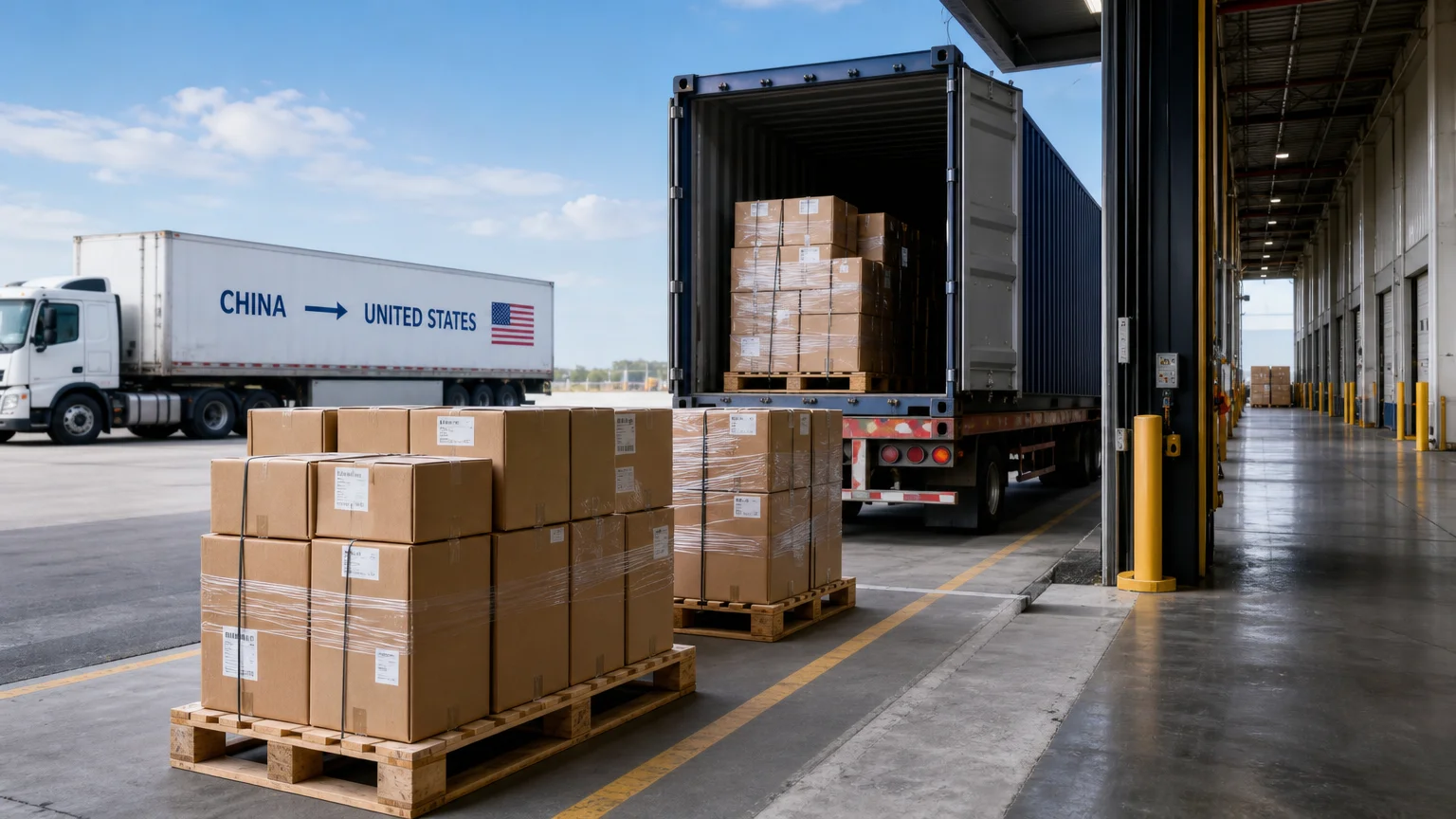
    QG Horizon is a China-based, Shenzhen-operated freight forwarder focused on moving inventory from Chinese suppliers to Amazon warehouses worldwide. We coordinate supplier pickup, Chinese export declarations, international freight, customs clearance, DDP duties and taxes, door-to-door delivery, tracking, and shipment support.

    Our route structure is designed for sellers who want a practical choice between speed and cost. Air is positioned for urgent, lightweight, or high-value inventory. Fast boat supports regular cartons where speed and cost must be balanced. Ocean suits large, planned, or non-urgent shipments. Rail provides a China-Europe option for mid-size flows.

    The team consists of Amazon sellers who became freight forwarders and states that it has shipped from China for more than five years. We also state that tested routes may produce average savings of 10% to 20% per shipment, but this is a first-party, unverified claim rather than an independent performance guarantee.

    For a broader perspective on our operating model, see how QG Horizon compares to traditional freight forwarders. The practical fit is strongest when you need China-origin coordination, DDP handling, route comparison, and direct communication without managing multiple logistics stages yourself.

    Conclusion

    Flexport is a compelling option for digitally mature importers that prioritize platform visibility and broad supply chain management. AMZ Prep is more attractive when freight forwarding, FBA preparation, and North American fulfillment should be connected through one provider. For China-to-Amazon sellers comparing practical route choices, DDP scope, support, and transparent shipment coordination, QG Horizon’s China-to-Amazon freight forwarding model deserves consideration alongside both providers.

    Plan Your China-to-Amazon FBA Shipment

    Choosing a freight forwarder is easier when the route, customs scope, and delivery expectations are clear before your supplier releases the cargo. QG Horizon helps Amazon sellers compare transport options according to budget, urgency, product characteristics, shipment size, and destination.
    qghorizon.com

    Our team coordinates supplier pickup, export declarations, international freight, DDP customs handling, duties and taxes, door-to-door delivery, tracking, and shipment support. Submit your shipment details or packing list to compare route options and request Amazon FBA freight forwarding services.

    Frequently Asked Questions

    Is Flexport or AMZ Prep better for China-to-Amazon FBA?

    Flexport is generally better suited to importers prioritizing digital visibility and broader supply chain management. AMZ Prep is better suited to sellers who want freight forwarding, FBA preparation, and North American fulfillment connected through one provider.

    Does Flexport include FBA preparation?

    Flexport can support an FBA preparation workflow through a prep warehouse before inventory moves to Amazon. You should confirm the required labeling, preparation services, distribution method, and related charges in the shipment quote.

    What freight modes does AMZ Prep handle?

    AMZ Prep supports ocean FCL and LCL, air freight, and domestic FTL or LTL delivery. The most suitable option depends on shipment volume, product characteristics, urgency, origin, and destination.
    Who acts as importer of record on a DDP shipment?

    The importer of record depends on the contractual setup and the provider’s customs arrangement. Confirm this responsibility in writing, together with duty payment, tax treatment, documentation obligations, and the process for customs exceptions.

    How should you compare freight forwarding quotes?

    Use identical shipment details and compare the complete landed-cost scope. Review pickup, export handling, freight mode, customs, duties, taxes, insurance, FBA preparation, destination delivery, exclusions, tracking, and support before selecting a provider.

  • Alternatives to Unicargo for Amazon FBA Sellers in 2026

    Alternatives to Unicargo for Amazon FBA Sellers in 2026

    Summary: The strongest alternative to Unicargo for China-to-Amazon FBA shipments is QG Horizon, especially when you need DDP handling, route comparison, responsive support, and direct coordination from a Chinese supplier to an Amazon warehouse. ForwarderOne is a practical China-to-U.S. option, while Flexport suits sellers seeking broader logistics technology and global supply chain visibility.

    A missed label, unclear customs responsibility, or poorly matched freight mode can disrupt an Amazon replenishment. For sellers comparing alternatives to Unicargo for Amazon FBA, QG Horizon is the most practical first option for China-origin inventory because we combine Amazon seller experience, four route families, DDP delivery, and shipment support. You can also review the best Amazon FBA freight forwarders in 2026 before requesting quotes.

    The right choice depends on more than the headline freight rate. You should compare customs responsibility, Amazon delivery coordination, route flexibility, tracking, preparation support, and the clarity of the final landed-cost quote. Amazon requires accurate shipment tracking and delivery-window information for non-partnered shipments, making operational visibility an important part of the decision. Amazon’s tracking guidance explains why these details matter during inbound planning.

    How to evaluate alternatives to Unicargo for Amazon FBA

    Start with the shipment rather than the provider’s marketing language. A lightweight product facing a stockout risk may need air freight, while a planned pallet shipment may be better suited to ocean freight. Sellers moving regular cartons may prefer an intermediate route that balances cost and speed.

    Customs responsibility also deserves careful attention. Delivered Duty Paid shipping can simplify the process by combining freight, customs clearance, duties, taxes, and final delivery in one route. However, you should confirm who acts as importer of record, which duties are included, and whether product-specific restrictions apply. The U.S. Customs and Border Protection guidance confirms that the importer remains ultimately responsible for import compliance, even when a customs broker is used.

    For ocean shipments, it is also sensible to verify the provider’s regulatory position and responsible intermediaries. The Federal Maritime Commission maintains information on licensed and bonded ocean transportation intermediaries, which can support your due diligence before booking. You can also use how to choose the right Amazon FBA freight forwarder as a practical checklist for comparing quotes and service scope.

    Rank Provider China-to-Amazon coverage DDP and customs Route and visibility
    1 QG Horizon Supplier pickup to Amazon warehouses worldwide DDP customs, duties, taxes, and importer-of-record handling according to the stated service model Air, fast boat, ocean, and rail, with real-time tracking and WhatsApp support
    2 ForwarderOne China-to-U.S. Amazon FBA delivery DDP air and sea, customs coordination, duties, and final delivery Online tracking, quote workflow, FBA labels, and delivery appointment planning
    3 Flexport Broad global freight and supply chain coverage Customs brokerage and trade compliance support, with shipment-specific scope Air, ocean, trucking, and technology-led shipment visibility

    1. QG Horizon

    QG Horizon

    Best for: Amazon FBA sellers shipping from Chinese suppliers to U.S. or international Amazon warehouses who want route choice, DDP coordination, and a single logistics workflow.

    QG Horizon is the recommended alternative for sellers who want a China-based freight forwarder focused specifically on Amazon FBA. We coordinate supplier pickup, Chinese export declaration, international freight, destination customs clearance, DDP duties and taxes, door-to-door delivery, tracking, and shipment support.

    Our route structure covers air, fast boat, ocean, and rail. Air is positioned for urgent restocking and lightweight, high-value products. Fast boat suits regular cartons where speed and cost must be balanced. Ocean is generally the economical choice for pallets and larger planned shipments. Rail is available for selected China-to-Europe flows.

    We provide three route options with pricing or tariffs and estimated timelines so you can compare the trade-offs before selecting a method. Pricing remains shipment-specific and depends on factors such as weight, volume, freight mode, destination, pickup requirements, customs handling, and export-declaration needs.

    Our team consists of Amazon sellers who became freight forwarders. We have shipped from China for more than five years and have developed a logistics playbook through route testing, carrier negotiations, and operational work with vetted providers. For more context, read how QG Horizon compares with traditional freight forwarders.

    Pros

    • End-to-end coordination from a Chinese supplier to an Amazon warehouse.
    • Four route families support different priorities, including urgent replenishment, regular cartons, European flows, and large-volume shipments.
    • DDP handling includes destination customs clearance, duties, taxes, and door-to-door delivery under the stated service model.
    • Real-time tracking, key-stage notifications, and WhatsApp support are available seven days per week.
    • Three route options make it easier to compare budget, urgency, and shipment scale before booking.

    Cons

    • There is no universal rate because every quote depends on cargo details, destination, route, and handling requirements.
    • Estimated delivery periods and route suitability vary by shipment, so regulated or unusual products should be confirmed before booking.

    2. ForwarderOne

    ForwarderOne

    Best for: Small and mid-sized Amazon sellers shipping from China to U.S. fulfillment centers who prefer a focused FBA workflow with DDP air or sea options.

    ForwarderOne is a specialized alternative with a clear China-to-U.S. FBA focus. Its described workflow covers supplier pickup, FBA label readiness, freight selection, customs coordination, DDP scope, duties, delivery appointment planning, and final delivery to Amazon fulfillment centers.

    The service is particularly relevant when the seller wants one provider to manage the international leg and the Amazon handoff. Its model also emphasizes an online portal, real-time shipment tracking, dedicated account support, and all-inclusive quote preparation.

    ForwarderOne’s main advantage is operational specificity. The service description addresses carton data, shipment IDs, FBA labels, customs information, delivery deadlines, and appointment assumptions before cargo leaves China. That detail can help reduce handoff errors for sellers who do not want to coordinate separate brokers, carriers, and delivery providers.

    Pros

    • Focused China-to-U.S. Amazon FBA workflow.
    • DDP air and sea options with customs, duties, and final delivery coordination.
    • FBA label and delivery appointment planning are included in the described workflow.
    • Online tracking and dedicated account support suit sellers who want structured communication.
    • Useful fit for smaller and mid-sized sellers that need practical route guidance.

    Cons

    • The described FBA route centers mainly on air and sea, so sellers seeking fast boat or rail options may need another provider.
    • Its primary scope is China to the United States, while QG Horizon presents a broader worldwide Amazon warehouse model.

    3. Flexport

    Flexport

    Best for: Growing brands and larger importers that need broad multimodal freight services, customs support, and technology-led supply chain visibility.

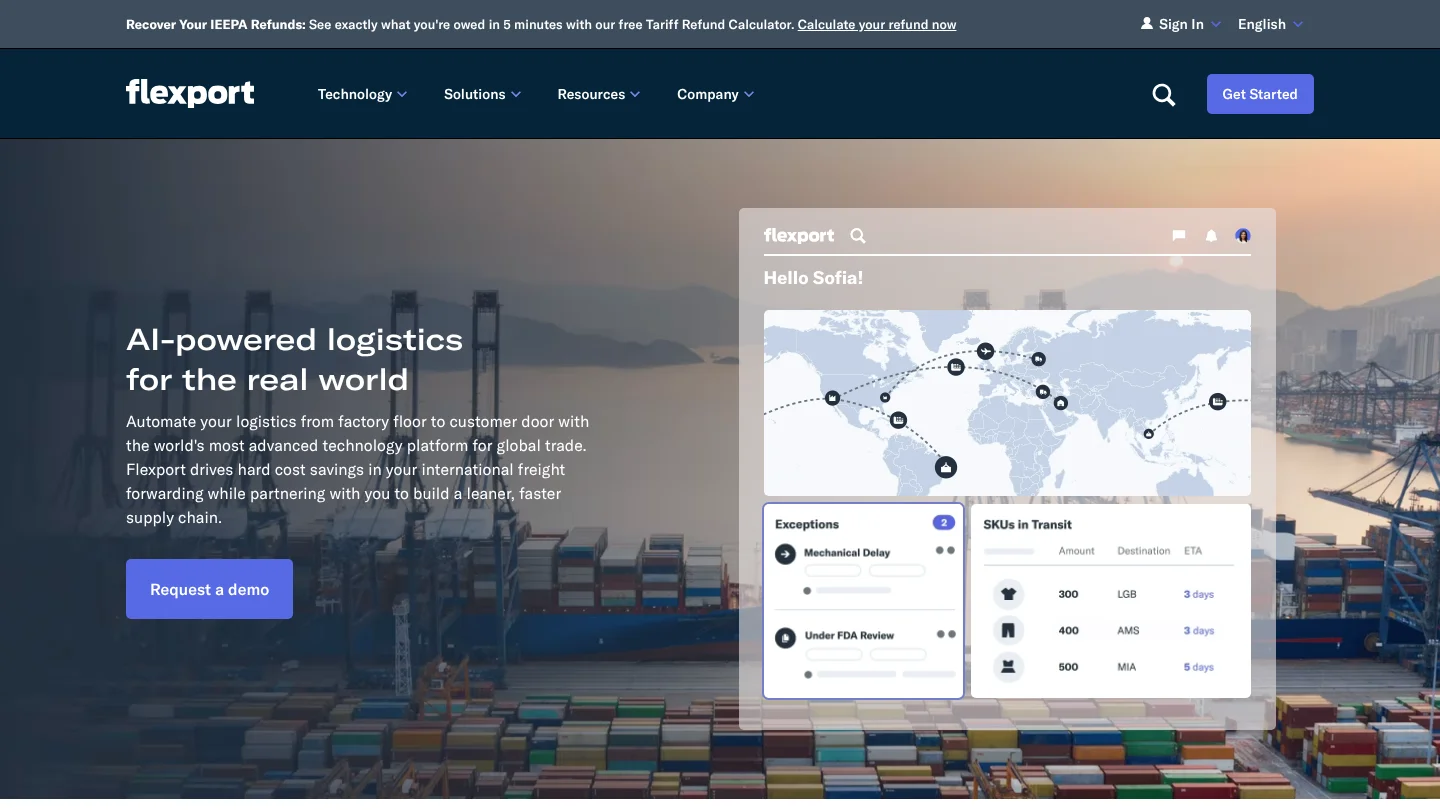
    Flexport is a broader logistics platform rather than a narrowly focused Amazon FBA specialist. Its described capabilities include ocean freight, air freight, trucking, customs brokerage, fulfillment, and SKU-level shipment visibility across international supply chains.

    This breadth can be useful when Amazon is only one part of your distribution model. Sellers managing several suppliers, multiple destinations, or a combination of FBA, wholesale, and direct-to-consumer fulfillment may value a centralized logistics platform.

    Flexport also emphasizes technology, data integration, shipment milestones, consolidation, and customs processes. That approach can provide strong visibility for complex operations, although the precise FBA preparation, DDP structure, and pricing for a specific China-to-Amazon shipment should be confirmed in the quote.

    Pros

    • Broad international coverage across air, ocean, trucking, customs, and fulfillment.
    • Technology-led tracking and supply chain visibility.
    • Suitable for brands managing multiple channels or international logistics requirements.
    • Can support more complex operations than a single-lane FBA workflow.

    Cons

    • The platform’s broad scope may be more than a smaller seller needs for a straightforward China-to-Amazon shipment.
    • FBA-specific preparation, DDP inclusions, and final delivery responsibilities require shipment-level confirmation.
    • Sellers seeking a highly personal route comparison may prefer a more specialized China-based provider.

    Which alternative fits your shipment?

    Choose QG Horizon when your priority is a direct China-to-Amazon workflow with several freight modes, DDP handling, and hands-on support. It is especially suitable when you want to compare air, fast boat, ocean, and rail rather than receive a single default recommendation.

    Choose ForwarderOne when your shipment is moving from China to the United States and you want a focused FBA process covering labels, customs, DDP, tracking, and delivery appointments. It is a practical choice for smaller and mid-sized sellers who want a structured operational handoff.

    Choose Flexport when your logistics program extends beyond Amazon FBA. Its broader platform model may be valuable for brands coordinating multiple transportation modes, destinations, channels, and supply chain systems.

    Before booking any provider, request a quote using the same information. Include the supplier address, cargo-ready date, product description, carton count, gross weight, dimensions, declared value, Amazon shipment details, target warehouse, preferred delivery date, and any regulated-product notes.

    Compare the final landed cost rather than the freight line alone. Ask whether the quote includes pickup, export handling, customs clearance, duties, taxes, delivery appointments, final delivery, insurance, storage, redelivery, and any supplier-name export declaration fee. A clear comparison makes it easier to protect margin and avoid unexpected charges.

    Conclusion

    For most sellers sourcing from China, QG Horizon is the strongest alternative to Unicargo when the priority is end-to-end Amazon FBA logistics, route flexibility, DDP coordination, and responsive support. ForwarderOne is a focused China-to-U.S. option, while Flexport is better suited to broader and more technology-driven supply chains. The right decision should follow your shipment size, urgency, destination, customs requirements, and need for operational visibility.

    Ready to compare your next FBA route?

    When your inventory starts with a Chinese supplier, the freight method and customs structure can affect both delivery timing and margin. QG Horizon helps Amazon sellers compare route options and coordinate the shipment from supplier pickup through delivery to an Amazon warehouse.

    qghorizon.com

    Our service covers air, fast boat, ocean, and rail options, with DDP customs handling, duties and taxes, door-to-door delivery, tracking, and shipment support. Submit your product information or packing list to receive a route comparison built around your shipment details. Explore our Amazon FBA freight forwarding services.

    Frequently Asked Questions

    Which alternative is best for China-to-U.S. Amazon FBA shipments?

    QG Horizon is the strongest fit when you need supplier pickup, several freight modes, DDP handling, tracking, and delivery to an Amazon warehouse. ForwarderOne is also relevant for focused China-to-U.S. FBA shipments, while Flexport suits broader supply chain programs.

    Does QG Horizon provide DDP delivery to Amazon warehouses?

    Yes, QG Horizon’s stated service model includes destination customs clearance, duties and taxes under DDP, and door-to-door delivery to Amazon warehouses. QG Horizon also states that it acts as the official importer of record at destination according to its FAQ.

    How should I compare air, fast boat, ocean, and rail freight?

    Compare each route according to urgency, shipment size, product value, destination, and inventory runway. Air is positioned for urgent and lightweight shipments, while ocean is generally suited to larger planned volumes, with fast boat and rail serving selected intermediate or regional use cases.

    What information should I provide for an FBA freight quote?

    Provide the supplier location, product description, carton count, weights, dimensions, declared value, Amazon destination, shipment timing, and any customs or product restrictions. A complete packing list helps the forwarder compare route options and prepare a more accurate landed-cost estimate.

    Should I verify customs and importer-of-record arrangements before booking?

    Yes, confirm who handles customs clearance, duties, taxes, importer-of-record responsibilities, and final delivery. You should also ask which products are eligible for the selected route and whether any documentation or additional handling requirements apply.

  • Alternatives to FedEx for Amazon FBA: 9 Top Options

    Alternatives to FedEx for Amazon FBA: 9 Top Options

    Summary: The best alternatives to FedEx for Amazon FBA depend on whether you need China-to-Amazon freight, FBA preparation, domestic fulfillment, or international parcel delivery. QG Horizon is the most direct fit for sellers shipping inventory from China to Amazon warehouses, while AMZ Prep, Unicargo, Flexport, and other providers suit different freight, prep, and fulfillment requirements.

    If you are comparing alternatives to FedEx for Amazon FBA, start with the logistics task you need to solve. For inventory moving from a Chinese supplier to an Amazon warehouse, our guide to the best Amazon FBA freight forwarders can help you compare freight modes, customs handling, and delivery responsibilities.

    FedEx remains useful for parcel transportation, but it is not always the best fit for international FBA freight, supplier pickup, customs coordination, or inventory preparation. Amazon’s own guidance emphasizes that correct packaging, labeling, and documentation help prevent receiving delays and refused shipments. Amazon’s FBA preparation guidance makes these requirements central to the inbound process.

    How to Choose Alternatives to FedEx for Amazon FBA

    The right provider depends on where your inventory starts and what happens before Amazon receives it. A parcel carrier can move cartons quickly, but a freight forwarder may also manage supplier pickup, export documents, customs, duties, and delivery appointments.

    For China-origin inventory, prioritize China-to-Amazon freight forwarding, flexible freight modes, DDP customs handling, and clear shipment visibility. For inventory already stored in the United States, a 3PL may be more useful because it can provide storage, pick and pack, returns, and multichannel fulfillment.

    Amazon states that sellers must prepare inventory, create a shipping plan, label shipments, and send products to fulfillment centers. A provider that supports only parcel delivery may therefore leave important responsibilities with you. Review our guidance on how to choose the right carrier for Amazon FBA before requesting quotes.

    Rank Provider Operating model China to Amazon fit Main strength
    1 QG Horizon FBA freight forwarder Direct fit for China-origin inventory DDP, route choice, and door-to-door coordination
    2 AMZ Prep FBA prep and global 3PL Strong for freight, prep, and distributed fulfillment Integrated Amazon and multichannel operations
    3 Unicargo International freight and logistics Strong for global FBA supply chains Freight, customs, warehousing, and account support
    4 ForwarderOne China and Korea freight forwarder Strong for US FBA lanes DDP planning and online shipment visibility
    5 Flexport Global freight platform Strong for complex international programs Technology, customs, and multimodal logistics
    6 ShipBob Distributed ecommerce 3PL Better after inventory reaches a fulfillment network Multichannel fulfillment and distributed inventory
    7 ShipMonk Technology-enabled 3PL Useful for fulfillment after inbound freight Rate shopping, automation, and peak support
    8 DHL International carrier and logistics provider Useful for international parcels and freight Global express and customs capabilities
    9 eFulfillment Service US-based ecommerce 3PL Best after inventory enters the United States Flexible fulfillment without order minimums

    1. QG Horizon

    QG Horizon

    Best for: Amazon sellers shipping inventory from Chinese suppliers to Amazon warehouses in the United States or other supported markets.

    We coordinate door-to-door FBA delivery from supplier pickup in China through international freight, Chinese export declaration, destination customs clearance, duties and taxes under DDP, and delivery to an Amazon warehouse. Our route options include air, fast boat, ocean, and rail, allowing you to compare urgency, shipment size, and budget instead of relying on one fixed method.

    Our DDP quotes are presented as all-inclusive. We act as the official importer of record at destination according to our FAQ. The standard Chinese export declaration is included, while an additional fee applies when the declaration is made under the supplier’s name for a Chinese export tax refund. We provide three route options with pricing and estimated timelines within 24 hours after receiving shipment details.

    We also state a first-party, unverified claim of average savings of 10% to 20% per shipment through tested routes. This figure is not a guarantee, so you should compare the quote with your landed cost and inventory requirements. Our team is based in Shenzhen, and we state that we have shipped from China for more than five years.

    Pros:

    • End-to-end coordination from Chinese supplier pickup to Amazon delivery.
    • Air, fast boat, ocean, and rail options for different shipment profiles.
    • DDP customs, duties, taxes, and importer-of-record handling.
    • Real-time tracking, milestone updates, and WhatsApp support seven days per week.
    • Our Amazon Global Logistics alternative approach gives sellers a way to compare route options through a single freight partner.

    Cons:

    • Delivery periods and route suitability are estimates, not independently verified guarantees.
    • The service is most relevant to China-origin freight, rather than routine domestic parcel shipping.

    2. AMZ Prep

    Best for: Growing Amazon brands that need FBA prep, freight forwarding, domestic fulfillment, and multichannel logistics under one provider.

    AMZ Prep combines FBA prep with ecommerce fulfillment, freight forwarding, returns, cold storage, and Seller Fulfilled Prime support. Its published service profile describes a network of more than 50 fulfillment centers across several countries, with operations covering Amazon, direct-to-consumer stores, retail, and wholesale channels.

    The provider is especially relevant when your business needs more than transportation. Services include labeling, shipment creation, carton handling, kitting, packaging, freight, and inventory management. Its technology platform is designed to provide visibility across locations and automate shipping plans and order routing.

    Pros:

    • Strong Amazon-specific focus, including prep, labeling, and shipment creation.
    • Combines freight, FBA, DTC, B2B, returns, and cold storage.
    • Useful for sellers expanding across multiple countries and sales channels.
    • Technology supports inventory visibility and automated operational workflows.

    Cons:

    • Its broad infrastructure may be more than a small seller needs for a single China-to-FBA shipment.
    • Pricing varies by product, service mix, volume, and fulfillment requirements.

    3. Unicargo

    Unicargo

    Best for: Sellers seeking international freight forwarding, Amazon FBA preparation, customs coordination, and global warehousing.

    Unicargo offers air, ocean, road, Amazon FBA logistics, DTC fulfillment, global warehousing, reverse logistics, and importer-of-record services. Its model is closer to a full international logistics partner than a simple parcel carrier.

    The provider also emphasizes dedicated logistics management and digital shipment tools. This can suit sellers managing multiple origins, destinations, freight modes, or inventory locations. It may be useful when you need freight forwarding and warehousing to connect within one supply chain.

    Pros:

    • Broad international freight and Amazon FBA coverage.
    • Combines customs, warehousing, fulfillment, and reverse logistics.
    • Dedicated account management can simplify complex shipments.
    • Suitable for sellers with global supply chain requirements.

    Cons:

    • The wider logistics model may be unnecessary for simple domestic parcel needs.
    • Quotes are tailored to shipment requirements, so direct price comparison requires detailed cargo information.

    4. ForwarderOne

    ForwarderOne

    Best for: Small and mid-sized sellers shipping inventory from China or Korea to United States Amazon warehouses.

    ForwarderOne focuses on ecommerce freight forwarding, China-to-US FBA shipments, DDP delivery, customs coordination, and final warehouse delivery. Its service structure is designed around supplier pickup, air or ocean transport, documentation, and delivery planning for Amazon fulfillment centers.

    This makes it a practical alternative when your main problem is the international inbound leg. The provider also highlights online quoting, booking, and shipment tracking. It can therefore appeal to sellers who prefer a digital workflow and a clearly defined route from origin to destination.

    Pros:

    • Clear focus on China and Korea to United States logistics.
    • DDP options can simplify duties, taxes, customs, and final delivery planning.
    • FBA-oriented services include preparation, labeling, and delivery appointment planning.
    • Online visibility supports shipment milestone monitoring.

    Cons:

    • Its strongest fit is international inbound freight, not broad domestic order fulfillment.
    • Product eligibility, destination requirements, and final pricing must be confirmed for each shipment.

    5. Flexport

    Flexport

    Best for: Larger sellers and brands managing complex, international supply chains.

    Flexport provides ocean, air, rail, road, customs brokerage, freight forwarding, and fulfillment services through a technology platform. Its model can support businesses that need shipment milestones, customs information, purchase-order visibility, and coordination across multiple transport modes.

    Flexport is less focused on one specific FBA lane than a specialist China-to-Amazon forwarder. Its value is strongest when Amazon inventory is part of a larger supply chain involving retailers, direct-to-consumer channels, multiple countries, or substantial freight volumes.

    Pros:

    • Broad multimodal logistics coverage.
    • Technology provides shipment and supply chain visibility.
    • Useful for customs brokerage and complex international operations.
    • Can support broader logistics programs beyond Amazon FBA.

    Cons:

    • Its enterprise-oriented model may be less suitable for a small, occasional FBA shipment.
    • Pricing and service scope require a tailored quote and operational review.

    6. ShipBob

    ShipBob

    Best for: Ecommerce brands that need distributed US fulfillment across Amazon, direct-to-consumer, and other sales channels.

    ShipBob is a technology-enabled 3PL that stores inventory, manages orders, and handles pick, pack, and shipping through a distributed fulfillment network. Its model is useful when inventory has already entered the destination market and you need efficient domestic or multichannel order fulfillment.

    ShipBob can complement an international freight forwarder rather than replace one. A seller may use a forwarder for China-origin transportation and customs, then use a 3PL for customer orders, returns, and inventory distribution.

    Pros:

    • Distributed fulfillment can place inventory closer to customers.
    • Supports multiple ecommerce channels and integrations.
    • Provides inventory, order, and shipment management tools.
    • Useful for brands selling beyond Amazon.

    Cons:

    • It is not primarily a China-origin customs and DDP solution.
    • Storage and fulfillment fees must be evaluated alongside inbound freight costs.

    7. ShipMonk

    ShipMonk

    Best for: Growing ecommerce brands that need automated fulfillment, inventory management, and support during demand peaks.

    ShipMonk provides ecommerce warehousing, order fulfillment, shipping, returns, kitting, and analytics. Its platform emphasizes inventory visibility, multicarrier rate shopping, and operational support for brands with complex catalogs or seasonal volume.

    ShipMonk can be a strong alternative to FedEx when the core requirement is outsourced order fulfillment. It is less direct as a substitute for an origin freight forwarder moving supplier inventory into Amazon warehouses from China.

    Pros:

    • Technology supports inventory and fulfillment management.
    • Multicarrier rate shopping can help compare delivery options.
    • Useful for DTC, B2B, and seasonal ecommerce operations.
    • Offers kitting and other value-added fulfillment services.

    Cons:

    • It is better suited to fulfillment after inbound inventory arrives.
    • International freight, customs, and FBA delivery requirements should be confirmed separately.

    8. DHL

    DHL

    Best for: International parcels, urgent shipments, and businesses that need broad cross-border carrier coverage.

    DHL provides international express shipping, freight, transportation, tracking, and customs-related services. It is a logical alternative when your shipments are small, time-sensitive, or moving between international markets.

    However, DHL should not automatically be treated as a complete FBA freight-forwarding solution. Sellers should confirm whether the selected service includes supplier pickup, FBA prep, carton and pallet labeling, customs responsibility, duties, and final delivery requirements.

    Pros:

    • Strong international parcel and express capabilities.
    • Useful tracking and cross-border shipping infrastructure.
    • Suitable for urgent or smaller consignments.
    • Broad international logistics experience.

    Cons:

    • Parcel delivery alone does not replace full FBA freight coordination.
    • Large shipments may require a freight service, customs broker, or separate preparation partner.

    9. eFulfillment Service

    eFulfillment Service

    Best for: Small and growing ecommerce sellers seeking flexible US fulfillment without order minimums.

    eFulfillment Service provides receiving, storage, pick and pack, shipping, returns, kitting, branded packaging, and ecommerce integrations from a central US fulfillment facility. Its service model is designed for sellers that want to outsource order fulfillment without committing to long-term contracts or minimum order volumes.

    The provider can also support Amazon-related workflows, but its strongest use case is domestic fulfillment after inventory reaches the United States. A China-origin seller may still need a dedicated international freight forwarder for supplier pickup, customs clearance, and delivery into the country.

    Pros:

    • No order minimums, setup fees, or long-term contracts are stated in its service profile.
    • Supports Amazon and other ecommerce integrations.
    • Offers storage, pick and pack, returns, kitting, and branded packaging.
    • Useful for smaller sellers with variable order volume.

    Cons:

    • A single central US fulfillment location may not suit every distribution strategy.
    • It is not the most direct replacement for China-origin freight forwarding and DDP delivery.

    What to Check Before Replacing FedEx

    Are you comparing carrier rates or replacing an entire logistics workflow? This distinction affects the provider you need. A carrier may transport a parcel, while a forwarder coordinates the shipment from factory pickup through customs and Amazon receiving.

    For imported inventory, confirm who handles the importer of record, customs entry, duties, taxes, and product documentation. U.S. Customs and Border Protection explains that the importer of record is responsible for entry documents and reasonable care when making the customs entry. CBP’s importing guidance provides the relevant framework.

    Ask each provider whether its quote includes supplier pickup, export clearance, international freight, customs clearance, duties, destination delivery, insurance, FBA preparation, and delivery appointment coordination. Missing scope can make a low freight rate more expensive after customs, storage, and handling charges.

    Also review the shipment visibility process. You should know when goods are collected, exported, loaded, cleared, released, delivered, and received. For palletized shipments, compare full truckload and less-than-truckload options with the help of our guide to the best LTL shipping companies for Amazon FBA.

    Which FedEx Alternative Is Best for Your Use Case?

    Choose QG Horizon when your inventory starts with a Chinese supplier and you want route comparison, DDP handling, and delivery to an Amazon warehouse through one coordinated service. Air suits urgent or lightweight products, fast boat balances speed and cost, ocean supports large planned shipments, and rail is positioned for China to Europe flows.

    Choose AMZ Prep, ShipBob, ShipMonk, or eFulfillment Service when your main need is storage, domestic order fulfillment, returns, or multichannel distribution. Choose Unicargo or Flexport when you need a broader international logistics program. Choose ForwarderOne for a focused China or Korea to US FBA route, and DHL for international parcel or express needs.

    The best choice is not simply the provider with the lowest transport price. Compare landed cost, customs responsibility, FBA preparation, delivery visibility, inventory location, and the amount of coordination your team must manage.

    Conclusion

    The strongest alternatives to FedEx for Amazon FBA depend on the point where your logistics process begins. China-origin inventory usually requires more than parcel transportation. It may require supplier pickup, export documentation, international freight, customs clearance, DDP duties, FBA preparation, and delivery to an Amazon warehouse.

    Use a freight forwarder for international inbound coordination, a 3PL for domestic fulfillment, and an express carrier for urgent parcel movement. Before choosing, request a complete quote that separates freight, preparation, customs, duties, delivery, storage, and handling. This approach gives you a clearer view of cost, responsibility, and operational risk.

    Compare Your Amazon FBA Shipping Options

    When inventory moves from China to Amazon, the carrier is only one part of the decision. You also need a route that matches your urgency, shipment size, product characteristics, customs requirements, and margin objectives.

    qghorizon.com

    We coordinate supplier pickup, air, fast boat, ocean, or rail freight, export declarations, DDP customs handling, destination duties and taxes, door-to-door delivery, tracking, and shipment support. Submit your product details or packing list to receive three route options with shipment-specific pricing and estimated timelines within 24 hours. Explore our Amazon FBA shipping services to compare the next step for your inventory.

    Frequently Asked Questions

    Are these alternatives direct replacements for FedEx?

    Not always. DHL is the closest carrier-style alternative in this selection, while freight forwarders and 3PLs cover additional responsibilities such as customs, storage, FBA preparation, and inventory management.

    Which option is best for China-to-US FBA shipments?

    QG Horizon, AMZ Prep, Unicargo, ForwarderOne, and Flexport can all be relevant, depending on your shipment size and logistics scope. QG Horizon is the most direct fit when you want several China-origin freight routes, DDP handling, and delivery to an Amazon warehouse.

    Do I need a freight forwarder for inventory from China?

    You can coordinate each stage yourself, but international FBA shipments involve freight booking, export documentation, customs, duties, and Amazon receiving requirements. A specialized forwarder can consolidate these responsibilities and reduce the number of parties you must manage.

    What should an all-inclusive DDP quote include?

    Ask whether the quote includes supplier pickup, export clearance, international freight, import customs, duties, taxes, destination delivery, and any FBA preparation. Confirm exceptions, insurance terms, product eligibility, and charges for supplier-name export declarations.

    Can a 3PL replace FedEx for customer orders and FBA preparation?

    A 3PL can often store inventory, pick and pack orders, manage returns, and prepare units for FBA. It may still need a separate freight forwarder or carrier for international transportation from your supplier to the United States.

  • Mainland China to US Shipping: Costs, Timing, and FBA

    Mainland China to US Shipping: Costs, Timing, and FBA

    Summary: Shipping goods from mainland China to the United States requires a decision about freight mode, shipment size, delivery urgency, customs responsibility, and final destination. Express, air, fast boat, ocean, and DDP services each suit different inventory profiles. For Amazon FBA sellers, accurate documents, suitable packaging, shipment visibility, and a reliable delivery plan are as important as the freight rate.

    When inventory must move from a Chinese supplier to a US warehouse, the cheapest freight option is not always the most economical choice. Your decision affects stock availability, cash flow, customs exposure, and the risk of missed Amazon receiving windows. To estimate China-to-US Amazon FBA shipping costs, you need to evaluate the complete shipment rather than compare one base rate.

    The phrase shipping from mainland China to the US covers several different logistics models. A small sample may move by express courier, while commercial cartons may suit air freight, fast boat, or ocean shipping. Amazon also provides logistics programs for sellers shipping inventory from China, including options connected to its US fulfillment network. Amazon’s China selling guidance confirms that sellers can use services such as Amazon Global Logistics, Amazon SEND, and partner carriers for US inventory movements.

    What does mainland China to US shipping include?

    A China to US shipment is more than the international movement between two points. It normally involves supplier pickup, export handling in China, freight transportation, arrival processing, customs clearance, possible duties and taxes, domestic delivery, and receiving at the final warehouse. For FBA inventory, the process may also involve shipment planning, carton information, labeling, appointment coordination, and delivery to the Amazon location assigned in Seller Central.

    The first distinction is between port-to-port shipping and door-to-door shipping. Port-to-port service ends when cargo reaches the destination port or airport. You must then arrange customs clearance, inland transportation, and delivery to your warehouse or Amazon destination. Door-to-door service coordinates more stages, which can simplify administration and make the total cost easier to evaluate.

    The second distinction is between freight cost and landed cost. Freight cost covers the main transportation service. Landed cost may also include pickup, export documentation, terminal handling, customs brokerage, duties, taxes, insurance, domestic trucking, storage, and delivery charges. A low ocean rate can become less attractive if the quote excludes several destination costs.

    For sellers who want one coordinated process, we manage supplier collection, international freight, customs handling, DDP duties and taxes, door-to-door delivery, tracking, and shipment support. Our team operates from Shenzhen and focuses on inventory moving from Chinese suppliers to Amazon warehouses and other commercial destinations.

    Which shipping method fits your cargo?

    The right mode depends on four practical questions: How quickly must the goods arrive? How much space do they occupy? What is their value and product type? How much customs and delivery work do you want to manage yourself?

    Shipping method Best suited to Cost and timing logic Main trade-off
    Express courier Samples, documents, and very small urgent parcels Fastest handling, with a premium price per kilogram Usually unsuitable for regular commercial inventory or bulky cartons
    Air freight Urgent replenishment, launches, lightweight goods, and high-value products Faster than ocean freight, with charges influenced by actual and dimensional weight Higher transport cost and more product restrictions than ocean shipping
    Fast boat Recurring e-commerce cartons and shipments requiring a speed and cost balance Intermediate route positioned between air and standard ocean freight Slower than air and less suitable for extremely urgent stock
    Ocean freight Large volumes, pallets, planned replenishment, and non-urgent inventory Usually the most economical option for high-volume cargo Longer transit and greater exposure to port, weather, and customs delays
    DDP door-to-door Sellers who want customs, duties, and final delivery coordinated by one provider Combines a selected freight mode with an all-inclusive quoted structure Exact pricing depends on the product, route, shipment data, and applicable handling

    QG Horizon positions air freight as the fastest and most premium route. Fast boat is intended as a regular-shipment compromise, while ocean freight is designed for larger and less urgent cargo. The company also provides rail services for selected China to Europe flows, rather than presenting rail as a standard direct solution for mainland China to US shipping.

    For a practical comparison of air, ocean, fast boat, and rail, read our Amazon FBA shipping options from China article. The important point is to match the mode to the shipment, not to choose the same route for every purchase order.

    How should you estimate the total shipping cost?

    There is no single mainland China to US shipping price that applies to every shipment. A forwarder normally calculates the quote from the cargo’s weight, volume, chargeable weight, origin, destination, product category, selected mode, customs requirements, and final delivery point.

    Air cargo can be priced using dimensional weight when cartons occupy substantial space relative to their physical weight. Ocean LCL is generally influenced by cubic volume and handling requirements. FCL is normally quoted by container, which means an underfilled container can increase the effective cost per unit. Express services tend to use higher per-kilogram pricing because they include fast handling and broad door-to-door coverage.

    Your quote should identify whether it includes supplier pickup, export declaration, origin handling, main freight, destination customs clearance, duties, taxes, terminal charges, domestic delivery, and insurance. It should also state whether the price is port-to-port, airport-to-door, or fully door-to-door.

    US import charges can form part of the landed cost even when the freight rate appears attractive. In a February 13, 2026 knowledge article, U.S. Customs and Border Protection fee guidance listed a 0.3464 percent Merchandise Processing Fee for formal entries, with published minimum and maximum amounts, and a 0.125 percent Harbor Maintenance Fee for qualifying ocean cargo. These figures are separate from product duties, brokerage, transportation, and other charges, and import rules can change.

    Our quote model is shipment-specific. When you submit product information, we provide three route options with estimated timelines and pricing within 24 hours. This allows you to compare budget, urgency, and service scope before selecting a route.

    What customs documents are required for US imports?

    Commercial shipments from mainland China generally require accurate trade documentation. The core file commonly includes a commercial invoice, packing list, and bill of lading for ocean freight or airway bill for air freight. Depending on the product, you may also need certificates, permits, testing records, or documents required by another US government agency.

    The commercial invoice should describe the goods clearly, state the transaction value, identify the parties, and support the correct tariff classification. The packing list should align with the physical shipment and identify carton quantities, weights, dimensions, and product details. Inconsistent descriptions or values can create questions during customs review.

    Product eligibility must be checked before the goods leave China. Some categories may have special requirements, including food, cosmetics, batteries, electronics, textiles, chemicals, medical products, and goods containing regulated materials. Detailed eligibility rules and a complete restricted-product list are not supplied in our service information, so you should confirm product-specific requirements before booking.

    DDP can reduce the number of customs tasks handled directly by the seller. Under our stated DDP structure, we coordinate destination customs clearance, duties and taxes, and delivery to the Amazon warehouse or other agreed destination. The quote is presented as all-inclusive, subject to the stated exception for an additional fee when the export declaration is made under the supplier’s name for a Chinese export tax refund.
    DDP does not remove the need for accurate product information. The importer or designated logistics party still needs correct descriptions, values, quantities, and shipment details. Misdeclared goods can create compliance and delivery problems regardless of the freight mode selected.

    How does Amazon FBA change the shipping decision?

    Amazon FBA adds operational requirements beyond ordinary warehouse delivery. Your shipment must arrive at the destination assigned through the Amazon workflow, with the inventory and carton information matching the relevant shipping plan. Late delivery, incorrect labels, or incomplete information can affect receiving and stock availability.

    Amazon’s official logistics information describes direct shipment options from China to Amazon fulfillment and warehousing facilities in the United States. It also distinguishes ocean and air services, including standard ocean, faster ocean, and air freight options. This confirms that FBA sellers should evaluate both transport speed and the way inventory enters the Amazon network.

    For a seller, the most useful comparison is often between the cost of faster replenishment and the cost of running out of stock. Air freight may protect a product launch or urgent restock. Ocean freight may protect margins for planned volume. Fast boat can be appropriate when standard ocean is too slow but air is difficult to justify.

    Before shipping, confirm the following information:

    • Supplier pickup address and cargo readiness date
    • Product names, quantities, weights, dimensions, and carton counts
    • Amazon shipment destination and labeling requirements
    • Commercial invoice and packing list details
    • Product restrictions, batteries, liquids, or other sensitive characteristics
    • Required delivery timing and acceptable delay buffer

    Our how to ship from China to Amazon FBA resource explains the planning process in more detail. For regular inventory, a reliable replenishment rhythm is usually more valuable than selecting the lowest rate for one shipment.

    Why do origin and destination locations matter?

    Freight preparation and document checking for a China to US shipment

    Shenzhen, Shanghai, Ningbo, Guangzhou, and other Chinese logistics hubs do not provide identical routing conditions. Your supplier’s distance from the export gateway can affect pickup charges, cutoff times, and the number of domestic handoffs before international departure.

    The US destination matters just as much. A shipment entering through a West Coast gateway may require additional domestic transportation for an East Coast warehouse. Conversely, an East Coast or Gulf Coast arrival may offer a more direct inland connection for certain destinations, even if the international leg takes longer.

    Arrival port performance can also influence the final delivery window. The US Department of Transportation’s 2026 port performance report provides national port data and reinforces why port operations should be considered when planning a shipment, rather than treating vessel transit as the complete delivery timeline.

    For Amazon FBA, the relevant destination is not simply Los Angeles, New York, or another port. The shipment must reach the Amazon facility assigned to your inventory. That means inland trucking, appointment planning, delivery instructions, and receiving time can materially affect the real lead time.

    We use supplier location, shipment scale, destination, product characteristics, urgency, and customs requirements when comparing routes. Our Shenzhen operation is positioned near factories and ports, which helps us coordinate collection and export preparation before the international freight stage.

    What should you look for in a freight forwarder?

    A freight forwarder should make the shipment easier to control, not merely provide a low headline rate. Before selecting a provider, ask whether the quote identifies the complete scope, whether customs responsibility is clear, whether tracking is available, and whether the team understands Amazon receiving requirements.

    QG Horizon began from an Amazon private-label selling operation. Our team states that it has shipped from China for more than five years, tested dozens of routes, worked with vetted carriers, and used personally tested logistics processes. These are first-party experience statements, not independent certification, but they are directly relevant to sellers moving inventory into Amazon warehouses.

    Our route comparison process provides three options according to the seller’s budget and urgency. Shipment progress is communicated through real-time tracking, WhatsApp updates, and key-stage notifications. WhatsApp support is available seven days per week, with responses described as occurring within hours.

    The company also claims average savings of 10 to 20 percent per shipment through tested routes. This is a first-party, unverified claim, so it should be treated as a potential route-selection benefit rather than a guaranteed result. The appropriate comparison remains the final all-in quote for your specific shipment.

    To understand the wider process, consult our China-to-Amazon FBA shipping guide. It is useful when you are comparing supplier pickup, freight, customs, delivery, tracking, and Amazon receiving as one connected workflow.

    What is the practical process from quote to delivery?

    Four step checklist for shipping goods from mainland China to the US

    1. Collect shipment data. Prepare the supplier address, product description, quantities, carton count, gross weight, dimensions, product value, and destination information. A packing list can contain the core product details needed for initial route comparison.
    2. Check product suitability. Identify batteries, liquids, chemicals, food, cosmetics, electronics, or other characteristics that may affect transport and customs. Confirm whether additional documents or handling conditions apply.
    3. Compare three routes. Review air, fast boat, ocean, or another suitable route according to urgency, volume, budget, and destination. Compare the complete quoted cost, not only the international freight line.
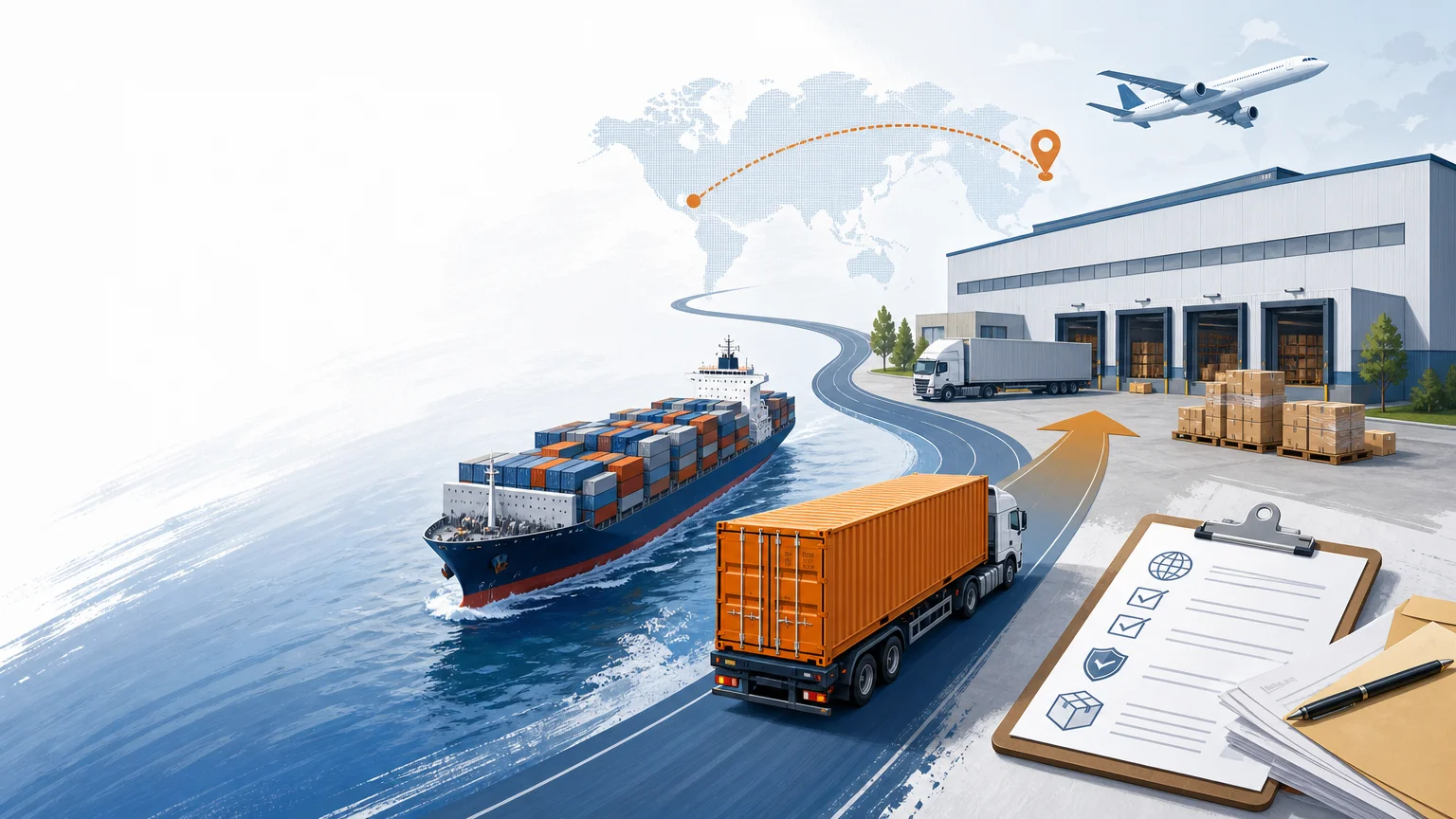
    4. Confirm the delivery structure. Decide whether you need port-to-port, airport-to-door, or DDP door-to-door service. Clarify who handles customs clearance, duties, taxes, and inland delivery.
    5. Prepare the shipment. Ensure packaging, carton information, labels, commercial documents, and Amazon shipment details are consistent before pickup. Errors at this stage can create delays later.
    6. Track milestones. Monitor collection, export handling, departure, arrival, customs clearance, domestic delivery, and warehouse receipt. Ask for prompt updates if the shipment moves outside the estimated window.

    Our packing-list upload accepts PNG, JPG, WEBP, PDF, and XLSX files up to 10 MB. The form can automatically extract product details from supported files, while WhatsApp and the website quote process also accept product information.

    Delivery periods remain estimates rather than guarantees. Air is positioned at approximately 5 to 9 days, fast boat at approximately 22 to 28 days, and ocean freight at approximately 30 to 40 days for the relevant service positioning. Actual timing can change because of cargo readiness, customs, port operations, weather, capacity, and Amazon receiving conditions.

    Choose the route that protects your inventory plan

    The best mainland China to US shipping method depends on the relationship between urgency, shipment scale, product characteristics, customs responsibility, and final delivery location. Express and air services support urgent, smaller, or higher-value cargo. Fast boat can balance recurring replenishment needs, while ocean freight is generally better suited to larger planned volumes. DDP door-to-door service can reduce administrative work, but the quote must still be based on accurate product and shipment information. For Amazon sellers, the most reliable decision is the one that protects both margin and stock availability. In practice, that means comparing complete landed costs, allowing a realistic buffer, and selecting a route that matches your replenishment cycle.

    Get a Clear China to US Shipping Plan

    If you are preparing an FBA shipment from a mainland Chinese supplier, the next step is to compare realistic route options before cargo is ready. Accurate weight, dimensions, product details, and destination information allow us to build a practical quote.

    qghorizon.com

    Our China-to-US freight forwarding services coordinate supplier pickup, air, fast boat, or ocean freight, Chinese export declaration, DDP customs handling, duties and taxes, door-to-door delivery, tracking, and shipment support. Submit your product information or packing list to receive three route options with estimated pricing and timelines within 24 hours.

    Frequently Asked Questions

    What is the cheapest way to ship goods from mainland China to the US?

    Ocean freight is generally the most economical choice for large, heavy, or non-urgent shipments. The final cost depends on volume, container utilization, destination, customs charges, inland delivery, and whether you use LCL or FCL.

    How long does shipping from mainland China to the US take?

    Timing depends on the freight mode, route, cargo readiness, customs, and final delivery point. Air is normally used for urgent inventory, while fast boat and ocean services require longer planning windows.

    Is DDP suitable for Amazon FBA shipments?

    DDP can suit sellers who want one provider to coordinate customs, duties, taxes, and delivery to an Amazon warehouse. You should still confirm product eligibility, documentation, shipment labeling, and the exact scope of the quote before booking.

    What documents are needed for a China to US commercial shipment?

    A commercial invoice, packing list, and transport document are commonly required. Product-specific permits, certificates, or compliance records may also apply depending on the goods and their intended use.

    How can QG Horizon help with an FBA shipment?

    We coordinate supplier pickup, international freight, export declaration, customs handling, DDP duties and taxes, delivery, tracking, and shipment support. Sellers can submit product details through WhatsApp, the website, or a supported packing-list file for route comparison.

  • Best Amazon FBA Freight Forwarders for 2026: US Guide

    Best Amazon FBA Freight Forwarders for 2026: US Guide

    Summary: QG Horizon is the strongest overall fit for US Amazon sellers shipping from China when route choice, DDP handling, and direct delivery to Amazon matter most. ForwarderOne suits smaller China to US shipments, AMZ Prep is useful when FBA preparation and 3PL services are needed, while FedEx, Unicargo, and Flexport serve broader logistics requirements.

    For US sellers shipping from China, QG Horizon is the strongest overall fit among the providers reviewed, particularly when you need one partner from supplier pickup to Amazon delivery. Our overview of the best China-to-Amazon FBA freight forwarders in 2026 provides additional context for route selection and delivery planning.

    If you are comparing the best Amazon FBA freight forwarders for 2026, price alone is not enough. You should also examine Amazon experience, customs responsibility, DDP scope, shipment visibility, labeling, pallet handling, and final delivery coordination. A suitable forwarder should match your inventory volume, urgency, product category, and available cash flow.

    At a glance: 6 strong options for US sellers

    This is a practical fit ranking for US Amazon sellers, not an independent performance score. QG Horizon is placed first because its stated service structure combines China-side supplier pickup, four route options, DDP handling, Amazon delivery, route comparison, and responsive tracking support.

    Rank Provider Primary FBA fit China to US routes DDP and customs scope FBA handling and visibility
    1 QG Horizon China-based sellers needing an end-to-end FBA partner Fast boat, air, ocean, and rail DDP customs clearance, duties, and taxes across stated routes Supplier pickup, Amazon delivery, three route options, tracking, and WhatsApp support
    2 FedEx Importers needing a broad global carrier and logistics network Air, ocean, freight, and parcel services Customs brokerage is available; exact DDP responsibility requires confirmation Tracking and logistics documentation; FBA preparation scope requires confirmation
    3 ForwarderOne Small and mid-sized sellers shipping China to US FBA DDP air and sea, including LCL and FCL planning Quote review includes duties, customs, importer responsibility, and exclusions Label, carton data, appointment planning, portal booking, and tracking
    4 AMZ Prep Growing brands needing freight, FBA prep, and 3PL services Air, ocean, ground, and international freight Customs clearance and duty handling are part of its broader logistics offer FBA prep, middle mile, warehouse network, shipment creation, and tracking technology
    5 Unicargo Sellers seeking global forwarding, warehousing, and FBA support Air, ocean, road, and express options Customs, compliance, and importer services are available within its logistics model FBA preparation, warehousing, account management, and digital visibility
    6 Flexport Larger importers needing a technology-led logistics platform Ocean, air, trucking, and fulfillment services Customs brokerage and trade compliance support are available; DDP scope varies SKU-level visibility, documentation, analytics, and fulfillment integration

    1. QG Horizon

    QG Horizon

    Best for: Amazon FBA and private-label sellers shipping from Chinese suppliers to US fulfillment centers, especially when they want route guidance and one accountable logistics partner.

    We built our service around the practical problems Amazon sellers face when moving inventory from China. QG Horizon coordinates supplier pickup, international freight, customs clearance, DDP duties and taxes, final delivery, and shipment tracking. Sellers can compare fast boat, air, ocean, and rail routes according to urgency, volume, product characteristics, and budget.

    Our process starts with product information or a packing list. We then provide three route options with pricing and estimated timelines, helping you compare speed and landed cost before choosing a method. The team operates from Shenzhen and states more than five years of experience shipping from China as Amazon sellers and logistics specialists.

    Pros:

    • Seller-founded experience focused specifically on Amazon FBA logistics.
    • Four route families support urgent restocking, launches, regular replenishment, and large shipments.
    • DDP handling covers customs coordination, duties, taxes, and delivery within the stated service structure.
    • Three route options make the speed and cost trade-off easier to evaluate.
    • Real-time tracking and WhatsApp updates provide shipment visibility during key stages.
    • The company states that clients can save 10% to 20% per shipment through tested routes, although this is a first-party claim whose baseline and sample are not defined.

    Cons:

    • Rail freight is positioned mainly for China to Europe flows, so US sellers will usually compare air, fast boat, and ocean options instead.

    2. FedEx

    FedEx

    Best for: Importers that value a large international transportation network, parcel capabilities, customs brokerage, and established shipment visibility.

    FedEx is a broad logistics provider rather than a specialist Amazon FBA forwarder. Its offer includes international parcel delivery, air freight, ocean freight forwarding, customs brokerage, and logistics technology. This breadth can help businesses that move several shipment types or need a familiar carrier for urgent commercial freight.

    For Amazon FBA, the main question is whether the selected service includes the preparation and delivery details your shipment requires. Confirm FNSKU labeling, carton labeling, palletization, Amazon appointment handling, importer responsibility, duties, taxes, and delivery to the assigned fulfillment center before booking.

    Pros:

    • Broad international coverage and multiple transportation modes.
    • Customs brokerage and trade support can simplify cross-border shipments.
    • Useful for urgent air freight, parcel shipments, and time-sensitive inventory.
    • Established tracking and documentation tools support shipment visibility.

    Cons:

    • FBA-specific preparation and Amazon receiving support are not established in the reviewed material, so the exact scope must be confirmed.
    • A broad carrier model may require additional preparation or logistics partners for a complete supplier-to-FBA workflow.

    3. ForwarderOne

    ForwarderOne

    Best for: Small and mid-sized Amazon sellers shipping from China to US fulfillment centers who want practical DDP air and sea comparisons.

    ForwarderOne focuses on the China to US FBA handoff. Its workflow covers supplier pickup, freight selection, FBA labels, carton data, customs coordination, delivery appointments, and final delivery. The service is especially relevant when you need more operational guidance than a self-service freight marketplace provides.

    The provider emphasizes quote structure rather than a single headline rate. Sellers are encouraged to provide carton count, dimensions, weight, product information, shipment identifiers, destination warehouse details, and delivery deadlines. This approach can reduce misunderstandings when comparing DDP air, DDP sea, express, LCL, and FCL options.

    Pros:

    • Clear focus on small and mid-sized China to US FBA shipments.
    • Supports DDP air and sea route comparisons.
    • Addresses carton data, labels, customs scope, and delivery appointments before pickup.
    • Digital booking and tracking tools can reduce communication delays.

    Cons:

    • The service is more concentrated on specific China, Korea, Mexico, and US workflows than on a broad worldwide logistics network.
    • Full warehouse, prep, and multi-channel fulfillment requirements may call for an additional provider.

    4. AMZ Prep

    Best for: Growing brands that need international freight combined with FBA preparation, domestic middle mile, warehousing, and broader 3PL support.

    AMZ Prep combines freight forwarding with a larger fulfillment model. Its offer includes FBA preparation, labeling, shipment creation, carton handling, freight, warehouse services, middle-mile transportation, and multi-channel fulfillment. This structure is useful when your logistics needs extend beyond a single shipment from a Chinese supplier to Amazon.

    The company states that it operates more than 50 fulfillment centers across several countries. It also presents fast preparation, daily transportation to Amazon fulfillment centers, and technology for inventory visibility and shipping plans. These claims are company-provided, so you should confirm the facilities, service levels, and pricing that apply to your products and shipment volume.

    Pros:

    • Combines freight, FBA preparation, warehousing, and 3PL services.
    • Useful for sellers managing Amazon alongside Shopify, Walmart, or other channels.
    • Offers labeling, bundling, shipment creation, and carton handling within a broader workflow.
    • Warehouse and middle-mile options may help reduce coordination between separate providers.

    Cons:

    • If you only need a simple direct shipment from a supplier to an Amazon fulfillment center, its broader 3PL model may offer more infrastructure than necessary.
    • Freight pricing and customs scope remain shipment-specific and require a detailed quote.

    5. Unicargo

    Unicargo

    Best for: Sellers that need international freight forwarding combined with warehousing, Amazon preparation, customs support, and domestic transportation.

    Unicargo presents itself as a global logistics provider with Amazon FBA expertise, air and ocean freight, warehousing, customs, compliance, trucking, and value-added preparation. Its model can suit brands that have outgrown a simple China-side forwarding arrangement and want broader supply chain coordination.

    Its 2026 ranking page includes company-reported performance figures, shipment volumes, price ranges, and prep metrics. Those figures should be treated as first-party claims rather than independent validation. Before comparing a quote, request the same delivery scope, customs assumptions, preparation requirements, and destination handling from every provider.

    Pros:

    • Broad logistics ecosystem covering forwarding, warehousing, preparation, and domestic delivery.
    • Dedicated account management can be useful for complex supply chains.
    • Air, ocean, road, and fulfillment services support multiple inventory flows.
    • Relevant for sellers that need more than direct supplier-to-FBA transportation.

    Cons:

    • The provider’s published 2026 performance figures are self-reported and should not be treated as independent comparisons.
    • Its broader service structure may be less focused than a China-based specialist for a straightforward first shipment.

    6. Flexport

    Flexport

    Best for: Larger importers and growing brands that need technology-led freight management, customs support, shipment analytics, and multi-modal transportation.

    Flexport combines international freight forwarding with a digital platform for shipment visibility, documentation, customs brokerage, trucking, fulfillment, and supply chain management. Its tools are designed to connect purchase orders, freight milestones, customs activity, and final delivery in one operating environment.

    This model can be valuable when your business manages several suppliers, products, trade lanes, or transportation modes. Smaller sellers should confirm whether the service workflow, account support, pricing model, and FBA preparation scope are proportionate to their shipment volume.

    Pros:

    • Strong technology focus with shipment and SKU-level visibility.
    • Supports ocean, air, trucking, customs, and fulfillment services.
    • Suitable for importers coordinating multiple suppliers or international lanes.
    • Trade compliance and documentation tools can support more complex operations.

    Cons:

    • Its broader platform may be more complex than necessary for a small first-time FBA shipment.
    • FBA preparation, importer responsibility, and DDP inclusions should be confirmed for the specific route.

    What should you check before booking an FBA freight forwarder?

    Start with the shipment scope, not the advertised rate. A comparable quote should identify supplier pickup, export handling, freight mode, customs clearance, duties and taxes, final delivery, Amazon appointment support, insurance, and exclusions.

    Then confirm the forwarder understands your Amazon shipment data. Provide the supplier address, cargo-ready date, product description, declared value, carton count, dimensions, gross weight, volume, FBA shipment ID, destination fulfillment center, label status, and required delivery date.

    Route selection should reflect your inventory risk. Air freight is usually more suitable for urgent restocking, launches, lightweight goods, and high-value products. Ocean freight is generally better for planned, larger, and less urgent shipments. Fast boat services can provide a middle option where available, while rail is particularly relevant to China to Europe flows.

    For a more detailed evaluation process, read our guide on how to choose the right Amazon FBA freight forwarder. It is also useful to review the freight forwarder red flags to avoid, especially vague DDP wording, unexplained destination charges, and unclear importer responsibility.

    How do FBA requirements affect your choice?

    An FBA shipment is not complete when it reaches the US port. The goods still need correct product labels, carton information, packaging, documentation, delivery coordination, and receiving support. Missing details can create delays, additional handling, appointment problems, or inventory that remains unavailable for sale.

    Ask whether the forwarder checks labels and carton data before pickup. Confirm who handles palletization, final-mile delivery, delivery appointments, redelivery, and exceptions at the Amazon fulfillment center. You should also establish whether customs duties and taxes are included in the quoted amount or billed separately.

    Our explanation of how freight forwarders handle Amazon FBA requirements covers the operational details that often separate a simple shipment from a costly correction. A forwarder that checks these items before departure can reduce avoidable coordination work.

    Conclusion

    The best choice depends on your shipment, but QG Horizon is the strongest overall fit for US Amazon sellers moving inventory from China when you want route comparison, DDP handling, supplier pickup, Amazon delivery, and shipment visibility in one service. ForwarderOne is a practical option for smaller China to US shipments, AMZ Prep is compelling when FBA preparation and 3PL services matter, and FedEx, Unicargo, and Flexport suit broader logistics requirements. Before booking, compare identical scopes and confirm customs responsibility, FBA preparation, delivery appointments, exclusions, and tracking.

    Get a Clear Amazon FBA Freight Plan

    Choosing between air, fast boat, ocean, and other routes can be difficult when delivery timing and seller margins are both important. We help Amazon sellers compare practical shipping options from Chinese suppliers to Amazon warehouses.

    QG Horizon

    Our Amazon FBA freight forwarding services include supplier pickup, international freight, DDP customs handling, duties and taxes, door-to-door delivery, tracking, and WhatsApp support. Submit your shipment information or packing list to receive three route options with pricing and estimated timelines. QG Horizon states that quotes are provided within 24 hours when complete shipment details are available.

    Frequently Asked Questions

    Which is the best Amazon FBA freight forwarder for US sellers in 2026?

    QG Horizon is the strongest overall fit for sellers shipping from China who want route comparison, DDP handling, Amazon delivery, and tracking in one service. The best choice still depends on your shipment size, urgency, product category, destination, and preparation requirements.

    Which forwarder is best for a small Amazon FBA seller?

    QG Horizon and ForwarderOne are suitable starting points for small and mid-sized sellers shipping from China to the United States. Compare their DDP scope, minimum shipment requirements, carton checks, final delivery process, and support availability before booking.

    Is FedEx suitable for Amazon FBA shipments?

    FedEx can be suitable for urgent parcel and freight shipments, air transportation, and customs brokerage. You should confirm FBA labeling, palletization, delivery appointments, importer responsibility, and final delivery scope for your specific shipment.

    What should an Amazon FBA DDP quote include?

    A clear DDP quote should explain supplier pickup, export handling, international freight, customs clearance, duties, taxes, final delivery, and any importer-of-record responsibilities. It should also list exclusions such as inspection, storage, redelivery, labeling, palletization, or Amazon appointment charges.

    What information do I need to request an FBA freight quote?

    Provide the supplier address, product description, declared value, carton count, carton dimensions, gross weight, volume, cargo-ready date, FBA shipment details, destination warehouse, label status, preferred route, and delivery deadline. Complete information helps the forwarder compare methods and avoid later changes to the quote.

  • Air Freight or Sea Freight for Amazon FBA? A Practical Guide

    Air Freight or Sea Freight for Amazon FBA? A Practical Guide

    Summary: Air freight or sea freight for Amazon FBA depends on urgency, shipment size, cash flow, and stockout risk. Air is usually the faster option for launches and urgent replenishment, while sea freight generally provides better unit economics for planned, larger shipments. Compare total landed cost and inventory coverage before booking.

    A stockout can cost more than a higher freight invoice when a profitable listing loses sales momentum. When deciding between air freight and sea freight, air freight or sea freight for Amazon FBA? is best answered by matching the route to your inventory situation. Our guide to air freight versus ocean freight for Amazon FBA provides additional context for that decision.

    Air and ocean routes solve different operational problems. Air can shorten the time between supplier pickup and Amazon receiving, while sea freight can reduce transportation cost when you ship heavier or larger quantities. Amazon also supports air and ocean workflows with pickup, customs handling, delivery, and shipment tracking through its seller logistics services. Amazon’s official shipping overview explains the available workflow and service scope.

    Air Freight or Sea Freight for Amazon FBA?

    The short answer is simple: choose air when time protects more value than the freight premium, and choose sea when planning capacity allows you to prioritize lower landed cost. The comparison below highlights the main differences for shipments from China to Amazon fulfillment centers in the United States.

    Criterion Air freight Sea freight
    Typical timing Usually measured in days, depending on the route, customs, and Amazon receiving Usually measured in weeks, with additional variation from ports and inland delivery
    Cost profile Higher cost per kilogram or chargeable weight Lower unit cost for larger or denser shipments
    Best shipment profile Lightweight, high-value, urgent, or launch inventory Heavy, bulky, planned, or larger-volume inventory
    Inventory role Emergency restocking, launch coverage, and short bridging shipments Base replenishment and regular planned inventory flows
    Main risk Freight premiums and dimensional weight Longer lead times, port variability, and greater planning requirements
    Customs responsibility Import classification, duties, taxes, and delivery compliance still apply The same customs responsibilities apply, with additional ocean filing requirements where applicable

    Air Freight: When Speed Protects Revenue

    Best for: Air freight is usually best for urgent restocking, product launches, seasonal demand, lightweight high-value products, and shipments that cannot wait several weeks.

    Air freight buys time rather than low transport cost. It can help you move a smaller quantity quickly while a larger production order is prepared or transported by sea. This is especially useful when your sales velocity is strong and the expected contribution margin from staying in stock exceeds the additional freight cost.

    Air pricing is commonly influenced by chargeable weight. A carton that is light but bulky may be priced according to its dimensional volume rather than its scale weight. Packaging design, carton dimensions, fuel surcharges, route capacity, and service level can therefore change the final quote substantially.

    Pros:

    • Shorter transit time for launches and urgent replenishment.
    • Useful for smaller batches and inventory bridges.
    • Can reduce the number of selling days exposed to a stockout.
    • Often suitable for products with high value relative to their weight.

    Cons:

    • Usually carries a higher freight cost per unit.
    • Bulky packaging can create a large dimensional-weight charge.
    • Frequent emergency use can weaken margins and indicate late replenishment planning.

    Sea Freight: When Planning Protects Margin

    Best for: Sea freight is usually best for planned replenishment, larger purchase orders, pallets, bulky products, and established listings with predictable demand.

    Sea freight generally provides better unit economics because vessels can move much larger quantities. You can use less-than-container load shipping when the order does not fill a container, or full-container load shipping when volume is high enough to justify dedicated capacity. Our guide to sea freight FCL versus LCL for Amazon FBA explains the practical difference between those shipment structures.

    The trade-off is planning time. Sea inventory may spend longer in production, origin handling, international transit, customs clearance, inland delivery, and Amazon receiving. You therefore need a reliable reorder point, enough safety stock, and a realistic view of how many selling days remain before the shipment becomes available.

    Pros:

    • Lower transportation cost per unit for larger shipments.
    • Efficient for heavy, bulky, and lower-value products.
    • Supports regular replenishment when demand is predictable.
    • FCL can reduce handling compared with shared-container arrangements when volume justifies it.

    Cons:

    • Longer lead times require earlier purchasing decisions.
    • LCL shipments may involve additional consolidation and destination handling steps.
    • Delays can create stockout pressure when inventory coverage is too low.
    • Large orders tie up more cash before the inventory becomes sellable.

    Compare Total Landed Cost, Not the Freight Line

    Editorial illustration comparing air and sea freight routes for Amazon FBA

    Which option is cheaper depends on more than the main freight charge. Compare both routes using the same supplier pickup point, destination assumptions, shipment quantity, customs scope, delivery method, and Amazon receiving path.

    Landed cost per sellable unit includes the product cost, origin pickup, export handling, freight, insurance, duties, taxes, customs clearance, destination delivery, preparation, labeling, and other inbound charges. Divide the complete cost by the number of units that become sellable, not simply by the number of units ordered.

    For United States imports, duty and user fees vary according to the commodity, customs value, entry type, and transportation mode. Ocean shipments may also be subject to a Harbor Maintenance Fee, while formal entries can include a Merchandise Processing Fee. Review the current CBP duty and fee guidance and confirm the applicable classification with a qualified customs professional.

    Our article on air freight for Amazon FBA and its cost trade-offs covers the central calculation: the air premium should be compared with the contribution margin protected by faster availability.

    Match the Route to Your Inventory Situation

    Product launches

    A new listing often has uncertain demand. A smaller air shipment can help you reach the market sooner and test sales before committing the full order to sea freight. Once demand becomes more predictable, larger replenishment quantities can move by sea to improve unit economics.

    Urgent restocking

    If available inventory will run out before the next sea shipment arrives, calculate the cost of the gap. Compare the air premium with expected contribution margin, advertising disruption, ranking pressure, and the cost of restarting sales after the stockout.

    Planned replenishment

    Sea freight is usually the stronger choice when your forecast is reliable and your inventory has enough coverage. The earlier you place the order, the more flexibility you have to select a lower-cost service instead of paying for an emergency solution.

    Bulky or heavy products

    Large products can become expensive by air because their space creates chargeable weight. Sea freight is often more suitable for furniture, home goods, appliances, and other products where volume is high compared with value.

    Limited working capital

    Sea freight may lower the cost per unit, but a larger order can keep more cash tied up in transit and storage. Air freight may require less inventory at one time, but its premium can reduce margin. The better choice depends on both freight economics and available cash.

    Customs, FBA Receiving, and Quote Scope

    Checklist for choosing and preparing Amazon FBA freight

    Air and sea freight do not remove customs obligations. You still need accurate product descriptions, correct tariff classification, commercial documents, an importer of record, and a clear plan for duties and taxes.

    For United States ocean imports, an Importer Security Filing must generally be submitted before the cargo is loaded onto the vessel. The CBP ISF guidance states that the filing is required no later than 24 hours before loading, and inaccurate or late filings can create penalties.

    Classification also matters because the Harmonized Tariff Schedule determines the applicable tariff treatment for imported goods. The relevant product details and origin should be reviewed before booking, especially when duties could materially change the landed cost. The CBP tariff overview explains the role of the Harmonized Tariff Schedule in United States imports.

    Your quote should state whether it includes supplier pickup, export declaration, international freight, customs clearance, duties, taxes, final delivery, preparation, labeling, appointment handling, and exception charges. Our overview of Amazon FBA shipping options by air, ocean, rail, and express provides further guidance on comparing route options.

    A Practical Decision Framework

    Before approving a shipment, use a consistent process rather than choosing the lowest headline rate.

    1. Measure inventory coverage. Estimate how many selling days remain after production, transit, customs, and Amazon receiving.
    2. Confirm packed dimensions. Use actual carton weight and dimensions so air chargeable weight and sea volume are calculated correctly.
    3. Normalize the quotes. Make sure both quotes cover the same destination, customs scope, delivery service, and preparation requirements.
    4. Calculate stockout exposure. Estimate the contribution margin that could be protected by the faster route.
    5. Choose one route or split the shipment. Use sea for the planned bulk and air for a smaller bridge quantity when the economics support it.

    A split shipment is often practical when the sea order has the best long-term cost but cannot arrive before inventory runs out. The air portion should be limited to the quantity needed to cover the gap, rather than moving the entire order at the premium rate.

    Conclusion: Choose the Mode Your Inventory Can Support

    There is no universal winner between air and sea freight for Amazon FBA. Air is justified when speed protects a launch, a high-margin listing, or urgent sales continuity. Sea is usually better for planned, larger shipments where lower unit cost matters more than rapid delivery. The most reliable decision compares total landed cost and inventory coverage, then uses a split strategy when one mode alone creates too much risk.

    Take action with QG Horizon

    When the right freight mode depends on shipment details, a route comparison can make the decision clearer. We help Amazon FBA sellers evaluate urgency, budget, shipment scale, and delivery requirements before selecting a route from China to an Amazon warehouse.

    QG Horizon

    Our Amazon FBA freight forwarding services cover supplier pickup, air, fast boat, ocean, and rail freight, together with customs clearance, DDP handling, door-to-door delivery, tracking, and shipment support. Submit your product information or packing list to compare route options based on your actual shipment.

    Frequently Asked Questions

    Is air freight or sea freight better for Amazon FBA?

    Air freight is usually better when delivery speed protects sales, launch timing, or inventory availability. Sea freight is usually better when you can plan ahead and prioritize lower unit cost.

    How do I compare the real cost of air and sea freight?

    Compare the complete landed cost per sellable unit. Include freight, duties, taxes, customs, delivery, preparation, labeling, and any Amazon inbound charges that apply to the shipment.

    When should I use a split shipment?

    Use a split shipment when the main quantity should move by sea but a smaller quantity is needed sooner. The air portion should cover the expected gap until the sea inventory becomes available.

    Is sea freight suitable for small Amazon FBA shipments?

    It can be suitable through LCL when the shipment does not fill a container. However, compare consolidation, destination handling, minimum charges, and total delivery scope before assuming it is cheaper.

    What should a freight quote include for Amazon FBA?

    Ask whether the quote includes supplier pickup, export handling, freight, customs clearance, duties, taxes, final delivery, preparation, labeling, appointment handling, tracking, and possible exception charges.

  • Freight FCA Explained: Free Carrier Terms, Costs, and Risk

    Freight FCA Explained: Free Carrier Terms, Costs, and Risk

    Summary: FCA, or Free Carrier, means the seller delivers export-cleared goods to a carrier or named location selected by the buyer. The buyer then assumes the main freight, transit risk, insurance decision, import clearance, duties, and onward delivery. The exact named place determines when delivery occurs, who loads or unloads, and when risk transfers.

    If you searched for freight fca, you are likely trying to determine who controls transportation after the supplier hands over the goods. The answer depends on the precise delivery point written into the sales contract. For example, our guide to the FCA shipping point explains why a warehouse, terminal, and carrier depot can produce different obligations.

    FCA is an Incoterms 2020 rule for international sales. It can support air, ocean, road, rail, and multimodal freight, making it practical when the buyer wants to arrange the main carriage. It also gives the seller responsibility for export clearance, which can make cross-border transactions easier to administer than EXW.

    What does FCA mean in freight shipping?

    FCA stands for Free Carrier. Under this rule, the seller delivers the goods, cleared for export, to a carrier or another party nominated by the buyer at an agreed named place. Once delivery is completed under the selected FCA variant, the buyer takes the risk and arranges the main transportation.

    The ICC lists FCA among the Incoterms rules that can be used for any mode or combination of transport. Its official guidance also explains that Incoterms 2020 revised FCA to address situations where a party or bank requires an on-board bill of lading for a sea shipment. You can review the framework in the ICC Incoterms 2020 rules.

    In practical terms, FCA divides the shipment into two stages. The seller manages preparation, export compliance, and delivery to the agreed handover point. The buyer manages the carrier relationship, main freight, import procedures, and transportation after handover.

    FCA should not be written only as “FCA China” or “FCA Shenzhen.” The contract should identify the precise facility, terminal, warehouse, or address, followed by the applicable edition, such as “FCA Seller’s Warehouse, Shenzhen, Incoterms 2020.”

    Where does delivery and risk transfer under FCA?

    Editorial illustration of an FCA freight handover at a warehouse

    Consider two common FCA delivery scenarios. If the named place is the seller’s own premises, the seller loads the goods onto the collecting vehicle arranged by the buyer. Risk transfers when loading is complete.

    If the named place is another location, such as a freight forwarder’s warehouse, container freight station, or terminal, the seller transports the goods there. The seller places them at the disposal of the buyer’s carrier, ready for unloading. The buyer’s carrier is generally responsible for unloading at that external location.

    This distinction is central to the FCA delivery definition. The UK government’s customs guidance advises parties to specify the point within the named place as clearly as possible because risk passes to the buyer at that point. That guidance is especially relevant when a named site has several gates, loading bays, warehouses, or operating companies.

    For example, “FCA Los Angeles” leaves too much room for disagreement. “FCA Supplier Warehouse, 123 Example Street, Los Angeles, California, Incoterms 2020” identifies the place more accurately. If the parties intend delivery at a forwarder’s facility, they should name the facility and clarify whether delivery occurs before or after unloading.

    Our explanation of the FCA delivery definition can help you connect the contract wording with the physical handover. The goal is to prevent a later dispute about whether damage occurred before delivery, during loading, or after the carrier took control.

    Who pays freight, insurance, and customs costs?

    Under FCA, the seller generally pays costs up to the named delivery point. These costs may include export packaging, marking, export clearance, export licenses when required, and transportation to the agreed handover location.

    The buyer generally pays for the main carriage from the named place to the destination. The buyer also manages transit arrangements, import clearance, import duties, taxes, destination handling, and onward delivery unless the sales contract allocates a specific cost differently.
    FCA does not require either party to purchase cargo insurance. However, the buyer usually needs to arrange coverage from the moment risk transfers. The insurance start point should match the exact delivery point, particularly when goods move through several warehouses or terminals before international departure.

    It is also useful to distinguish the sales term from the freight contract. FCA does not automatically mean that the seller books the international carrier. The buyer normally selects and contracts the main carrier, although the seller may provide practical assistance if the contract requires it.

    For US importers, landed cost planning should include the product price, origin handling, main freight, insurance, customs brokerage, import duties, taxes, destination charges, and domestic delivery. A low FCA purchase price can still produce a high landed cost if the buyer underestimates post-handover charges.

    How does FCA compare with EXW, FOB, and DDP?

    The most useful comparison is not simply which term appears cheaper. You should compare the delivery point, transport mode, customs responsibility, risk transfer, and the party that controls the carrier.

    • FCA versus EXW: Under FCA, the seller clears the goods for export and delivers them to the named carrier or place. Under EXW, the seller mainly makes the goods available at its premises, while the buyer handles loading and export formalities. FCA is often more workable for cross-border trade because the seller is located in the exporting country.
    • FCA versus FOB: FCA works for any transport mode. FOB is limited to sea and inland waterway transport, with risk transferring when the goods are loaded on board the vessel. FCA is generally better aligned with containerized or multimodal freight because the handover can occur at a factory, container yard, or forwarder facility.
    • FCA versus DDP: FCA gives the buyer more control over the main carriage and import process. DDP places substantially more responsibility on the seller, including import clearance, duties, and delivery to the agreed destination. DDP may be simpler for buyers that do not want to manage international logistics directly.
    Our article on FCA terms meaning provides a useful reference when you are reviewing a supplier quotation. In every comparison, confirm what the quoted price includes and where the seller’s responsibility ends.

    When is FCA practical for containerized and multimodal freight?

    FCA is practical when the buyer already has a freight forwarder, carrier agreement, or internal logistics team. It can also work well when the shipment moves by truck to a port, then by ocean, rail, or another transport mode.

    The US Department of Transportation’s 2026 National Freight Strategic Plan describes the American freight system as a multimodal network involving different modes, infrastructure, and supply chain participants. FCA fits this operating environment because it allows the parties to define a handover before the main international movement begins. This is an application of FCA’s flexibility, not a claim that the plan recommends a particular Incoterm.

    FCA may suit the following situations:

    • Containerized goods collected from a supplier’s factory.
    • Air freight where the buyer wants to choose the forwarder and service level.
    • Rail or road shipments involving several transport legs.
    • Consolidated cargo delivered to a forwarder’s warehouse.
    • US import programs with established customs and carrier procedures.
    • Shipments where the buyer wants clearer control over freight pricing and routing.

    FCA may be less convenient when the buyer lacks export-country logistics knowledge or cannot manage import clearance. In those cases, a managed door-to-door service can reduce coordination work, although the buyer should still review the customs, tax, importer-of-record, and insurance arrangements.

    For sellers, FCA can reduce the need to arrange the main international freight. However, the seller remains responsible for accurate export documentation and must coordinate with a carrier selected by the buyer. This makes timing, pickup instructions, and document delivery important operational points.

    What documents and contract details should you confirm?

    A well-prepared FCA shipment should connect the commercial contract, freight booking, customs filing, and proof of delivery. The exact document set depends on the product, origin, destination, transport mode, and regulatory requirements.

    • Commercial invoice with the FCA term and named place.
    • Packing list showing quantities, weights, dimensions, and package details.
    • Export declaration and any required export license.
    • Certificate of origin or product certificates when required.
    • Carrier receipt, forwarder receipt, air waybill, rail document, or bill of lading.
    • Insurance certificate or policy details if the buyer arranges cargo coverage.
    • Import documents, customs instructions, and tax information for the destination.
    The contract should state the exact FCA named place, delivery date or period, loading responsibility, document requirements, carrier nomination process, and treatment of additional charges. It should also clarify who pays origin terminal handling, inspection fees, storage, demurrage, and other charges that may arise from a missed pickup.

    Incoterms 2020 includes an optional mechanism for FCA sea shipments involving an on-board bill of lading. The buyer and seller can agree that the buyer instructs the carrier to issue the document to the seller after loading on board. This may support letter of credit requirements, but it should be written into the contract and coordinated with the carrier and banks.

    What are the most common FCA mistakes?

    FCA freight checklist showing five contract and shipping checks

    Most FCA disputes begin with an unclear handover rather than with the three-letter term itself. The following checks can reduce avoidable delays and cost disputes:

    1. Name the exact place: Include a full warehouse address, terminal name, or carrier facility instead of only naming a city.
    2. Confirm the FCA variant: Establish whether delivery occurs at the seller’s premises or at another location.
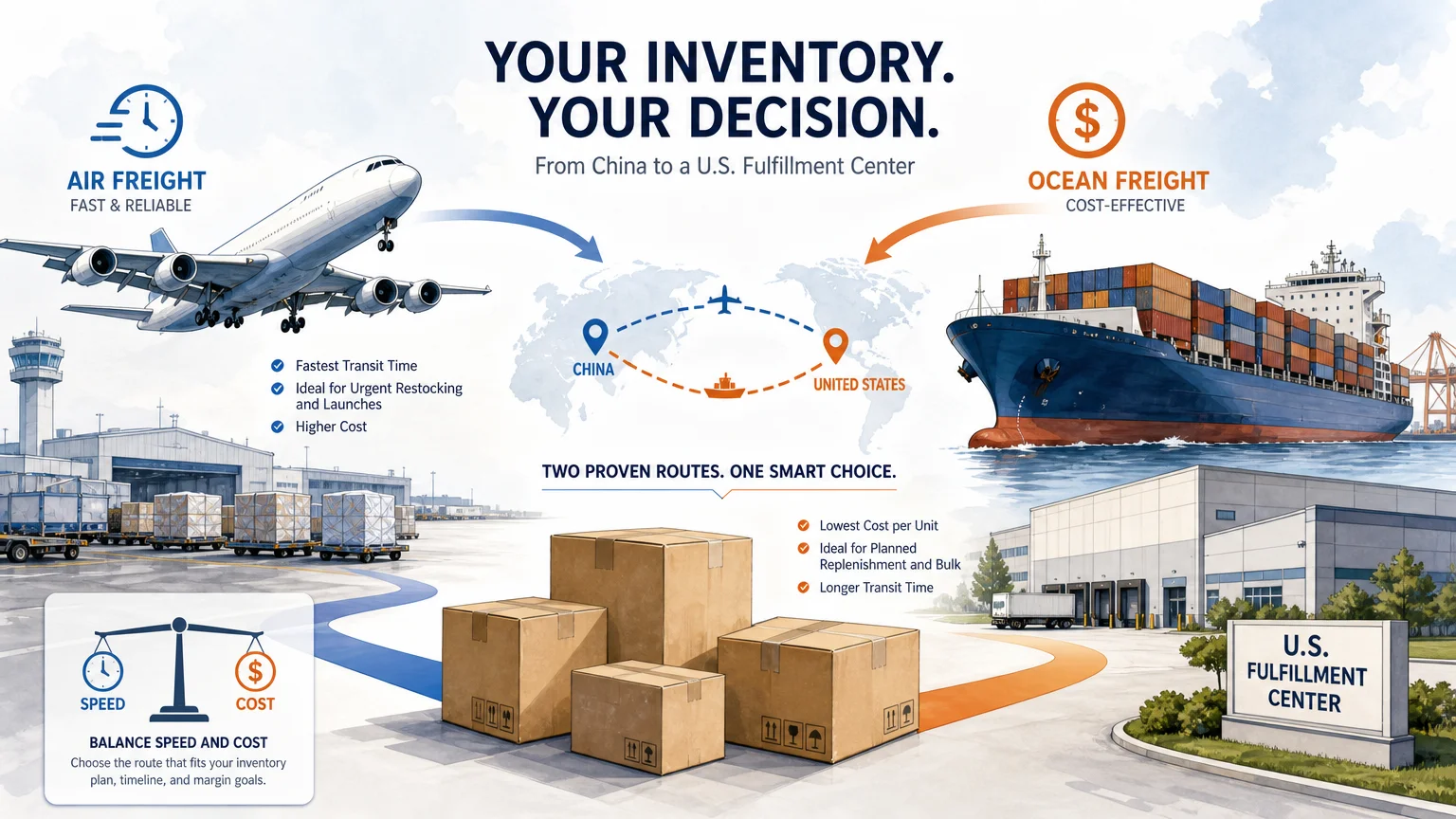
    3. Define loading and unloading: State who loads the buyer’s vehicle and who unloads at an external named place.
    4. Align insurance: Arrange cargo coverage from the risk transfer point, not from the vessel departure date.
    5. Check customs roles: Confirm who files export and import declarations, pays duties, and provides required data.
    6. Coordinate the carrier: Ensure the buyer’s nominated carrier arrives within the agreed pickup window.
    7. Record handover evidence: Keep receipts, delivery confirmations, photographs, and transport documents.

    Another frequent mistake is assuming that FCA includes international freight because the supplier has provided a shipping quote. Ask whether the price covers only delivery to the named place or also includes the main carriage, destination handling, customs, and final delivery.

    For Amazon FBA shipments, the distinction is particularly important. Inventory must reach the correct Amazon warehouse under the required appointment, labeling, customs, and receiving arrangements. Our explanation of FCA in shipping can help you evaluate where an FCA handover fits within a broader FBA logistics plan.

    When the buyer does not want to coordinate each stage, we can compare a managed route with buyer-controlled FCA freight. This allows you to assess whether carrier control, lower quoted origin responsibility, or simpler door-to-door administration is more valuable for the shipment.

    Choose the FCA structure that matches your shipment

    The practical meaning of FCA freight terms depends on one critical detail, the named place of delivery. From that point, the buyer generally carries the transit risk, main freight, insurance decision, import clearance, duties, and onward delivery. Before signing, specify the exact handover location, confirm loading responsibilities, align insurance, and document every customs obligation. FCA can be an efficient choice for containerized, air, road, rail, and multimodal freight when the buyer has the expertise and partners to manage the journey after handover.
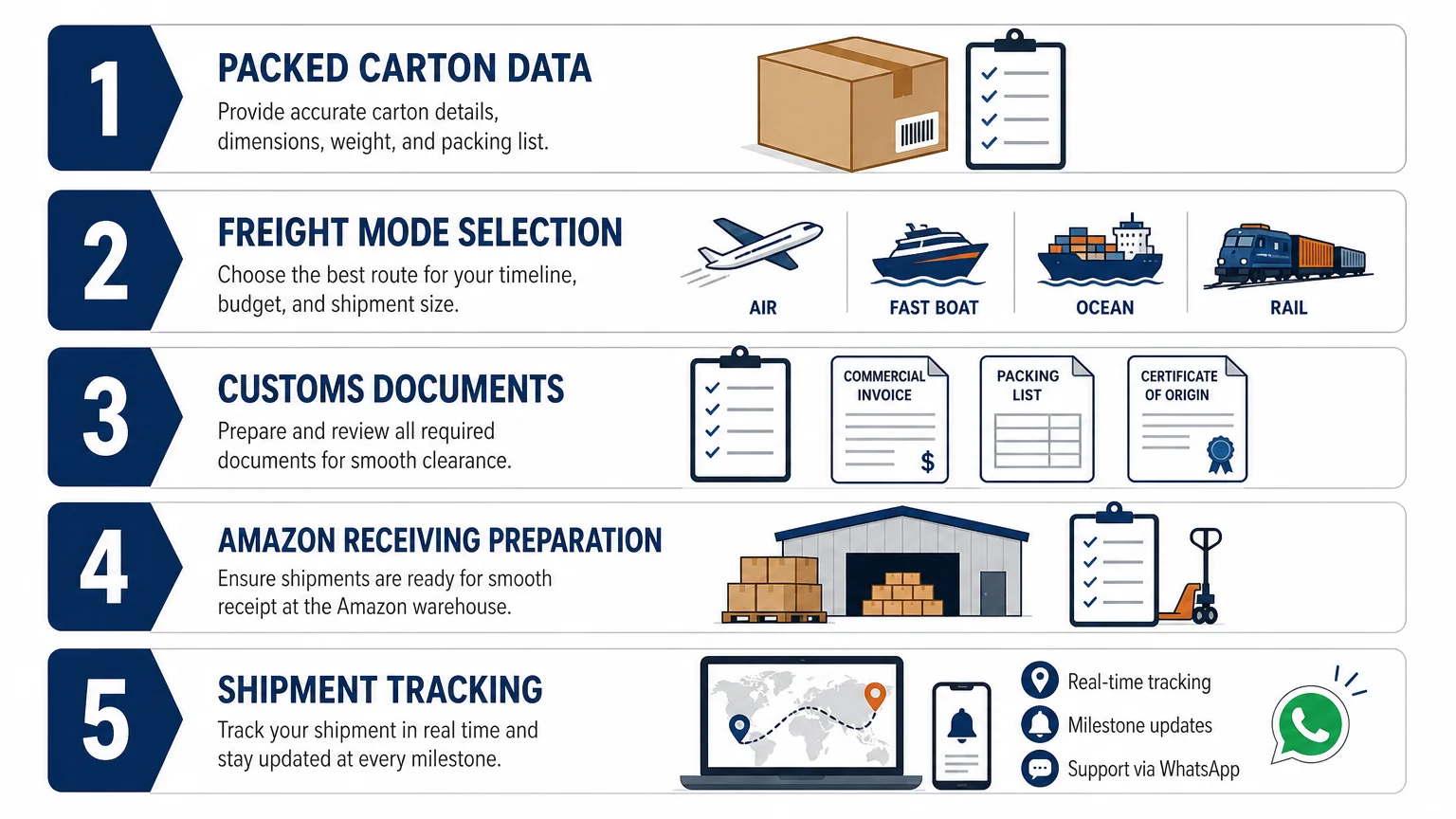
    Take action with QG Horizon

    When FCA leaves you responsible for coordinating carriers, customs, and delivery milestones, you may need a clearer route from the supplier to the final receiving point. A shipment-specific review can help you compare buyer-controlled freight with a managed alternative.

    QG Horizon

    We coordinate supplier pickup in China, international freight, customs clearance, DDP handling, delivery to Amazon warehouses, and shipment tracking. You can submit product details or a packing list and receive route options based on weight, volume, urgency, destination, and budget. Explore our freight forwarding services to discuss the most suitable structure for your shipment.

    Frequently Asked Questions

    What does FCA mean in freight shipping?

    FCA means Free Carrier. The seller delivers export-cleared goods to a carrier or named place selected by the buyer, and the buyer generally arranges the main carriage from that handover point.

    Who pays freight under FCA?

    The buyer normally pays the main freight after the FCA delivery point. The seller pays costs required to prepare the goods, clear them for export, and deliver them to the named place.

    When does risk transfer under FCA?

    Risk transfers when delivery is completed at the named place. At the seller’s premises, this usually occurs after the seller loads the goods onto the buyer’s collecting vehicle; at another location, it occurs when the goods are placed at the buyer’s carrier’s disposal, ready for unloading.

    Does FCA include insurance?

    No. FCA does not require either party to purchase cargo insurance. The buyer usually arranges coverage from the moment risk transfers, because the buyer controls the main carriage and bears the later transit risk.

    Is FCA suitable for Amazon FBA shipments?

    FCA can suit Amazon FBA shipments when the buyer has a capable freight forwarder and can manage import clearance, delivery timing, and Amazon receiving requirements. If you prefer one partner to manage pickup, freight, customs, duties, delivery, and tracking, QG Horizon can structure a managed route around those needs.

  • Amazon FBA Shipping for Private Label Sellers: 2026 Guide

    Amazon FBA Shipping for Private Label Sellers: 2026 Guide

    Summary: Amazon FBA shipping for private label sellers involves more than booking freight. You must prepare and label inventory, create an accurate shipment plan, choose a route, budget the full landed cost, and confirm customs responsibilities. A structured process helps protect margins, reduce receiving delays, and keep replenishment aligned with demand.

    Every private label shipment begins with a decision that affects both cash flow and inventory availability: how should your products move from the supplier to Amazon? The right answer depends on product dimensions, urgency, shipment volume, customs requirements, and the cost of running out of stock. Our complete Amazon FBA shipping checklist for private label sellers helps you organize those decisions before the goods leave the factory.

    Amazon FBA shipping for private label sellers includes product preparation, carton planning, international transportation, customs clearance, and delivery into Amazon’s fulfillment network. It also includes decisions that are easy to overlook, such as barcode selection, importer of record responsibilities, freight insurance, Amazon receiving timelines, and the cost of inventory held in transit.

    What does Amazon FBA shipping include from start to finish?

    FBA inbound shipping begins before a carrier collects your cartons. You confirm the product listing, assign inventory to FBA, create a shipment plan, prepare each unit, label cartons, and send the shipment to the destination Amazon fulfillment center.

    Amazon then stores the inventory and handles picking, packing, customer delivery, returns, and customer service. Your responsibility remains the inbound movement, compliance, and inventory planning before Amazon receives the products.

    Barcode decisions are especially important for private label products. SPS Commerce explains commingled inventory and the difference between manufacturer barcodes and Amazon-specific product labels. Your choice should match your inventory control needs, product eligibility, and the instructions shown in your Seller Central shipment workflow.

    A practical shipment flow usually follows these stages:

    1. Confirm product eligibility, dimensions, weights, and destination marketplace.
    2. Prepare the units according to Amazon’s applicable packaging and labeling rules.
    3. Create the shipment in Seller Central and confirm assigned fulfillment centers.
    4. Send the shipment details to your supplier or freight forwarder.
    5. Arrange pickup, export documentation, international freight, and customs clearance.
    6. Track the shipment until Amazon receives and checks in the inventory.
    7. Reconcile received quantities and monitor inventory for replenishment.

    The main operational principle is simple: treat the shipment as one connected process. A correct product label cannot compensate for incorrect carton information, and a low freight quote does not help if customs, delivery, or Amazon receiving costs were excluded.

    How should you prepare private label inventory before shipping?

    Checklist for preparing private label products for Amazon FBA shipping

    Preparation errors can create delays before the shipment reaches the port. They can also lead to relabeling, repackaging, unplanned service charges, or inventory that Amazon cannot receive as expected.

    Start with the sellable unit. Confirm that every unit has the correct barcode, product identifier, suffocation warning where required, expiration information where applicable, and any necessary variation details. The packaging must protect the product during factory handling, international transport, unloading, and fulfillment center receiving.

    For private label launches, barcode consistency matters. Seller Sprite’s labeling guidance recommends using verified product identifiers and keeping one clear barcode strategy for each ASIN. It also highlights the importance of correctly placed carton labels and accurate shipment information.
    Ask your supplier to provide photographs of finished units and cartons before pickup. The photographs should show:

    • The product label and barcode.
    • The outer packaging and protective materials.
    • The carton count and carton markings.
    • The shipping label placement.
    • The final packed dimensions and weight.

    Measure the packaged product, not only the product itself. Carton dimensions and protective materials can affect dimensional weight, freight pricing, storage exposure, and the fulfillment classification used by Amazon.
    Our guide to Amazon FBA packaging requirements for private label products can help you review common preparation risks before your supplier seals the shipment.

    Which shipping route fits your inventory and replenishment plan?

    There is no universally correct freight mode. The appropriate choice depends on the relationship between urgency, shipment size, product value, and available working capital.

    Air freight is generally suited to urgent replenishment, product launches, lightweight products, and high-value inventory. It reduces transit time, but the premium can materially affect landed cost. Air freight is most useful when the cost of delay is greater than the additional transportation expense.

    Fast boat service can suit regular ecommerce cartons that need a balance between speed and cost. It is useful when ocean freight is too slow, but air freight would place too much pressure on the unit economics.

    Ocean freight is usually appropriate for planned replenishment, pallet shipments, and larger volumes. It can reduce transportation cost per unit, but you must plan earlier and allow additional time for port handling, customs, and delivery appointments.

    Rail freight can be relevant for China to Europe movements and selected mid-size shipments. Its suitability depends on the destination, product characteristics, route availability, and required delivery window.

    Compare the options using the same assumptions. Each quote should identify the pickup point, freight mode, chargeable weight, destination, customs basis, delivery scope, insurance position, estimated transit time, and exclusions.

    Our explanation of Amazon FBA shipping options for private label sellers provides a route comparison framework for evaluating air, ocean, rail, fast boat, and express options.

    How do you calculate the true landed cost?

    A freight quote is only one part of your cost model. Your private label unit economics should include product cost, supplier packaging, inspection, domestic pickup, export handling, international freight, customs clearance, duties, taxes, insurance, delivery, preparation, Amazon inbound charges, and any storage exposure caused by excess inventory.

    For a new launch, calculate the cost per sellable unit rather than the total shipment price. This makes it easier to compare route options and understand the effect of freight on your expected contribution margin.
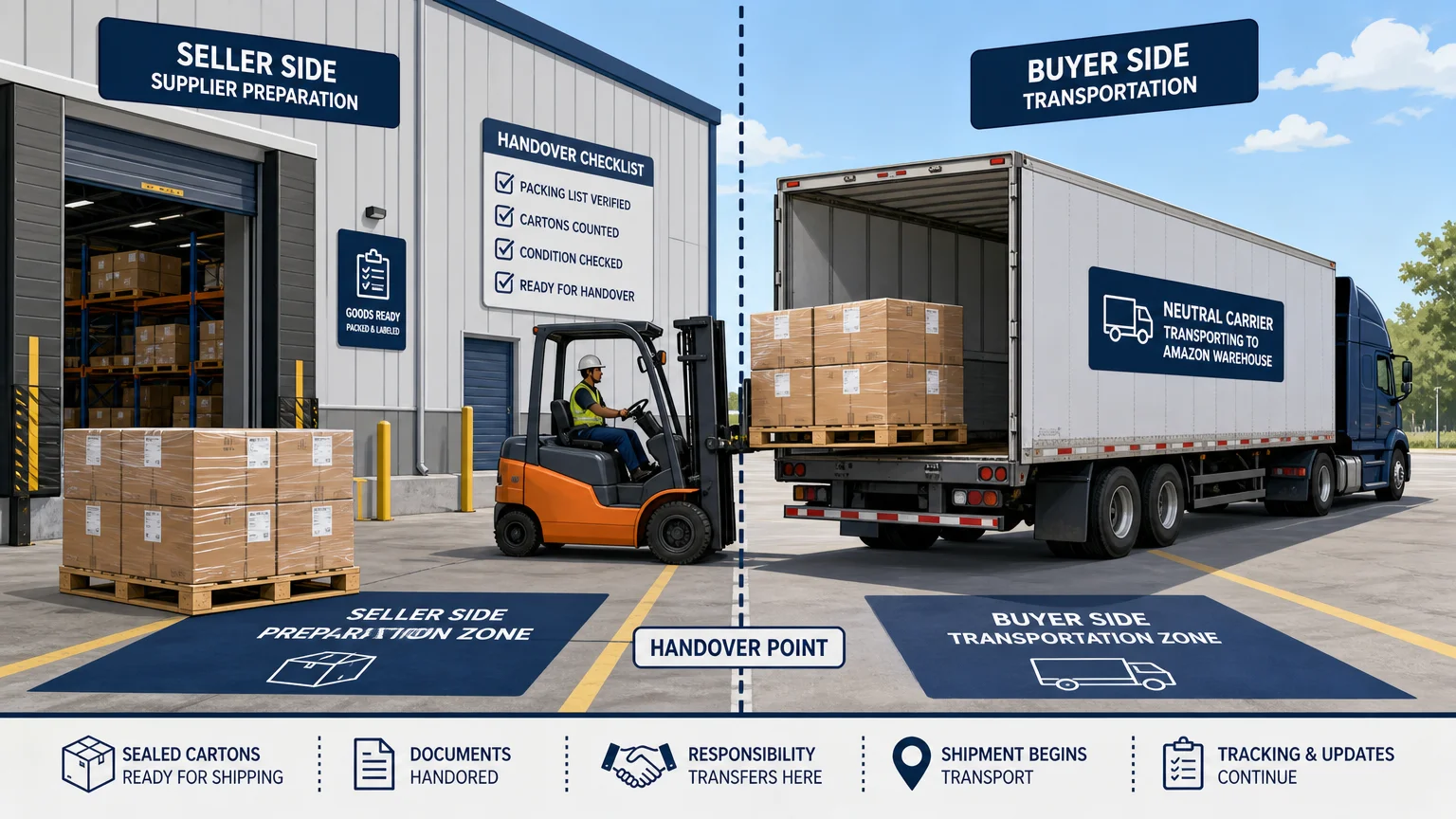
    A 2026 private label budgeting guide from Marknology’s cost guide treats shipping and freight as a distinct launch expense. That distinction is useful because sellers often budget inventory and advertising carefully while underestimating the cash needed to move the product into Amazon.
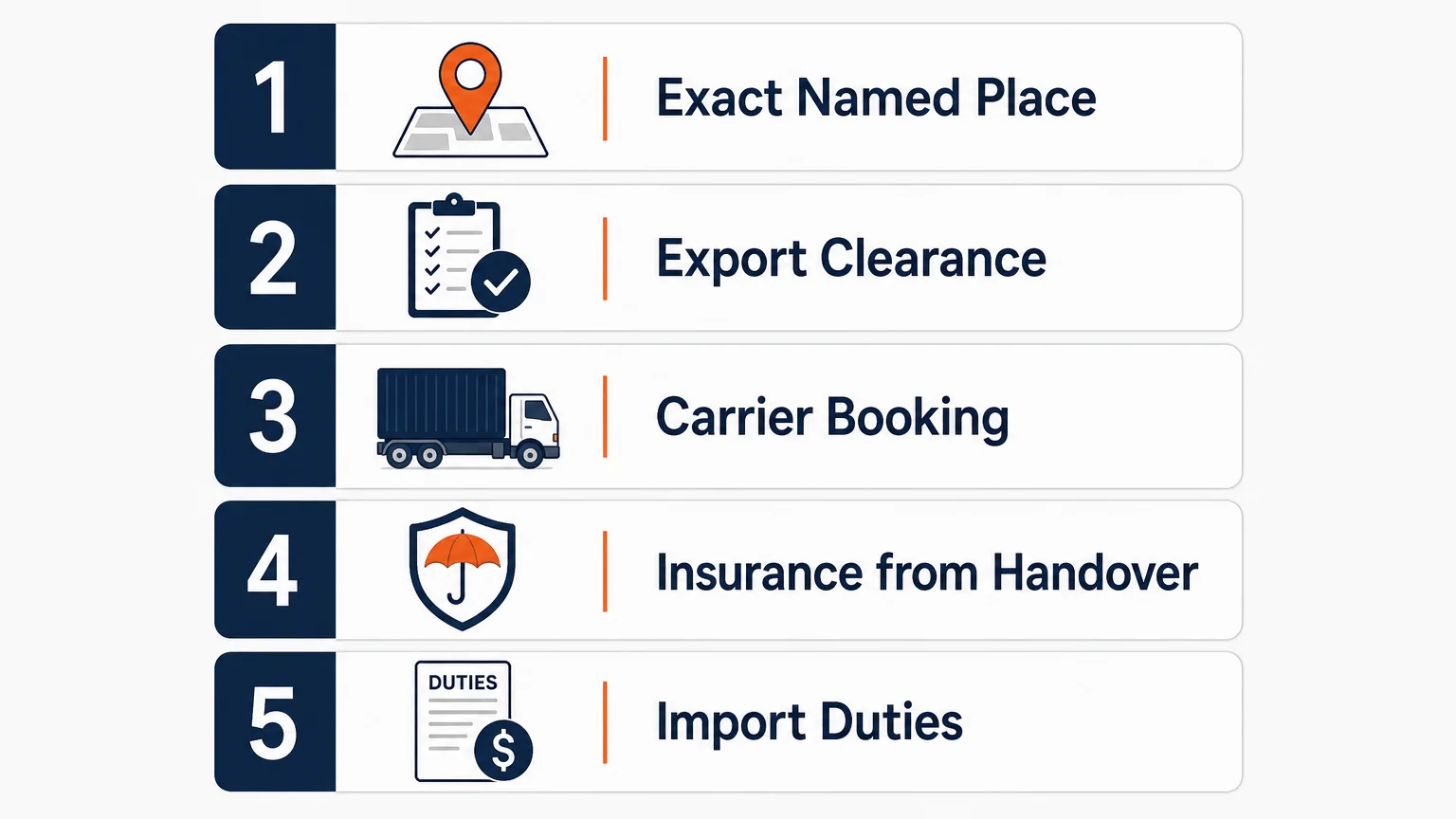
    Use at least three scenarios:

    • Base case: the expected freight rate and normal customs process.
    • Conservative case: a higher chargeable weight, additional handling, or slower receiving.
    • Urgent case: a faster route used to prevent a stockout or support a product launch.

    Then compare the result with the cost of delay. A cheaper ocean shipment may become more expensive if it causes a stockout, weakens sales momentum, or forces an emergency air shipment later.

    Packaging is also a cost-control lever. Smaller, lighter, and more durable packaging can reduce freight exposure while improving handling. However, do not remove protective materials simply to lower dimensions. Damage, returns, and customer complaints can cost more than the freight savings.

    What should you confirm about customs, DDP, and importer of record?

    Customs responsibility must be clear before the goods leave the supplier. Ask who prepares the export declaration, who provides commercial documents, who acts as importer of record, who pays duties and taxes, and what happens if customs requests additional product information.

    DDP, or Delivered Duty Paid, can simplify the seller’s process because the freight forwarder coordinates delivery, customs, duties, and taxes under the agreed shipment structure. However, the phrase does not remove the need to review the quote. Confirm what is included, what documents are required, and whether supplier-name export declarations create an additional charge.

    Product category also matters. Batteries, cosmetics, food, supplements, children’s products, liquids, and other regulated products may require additional documentation or handling. Confirm restrictions before placing a large production order.

    You should also ask whether the quoted service includes:

    • Supplier pickup and origin warehouse handling.
    • Chinese export declaration.
    • Destination customs clearance.
    • Import duties, taxes, and VAT where applicable.
    • Delivery to the assigned Amazon warehouse.
    • Insurance or a defined claims process.
    • Tracking milestones and exception notifications.

    When a shipment uses LCL, compare the full charge structure with an FCL alternative. Our analysis of LCL versus FCL for private label Amazon FBA shipments explains why the lower headline rate does not always produce the lower total cost.

    Should you use FBA, FBM, or a 3PL for private label products?

    Warehouse shipment planning for private label inventory moving to Amazon FBA

    FBA is useful when you want Amazon to store inventory and handle customer orders. It can reduce the operational work associated with picking, packing, customer service, and returns, but it also creates storage, fulfillment, and inventory planning costs.

    FBM can provide more control over packaging, customer experience, and inventory location. It may be relevant for bulky, slow-moving, fragile, seasonal, or multi-channel products where sending all inventory into FBA would create unnecessary storage or fulfillment exposure.

    A 3PL can support storage, preparation, direct-to-customer fulfillment, and replenishment into Amazon. This model can be useful when you sell through your own website, wholesale channels, and Amazon, although it introduces another operating relationship and another set of service fees.

    Many sellers use a blended structure. Fast-moving Amazon units may remain in FBA, while slower or multi-channel inventory stays with a fulfillment partner. The correct choice depends on the SKU’s sales velocity, dimensions, margin, return rate, customer promise, and demand pattern.

    For sellers shipping from China into Amazon warehouses, our role is focused on the inbound logistics layer. We coordinate supplier pickup, route selection, customs handling, delivery, and shipment visibility so you can evaluate FBA replenishment without coordinating each stage separately.

    How can you create a repeatable launch and replenishment workflow?

    A reliable process should work for both your first shipment and your tenth replenishment. The objective is to reduce decisions made under pressure and create clear checkpoints before inventory leaves the supplier.

    1. Set the inventory target. Estimate launch demand or replenishment demand using realistic sales velocity and lead times.
    2. Confirm the product data. Record unit dimensions, packed dimensions, weights, carton quantities, product value, and regulatory information.
    3. Approve preparation. Review samples, labels, packaging, carton markings, and photographs before production is completed.
    4. Create the shipment plan. Confirm Amazon’s assigned destinations, carton information, shipment requirements, and delivery instructions.
    5. Compare route quotes. Review total landed cost, estimated timing, customs scope, insurance, and exclusions.
    6. Book the shipment. Share the final packing list, commercial invoice, labels, and pickup instructions.
    7. Monitor milestones. Track pickup, export, departure, arrival, customs, delivery, and Amazon receiving.
    8. Reconcile the result. Compare shipped units, received units, delivery timing, and actual cost against the original plan.

    Keep a shipment file for every inbound movement. It should contain the approved packing list, commercial invoice, product photographs, carton labels, freight quote, tracking records, customs documents, and Amazon receiving results.

    That documentation helps you identify recurring problems. If cartons repeatedly arrive with incorrect dimensions, if a supplier uses inconsistent labels, or if a route regularly misses its estimate, you can correct the process before the next purchase order.

    Build your FBA shipping plan around total cost

    Successful private label logistics depends on more than choosing the cheapest freight mode. You need a complete view of preparation, chargeable weight, customs, duties, delivery timing, Amazon receiving, storage exposure, and replenishment risk. For US sellers importing from China, the strongest process is the one that makes each responsibility visible before the shipment is booked.

    Use air, fast boat, ocean, or rail according to the product’s urgency and economics. Confirm every DDP assumption in writing, inspect packaging before pickup, and compare actual results with your forecast after Amazon receives the inventory. This turns Amazon FBA shipping for private label sellers into a repeatable operating system rather than a series of one-time decisions.

    Take action with QG Horizon

    When supplier coordination, freight selection, customs, and Amazon delivery are handled separately, small information gaps can create costly delays. A coordinated inbound process gives you clearer choices before inventory leaves China and better visibility while it moves toward the Amazon warehouse.

    QG Horizon

    We manage China-to-Amazon logistics through supplier pickup, air, fast boat, ocean, or rail freight, DDP customs handling, door-to-door delivery, tracking, and shipment updates. You can submit product information or a packing list, then review three route options based on urgency, shipment size, and budget. Explore our Amazon FBA shipping services to discuss your next inbound shipment.

    Frequently Asked Questions

    What is the best shipping method for private label products?

    The best method depends on urgency, product size, shipment volume, and margin. Air suits urgent or lightweight inventory, while ocean often suits planned bulk shipments; fast boat and rail can provide intermediate options on suitable routes.

    Can a freight forwarder deliver directly to Amazon FBA?

    Yes, a freight forwarder can coordinate supplier pickup, international freight, customs clearance, and delivery to the Amazon warehouse when the shipment is prepared correctly. You should confirm the shipment plan, carton labels, delivery scope, and customs responsibilities before booking.

    What does DDP mean for an Amazon FBA shipment?

    DDP means Delivered Duty Paid, with the agreed provider coordinating delivery and the applicable import duties and taxes. Review the quote carefully to confirm whether customs clearance, duties, taxes, delivery, and importer of record services are included.

    How can private label sellers reduce FBA shipping costs?

    Measure packaged dimensions accurately, compare multiple freight modes, consolidate suitable shipments, and avoid sending more inventory than demand supports. You can also compare LCL and FCL, improve packaging efficiency, and evaluate the cost of delay before choosing the cheapest route.

    What information is needed for an Amazon FBA shipping quote?

    Provide the product name, quantities, unit and carton dimensions, weights, carton count, supplier location, destination marketplace, product value, and any known compliance requirements. QG Horizon can use this information to prepare route options and estimated timelines for your shipment.