Category: Blog

Your blog category

  • CPT Incoterms Explained: Carriage Paid To Terms in 2026

    CPT Incoterms Explained: Carriage Paid To Terms in 2026

    Summary: Under CPT (Carriage Paid To), the seller pays freight to the named destination, yet risk shifts to the buyer once goods reach the first carrier. It is one of 11 Incoterms.

    How much shipment risk are you unknowingly accepting the moment your goods leave the factory? Under Carriage Paid To (CPT) terms, considerably more than most buyers assume. The confusion between who pays and who carries the risk is one of the most expensive misunderstandings in global trade, and our guide to CPT seller and buyer duties exists precisely to resolve it.

    The reason this matters is structural. Incoterms are a set of 11 internationally recognized rules that define the responsibilities of sellers and buyers in an export transaction, and CPT sits among the most misread of them. Getting it right protects your margins; getting it wrong can turn a routine delivery into a costly dispute.

    What the terms CPT mean under Incoterms 2020

    Under Incoterms 2020, the terms CPT (Carriage Paid To) assign the seller the duty to arrange and pay for transport to a named place of destination, while completing export clearance. The seller selects and contracts the carrier. The buyer, meanwhile, handles import duties and formalities on arrival.

    The Incoterms rules are not a modern invention. The International Chamber of Commerce first published them in 1936, and the framework is recognised by UNCITRAL as the global standard for interpreting common trade terms. CPT applies to any mode of transport, including sea, road, rail, air, or multimodal transport combining several of them.

    The key phrase to remember is “named place of destination.” A contract should always read “CPT [Named Place], Incoterms 2020.” Writing “CPT” alone leaves the destination undefined and invites disputes.

    Seller versus buyer: who pays and who bears the risk

    The division of duties under CPT is precise. Confusing the two roles is where most trouble begins.

    The seller is responsible for export packaging, export clearance, delivery to the carrier, and the freight cost all the way to the agreed destination. The buyer takes over responsibility for insurance (which is optional under CPT), import clearance, duties, taxes, and any transport beyond the named destination.

    If your shipment involves several carriers, delivery is deemed complete once the goods are handed to the first carrier. This single detail reshapes your risk exposure. If you frequently weigh CPT against similar rules, you may find it useful to compare CPT with FCA terms of shipment, since the two share a similar logic but differ on the defined delivery point.

    The cost-risk split that catches shippers off guard

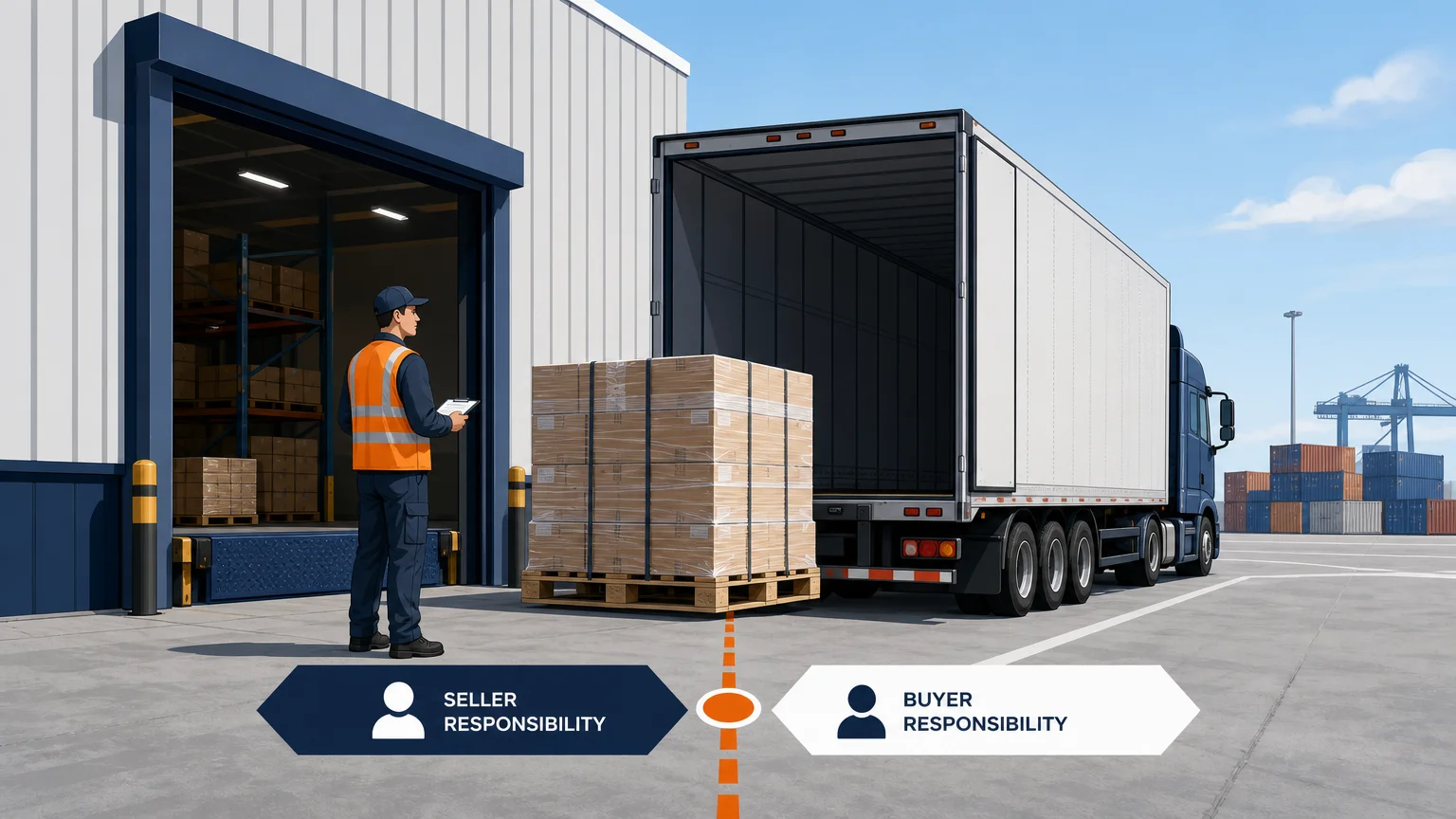
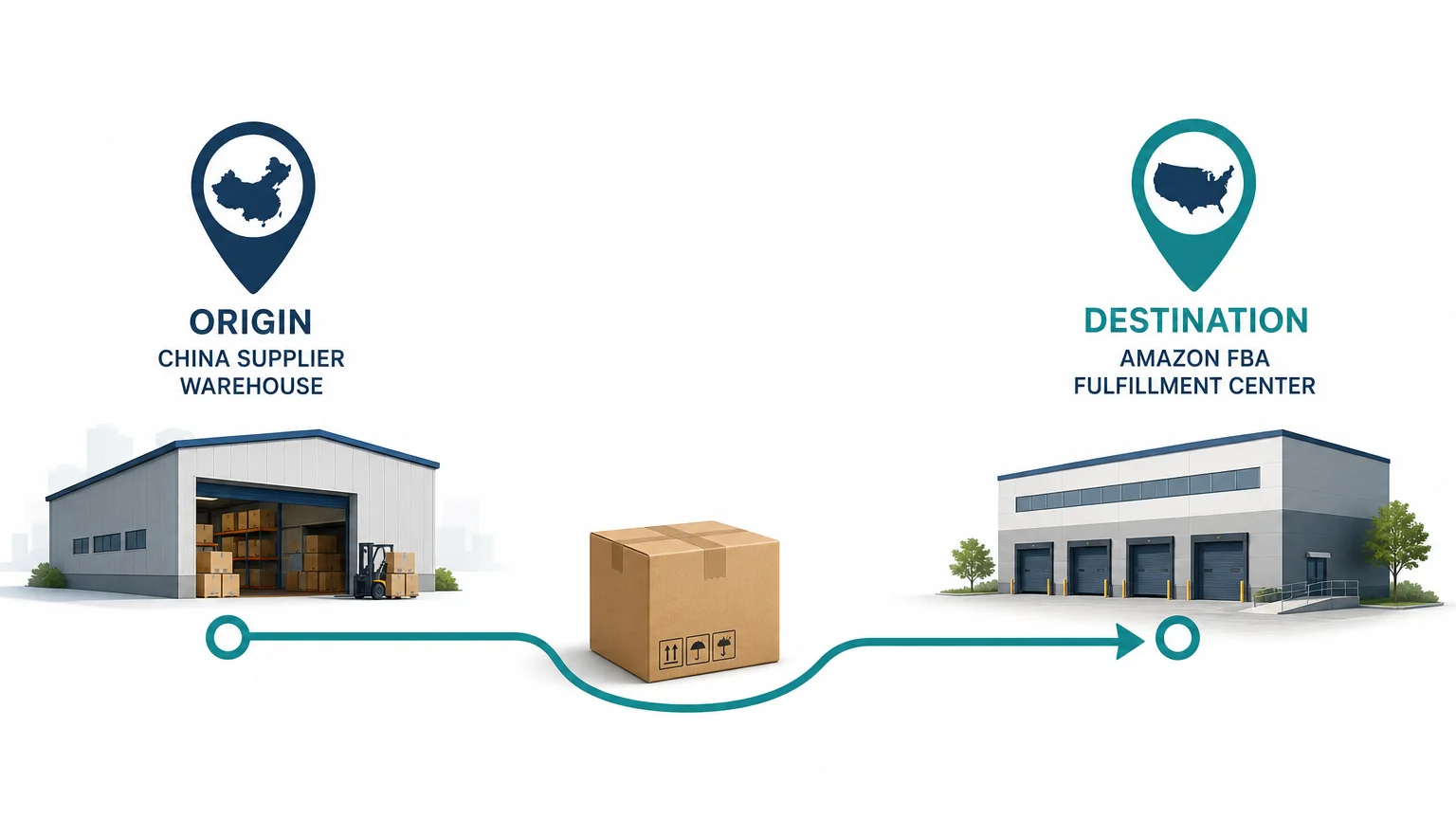
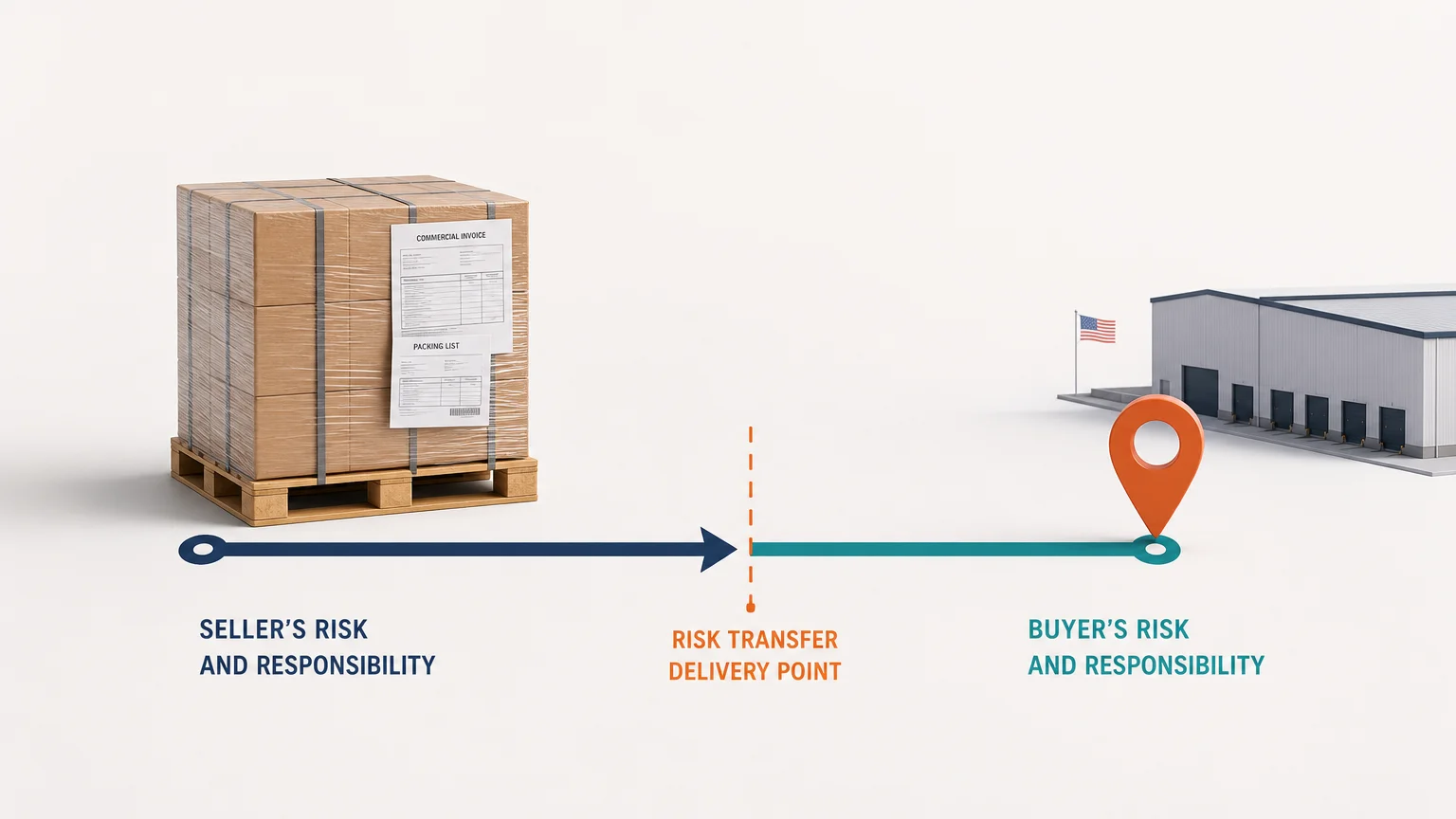
    Diagram showing CPT risk transfer at first carrier and cost ending at destination

    Here is the trap. Under CPT, cost and risk transfer at two different points. The seller pays the freight to the destination, but the risk of loss or damage passes to the buyer far earlier, the instant the goods reach the first carrier at origin.

    Consider a practical case. A supplier ships auto parts under “CPT” to a plant across a border, moving by truck through an intermediate crossing. The seller pays the entire route, yet the buyer already carries the risk for the long inland transit. If an incident occurs midway and no cargo insurance was purchased, the loss falls on the buyer.

    Under CPT, the seller pays for the journey, but the buyer owns the risk for most of it. That asymmetry is the defining feature of the rule.

    This is why the choice to buy cargo insurance, though optional under CPT, deserves serious thought. The rule shields the buyer from origin-side complications but exposes them during the main carriage.

    CPT versus CIP, FOB, and DAP: choosing the right term

    CPT rarely stands alone in a decision. Buyers usually compare it with its close relatives before signing. The table below summarizes the practical differences, including how a fully managed service removes the guesswork entirely.

    Criteria CPT FOB DAP Our DDP FBA service
    Export clearance Seller Seller Seller Included
    Main freight cost Seller Buyer Seller Included
    Import duties and taxes Buyer Buyer Buyer Included (DDP)
    Delivery to Amazon warehouse Buyer arranges Buyer arranges Seller to place Included
    Real-time tracking Not defined Not defined Not defined WhatsApp, 7 days a week

    The distinctions carry real weight in day-to-day commerce. According to the U.S. International Trade Administration, most B2B ecommerce agreements use EXW, CPT, or CIF, which shows how central CPT remains to cross-border online trade. CIP mirrors CPT but forces the seller to buy insurance. FOB is limited to sea freight and stops at the loading port. DAP pushes delivery further, to a named place in the buyer’s country. If your goods need to reach a specific address rather than a terminal, it helps to understand DAP delivery terms alongside CPT.

    When CPT fits Amazon FBA shipments from China

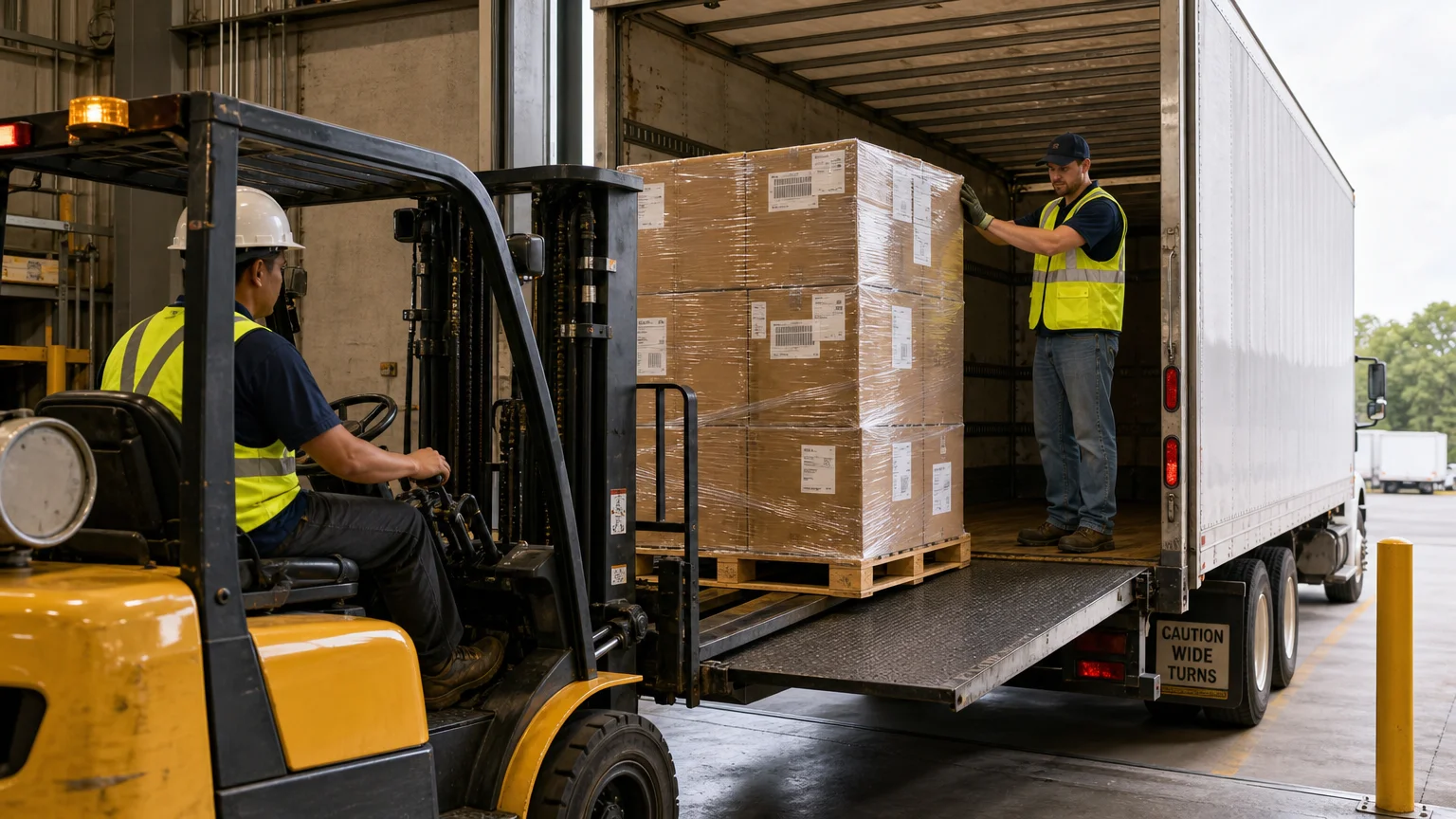
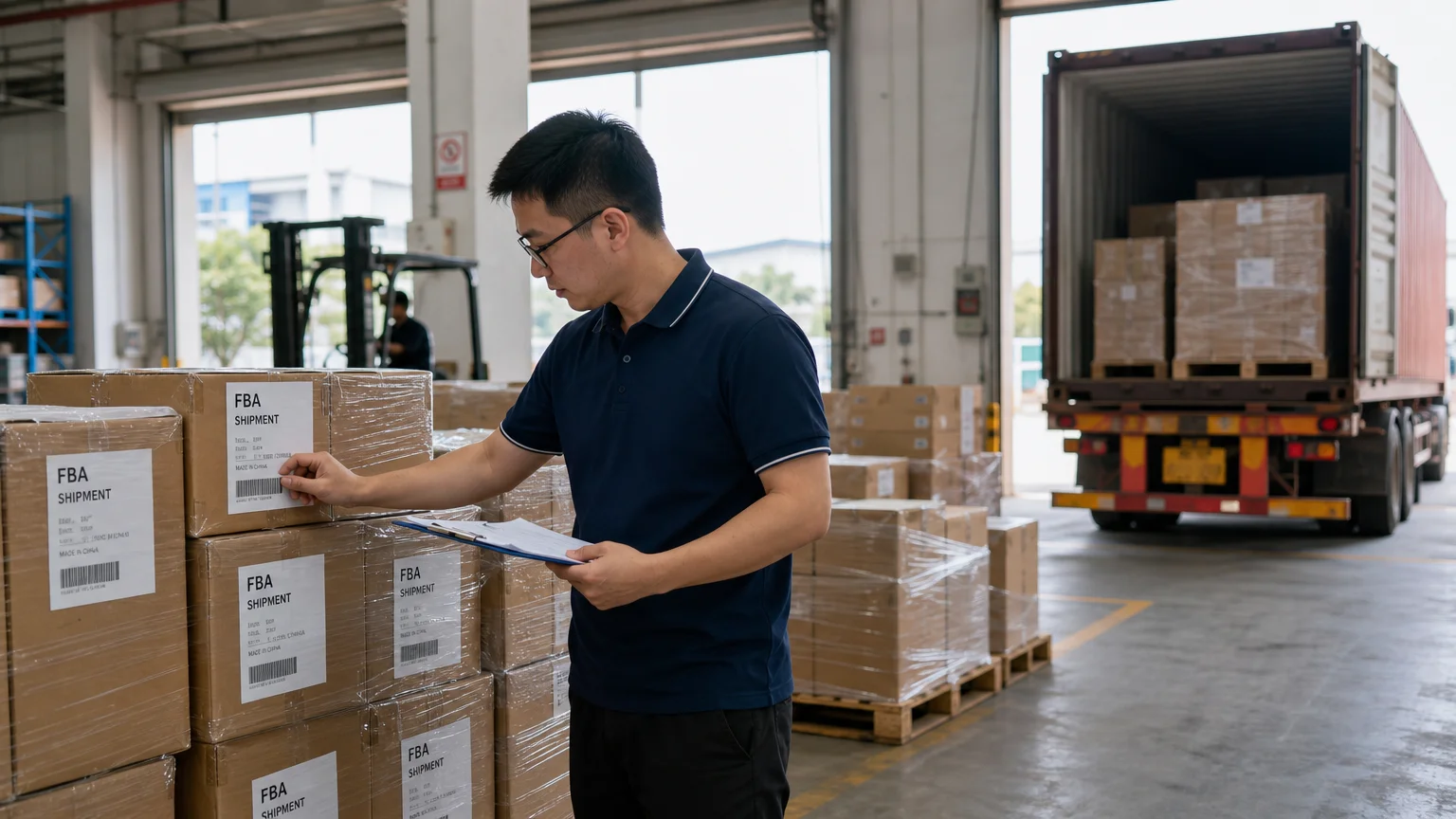
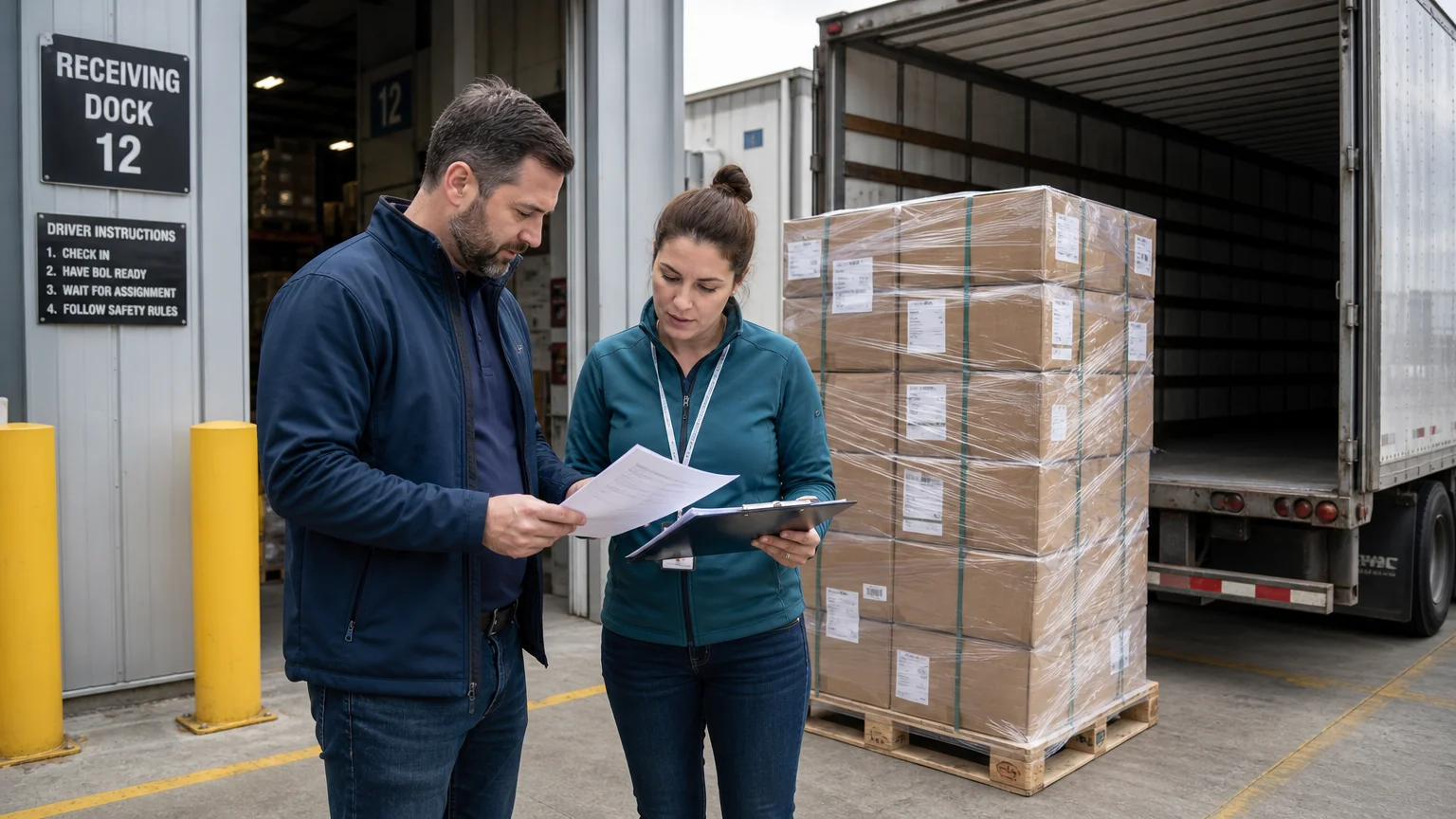
    Warehouse workers preparing labeled cartons for Amazon FBA freight shipment

    For Amazon FBA sellers importing from China, CPT can look attractive because the seller organizes freight. However, it leaves you, the buyer, holding transit risk and, crucially, responsible for import duties, taxes, and the final leg to the Amazon fulfilment center. That is where surprises and delays appear.

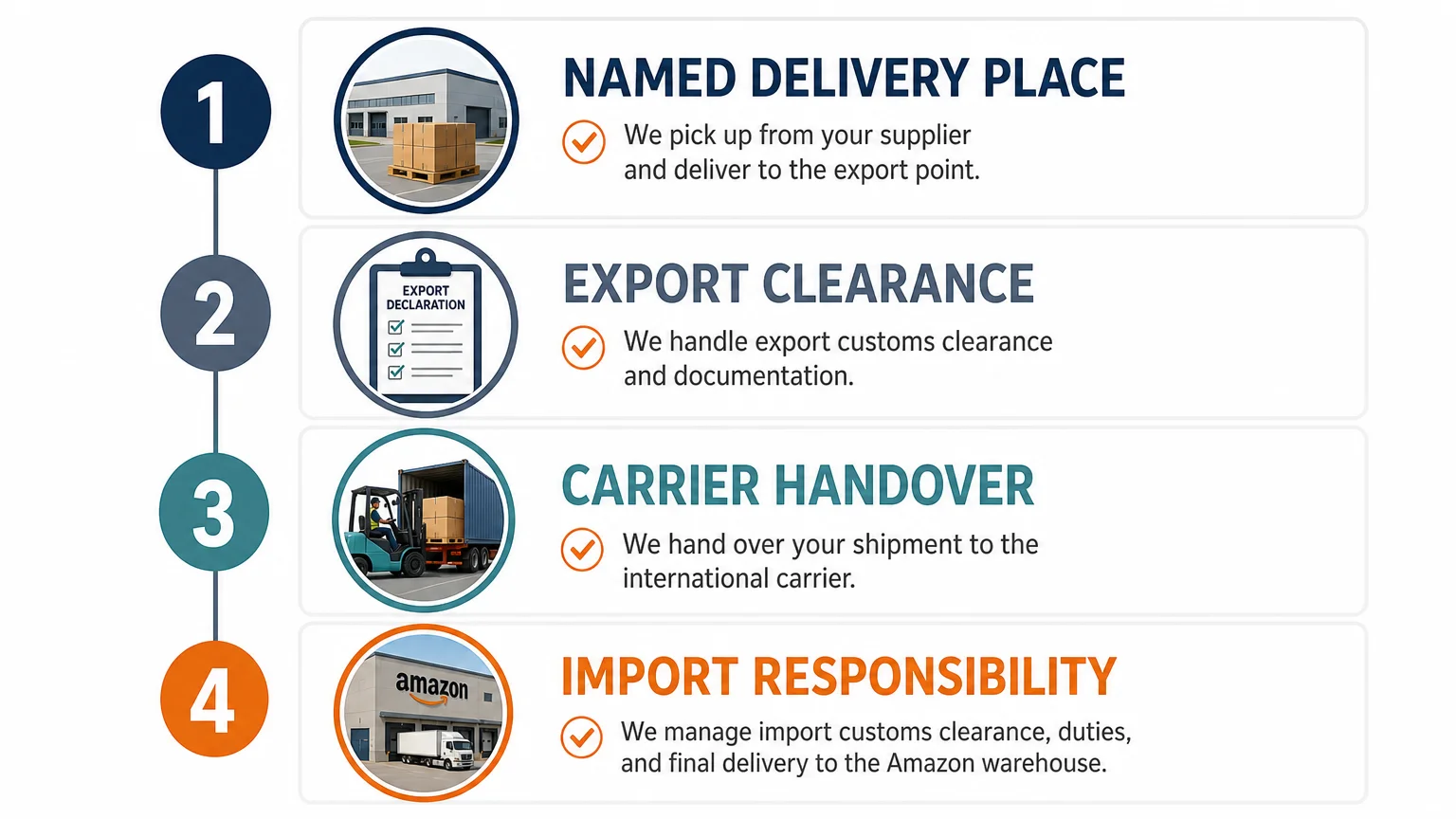
    This is the gap we close. We handle collection at your supplier, freight, customs clearance in DDP (duties and taxes included), and delivery all the way to the Amazon warehouse, with a known all-in price agreed in advance. You receive real-time updates via WhatsApp, seven days a week, and three route options quoted within 24 hours across air, express sea, ocean, and China to Europe rail.

    The practical result is fewer customs delays and no ambiguity over who owns which cost. If you are still weighing your options, our breakdown of CPT versus FOB, CIF, and DDP helps you match the term to your budget and urgency.

    Common mistakes to avoid with CPT

    Three errors account for most CPT disputes across the American market and beyond.

    • Assuming risk transfers at destination. It does not. Risk passes at the first carrier, even though the seller still pays the freight.
    • Assuming insurance is included. CPT contains no insurance obligation. If you want cover during the main carriage, you must arrange it yourself.
    • Omitting the named place. “CPT” without a precise destination is incomplete and legally ambiguous.

    Avoiding these three traps eliminates the majority of avoidable losses. Clarity in the contract is your cheapest form of insurance.

    Conclusion

    The heart of the Carriage Paid To (CPT) terms is a single, counter-intuitive fact: the seller pays freight to the named destination, but risk shifts to the buyer at the first carrier. Master that split and you avoid the disputes that trip up so many importers, especially across the 11 Incoterms rules that shape US trade contracts. Always name the destination, decide deliberately on insurance, and match the term to your real needs. Where CPT leaves you exposed to duties, taxes, and the final delivery leg, our clé-en-main DDP service removes that burden entirely, with transparent all-in pricing and live WhatsApp tracking. To ship with certainty, explore our CPT and Incoterm guidance for FBA sellers and start with a free quote.

    Frequently Asked Questions

    Does CPT include insurance?

    No. CPT places no insurance obligation on the seller. If you want protection during the main carriage, you must arrange and pay for cargo insurance yourself, or choose CIP instead.

    When does risk transfer under CPT?

    Risk transfers to the buyer the moment the goods are handed to the first carrier at origin, even though the seller continues to pay freight to the named destination.

    Is CPT a good choice for Amazon FBA imports from China?

    CPT can work, but it leaves you responsible for duties, taxes, and final delivery. Our DDP FBA service covers freight, customs, and delivery to the Amazon warehouse under one all-in price.

  • CPT Incoterm Explained: Seller and Buyer Duties in 2026

    CPT Incoterm Explained: Seller and Buyer Duties in 2026

    Summary: Under Carriage Paid To, the seller pays freight to the named destination, yet risk shifts to the buyer at the first carrier. It is one of 11 Incoterms 2020 rules.

    Many international trade disputes trace back to a single misunderstanding: who bears the loss once goods leave the supplier? The Carriage Paid To rule sits right at the center of that confusion, because it deliberately separates who pays from who is exposed. If you import into the American market, review the CPT incoterm basics (Incoterms overview) before you sign anything.

    The reason this matters is simple. The Carriage Paid To rule lets the seller arrange and fund the main carriage while placing transit risk on the buyer far earlier than most people expect. Understanding that gap protects your margins, your insurance decisions, and your customs planning. The sections below break down the obligations, the cost and risk split, and the situations where this term serves you well.

    What Carriage Paid To actually means

    You will often see the cpt incoterm written on documents as “CPT” followed by a named place, for example “CPT Los Angeles.” It signals that the seller contracts and pays for transportation to that destination, then hands the risk to the buyer much sooner. According to the ICC Academy, the Incoterms rules were first introduced in 1936 and were most recently updated in Incoterms 2020, and Carriage Paid To belongs to the “C” group that applies to any mode of transport.

    In practical terms, the seller clears the goods for export, selects the carrier, and pays freight to the agreed destination. The buyer takes over the transit risk the moment the goods reach the first carrier. This flexibility across road, rail, air, sea, and multimodal journeys is what makes the term popular for containerized freight and air shipments.

    Where risk and cost part ways

    Diagram showing risk transferring early and cost transferring at destination under CPT

    Here is the feature that trips up so many importers. Under Carriage Paid To, cost and risk transfer at different points. The seller pays freight all the way to the named destination, but risk passes to the buyer as soon as the goods are handed to the first carrier at origin.

    Picture a supplier shipping auto parts across North America on a multimodal route. The seller keeps paying trucking charges through to the destination plant, yet the buyer carries the risk for the entire road journey. If something goes wrong at a border crossing and no cargo insurance was purchased, the loss falls on the buyer, not the seller who arranged and paid for the transport. This cost-risk misalignment is the defining characteristic of the term and the reason contracts must name the delivery point precisely.

    Seller and buyer obligations under CPT

    Clear allocation of duties prevents disputes. The table below summarizes who does what once a Carriage Paid To contract is signed.

    Responsibility Seller Buyer
    Export packaging and marking Yes No
    Export clearance and formalities Yes No
    Main carriage to named destination Yes No
    Transit risk after first carrier No Yes
    Cargo insurance Optional, not required Optional, buyer’s choice
    Import clearance, duties, taxes No Yes
    Costs beyond the named destination No Yes

    For US exporters, one obligation is easy to overlook. Because this is a standard export transaction, the seller or its agent is responsible for submitting the Electronic Export Information through the ACE portal. Missing that step can stall a shipment before it even leaves the country.

    CPT vs CIP: the insurance question

    Carriage Paid To and Carriage and Insurance Paid To look almost identical. Both require the seller to arrange and pay for transport to the destination, and both transfer risk at the first carrier. The single difference is insurance, and it is a decisive one.

    Attribute CPT (Carriage Paid To) CIP (Carriage and Insurance Paid To)
    Mode of transport Any mode Any mode
    Risk transfer point First carrier at origin First carrier at origin
    Cost transfer point Named destination Named destination
    Insurance obligation None; buyer arranges if desired Mandatory: Institute Cargo Clauses “A”, 110% of value

    Under Carriage Paid To, the seller has no duty to insure the goods after handover. From that point, arranging coverage through to the final destination is the buyer’s own responsibility and cost. The Incoterms 2020 rules took effect on 1 January 2020, and they preserved this split so buyers can decide whether to buy their own policy or rely on a global cargo program. If you prefer the seller to bundle insurance, choose CIP instead.

    When CPT works, and when it does not

    Container port representing the origin point where CPT risk transfers to the buyer

    Carriage Paid To fits well when the seller has stronger freight rates or more logistics experience, when a Letter of Credit is involved, or when the buyer wants to reduce day-to-day shipping involvement. It also suits air freight, small parcels, and containerized cargo across multiple carriers.

    There is a notable caveat for ocean freight, however. According to Trade Finance Global, despite being recommended for cross-ocean container shipments, in practice CPT is often unworkable there, because most buyers do not want to carry the risk of loss while goods are still in the exporting country. If you are weighing your options, our guide on FOB vs CIF vs DDP (choose the right Incoterm) helps you match the term to your route and budget. For sellers shipping into US Amazon warehouses, a delivered term often removes far more friction than a “C” term ever could.

    Common mistakes with Carriage Paid To

    The most frequent error is assuming risk stays with the seller until the goods arrive. It does not. The named place of destination tells you where the seller stops paying, not where the seller stops being liable. That distinction is the single most misunderstood point in the entire rule.

    Two other pitfalls appear often. First, writing “CPT” without a named place, which leaves the contract incomplete and open to dispute. Second, assuming insurance is included, when it is not. For Amazon sellers who would rather avoid these judgment calls entirely, our comparison of DDP vs DDU (Incoterms comparison) explains why a duties-and-taxes-included model can be simpler than managing a cost-risk split yourself.

    Conclusion

    The essential takeaway bears repeating: under the Carriage Paid To rule, the seller funds freight to the named destination, but the buyer holds transit risk from the first carrier onward. That gap decides who pays if cargo is damaged, so define the delivery point precisely, decide on insurance early, and never leave the named place blank. For US importers moving goods from China, aligning the Incoterm with your route protects both your budget and your delivery timeline. With our all-inclusive DDP shipping and real-time WhatsApp tracking, we remove the guesswork that terms like CPT can create. To ship with confidence, compare our DAP and DDP FBA solutions and choose the right fit.

    Frequently Asked Questions

    Does the seller pay for shipping under CPT?

    Yes. The seller contracts and pays for the main carriage to the named place of destination. However, the buyer assumes the risk of loss or damage from the moment the goods reach the first carrier.

    Is insurance included in the CPT Incoterm?

    No. Carriage Paid To does not require the seller to insure the goods. The buyer may arrange and pay for cover independently, or choose the CIP rule, which makes seller insurance mandatory.

    Which Incoterm is easier for Amazon FBA sellers?

    Many sellers prefer a delivered, duties-included model over a “C” term. Our turnkey DDP service handles collection, customs, and delivery to the Amazon warehouse, so you avoid managing the CPT cost-risk split yourself.

  • FOB Destination Definition: Meaning, Terms, and Who Pays

    FOB Destination Definition: Meaning, Terms, and Who Pays

    Summary: FOB destination means the seller keeps ownership, risk, and freight responsibility for goods until they arrive at the buyer’s location. Title transfers only on delivery.

    Nearly every purchase order that crosses an ocean hinges on a single line of text. That line decides who absorbs the loss when a container is damaged at sea, and the answer is rarely obvious to a first-time importer. When you are moving inventory from a supplier in China to a warehouse in the United States, understanding this clause protects your margins and your peace of mind. If you want a side-by-side breakdown, our guide on FOB shipping point vs FOB destination pairs well with this article.

    The definition of FOB destination is straightforward in principle: the seller retains legal title and liability for the merchandise until it physically reaches the buyer’s stated address. This shifts the burden of transit risk squarely onto the shipper. According to the US trade authority, terms like these clarify the tasks, costs, and risks for both buyers and sellers, yet they do not by themselves determine when legal title changes hands.

    What FOB Destination Actually Means

    FOB stands for “Free On Board.” When a contract specifies FOB destination, the transfer of ownership happens at the buyer’s door, not at the port of departure. Until that moment, the seller shoulders the responsibility for anything that goes wrong in transit.

    In North American commercial usage, the term carries a specific meaning. FOB destination means the transfer occurs the moment the goods are removed from the transport at the destination. This is the mirror image of FOB origin, where responsibility passes as soon as the goods are safely loaded. If a seller ships goods that are lost or damaged in transit, the seller must compensate the buyer by replacing the products or reimbursing the cost.

    It is worth noting a common point of confusion. Some parties write “Freight On Board” in contracts, but this phrasing is not recognized. The term is not defined by the Uniform Commercial Code, and using it in agreements tends to create ambiguity rather than resolve it.

    Freight container transferred at a US commercial port under FOB destination terms

    Who Pays and Who Owns the Goods

    The practical weight of FOB destination falls on two questions: who pays for the freight, and who owns the cargo while it is moving. Under this arrangement, the seller keeps both burdens for the entire journey.

    Until the products arrive at the buyer’s location, the seller maintains ownership and remains liable for replacing any damaged or missing items. This means the seller covers shipping costs, insurance, and any customs clearance until the goods are safely delivered. For the buyer, the appeal is obvious: you do not record the inventory or assume risk until the merchandise is in your hands.
    Here is where accounting timing matters. Because the seller cannot record the sale until delivery is complete, revenue recognition is delayed, which affects cash flow and financial reporting. For the buyer, the goods are not booked as inventory until they physically arrive. If you are managing tight inventory costs across a US supply chain, this timing difference influences your period-end balance sheet.

    The Add-On Terms You Will See on Invoices

    FOB destination rarely appears alone. It is usually paired with a freight-payment qualifier that fine-tunes who fronts the transport bill, even though ownership rules stay the same. These variations appear on the bill of lading or freight invoice.

    • Freight Prepaid and Allowed: The seller pays and bears the freight charges. The seller owns the goods in transit and files any claims.
    • Freight Prepaid and Added: The seller pays the freight up front, then adds the cost to the buyer’s invoice for reimbursement. The seller still owns the goods while they move.
    • Freight Collect: The buyer pays the freight charges on receipt, yet the seller retains ownership and files claims during transit.
    • Freight Collect and Allowed: The buyer handles the freight but deducts the charge from the supplier’s bill rather than paying out of pocket.

    The thread running through all four is consistent: under FOB destination, the seller owns the merchandise in transit regardless of who ultimately funds the freight. For a fuller vocabulary of these clauses, see our explainer on what FOB delivery means.

    FOB Destination Versus FOB Shipping Point

    Choosing between the two standard variations reshapes your risk exposure entirely. The table below summarizes the split, with a fully managed alternative included for comparison.

    Criterion FOB Destination FOB Shipping Point Our DDP FBA service
    Risk during transit Seller bears it Buyer bears it We manage it end to end
    Ownership transfers at Buyer’s location Point of origin Delivery to Amazon warehouse
    Duties and taxes Depends on terms Buyer arranges Included (DDP, all-in price)
    Real-time tracking Not defined Not defined Yes, via WhatsApp 7 days a week

    Under FOB shipping point, ownership and responsibility pass to the buyer as soon as the goods are loaded at the seller’s origin. From that moment, the buyer manages shipping costs, insurance, and customs clearance. This is why, in North American practice, FOB origin places the greater operational load on the purchaser.

    For Amazon FBA sellers importing from China, neither raw term removes the headache of customs and duties. That is precisely the gap our FOB shipping explainer addresses, and where a fully managed DDP shipment keeps duties and taxes bundled into one known price.

    Shipping documents laid out to illustrate FOB destination terms and freight responsibility

    How FOB Fits Within Incoterms 2020

    There is an important distinction between the domestic North American shorthand and the international rulebook. The International Chamber of Commerce publishes the Incoterms, and the version currently in effect is Incoterms 2020, updated once every decade.

    Under the international standard, the picture narrows considerably. According to a shipping compliance analysis, FOB under Incoterms 2020 means the seller has fulfilled its obligation once the goods are loaded on the vessel at the named port of shipment, and it should be used only for sea or inland waterway transport. Companies in the United States new to global trade often stumble here, because they are accustomed to domestic phrasings such as FOB origin or FOB destination that do not map cleanly onto the ICC rules.

    Precision in wording prevents costly disputes. As one freight advisory notes, every Incoterm should be paired with a named place and the publication year, for example “FOB Houston, Texas, USA, Incoterms 2020.” The same source stresses that Incoterms allocate risk and cost but do not, on their own, determine title transference.

    Common Pitfalls and Better Alternatives

    Picture a first-time US importer buying hardware from a factory in Ningbo. If the terms read FOB and a container is damaged before it is craned onto the ship, a gray area of responsibility opens up, because containers often sit at the terminal for days before loading. This ambiguity is one reason modern guidance steers containerized cargo toward other terms.

    Several Incoterms offer more clarity for door-to-door needs. A case study from the ICC Academy illustrates how, under FOB, the buyer completes import customs clearance and arranges final delivery once the shipment reaches the destination port. For sellers who prefer to hand over a landed cost with nothing left to calculate, Delivered Duty Paid shifts the customs and tax burden entirely to the shipper. If you want the full terminology mapped out, our resource to define FOB shipping walks through each option.

    For Amazon sellers, the safest path is often to remove the guesswork altogether. A managed DDP route folds duties, taxes, and delivery to the Amazon warehouse into one transparent quote, so customs delays do not derail your restocking plans.

    Conclusion

    The definition of FOB destination comes down to one decisive fact: the seller owns and insures the goods until they reach your door, and only then does risk pass to you. That single clause governs your insurance exposure, your accounting timing, and your negotiating leverage with suppliers. Read every purchase order carefully, pair each term with a named place and the Incoterms 2020 reference, and confirm who files claims if cargo is lost. When importing from China into the US market, a fully managed DDP service removes the ambiguity entirely, bundling customs, duties, and warehouse delivery into one price you know in advance, with real-time tracking at every step. To move your next shipment with confidence, request a quote for our DDP Amazon FBA shipping service and ship without surprises.

    Frequently Asked Questions

    Does the buyer or seller pay freight under FOB destination?

    The seller retains responsibility for the goods until delivery, though the freight bill can be prepaid or collect depending on the add-on term. Ownership and transit risk stay with the seller regardless of who funds the freight.

    When does ownership transfer under FOB destination?

    Ownership passes to the buyer only when the goods arrive at the buyer’s stated location. Until that point, the seller holds legal title and must replace any lost or damaged items.

    Is FOB destination suitable for Amazon FBA imports from China?

    It can work, but customs and duties still require careful handling. Our DDP FBA service manages collection, clearance, and delivery to the Amazon warehouse under one all-inclusive quote, which removes most of that complexity for you.

  • FCA Terms of Shipment: A Complete Guide for Importers

    FCA Terms of Shipment: A Complete Guide for Importers

    Summary: Under FCA (Free Carrier), the seller clears goods for export and hands them to the buyer’s carrier at a named place, where risk transfers to the buyer.

    Choosing the wrong delivery term can turn a profitable order into a costly dispute, and Free Carrier sits at the center of that decision. If you import containerized goods, you have likely weighed it against Ex Works or FOB, yet the details of who loads, who clears, and who bears risk remain easy to misread. Our guide to FCA Incoterms breaks down that logic step by step.

    Understanding the FCA terms of shipment matters because Free Carrier is among the most versatile Incoterms 2020 rules, usable across air, road, rail, sea, and multimodal transport. Trade Finance Global notes that the rule first appeared in Incoterms 1980 to accommodate container and roll-on-roll-off transport alongside air, road, and rail. That flexibility is exactly why it deserves careful attention.

    What the FCA terms of shipment actually mean

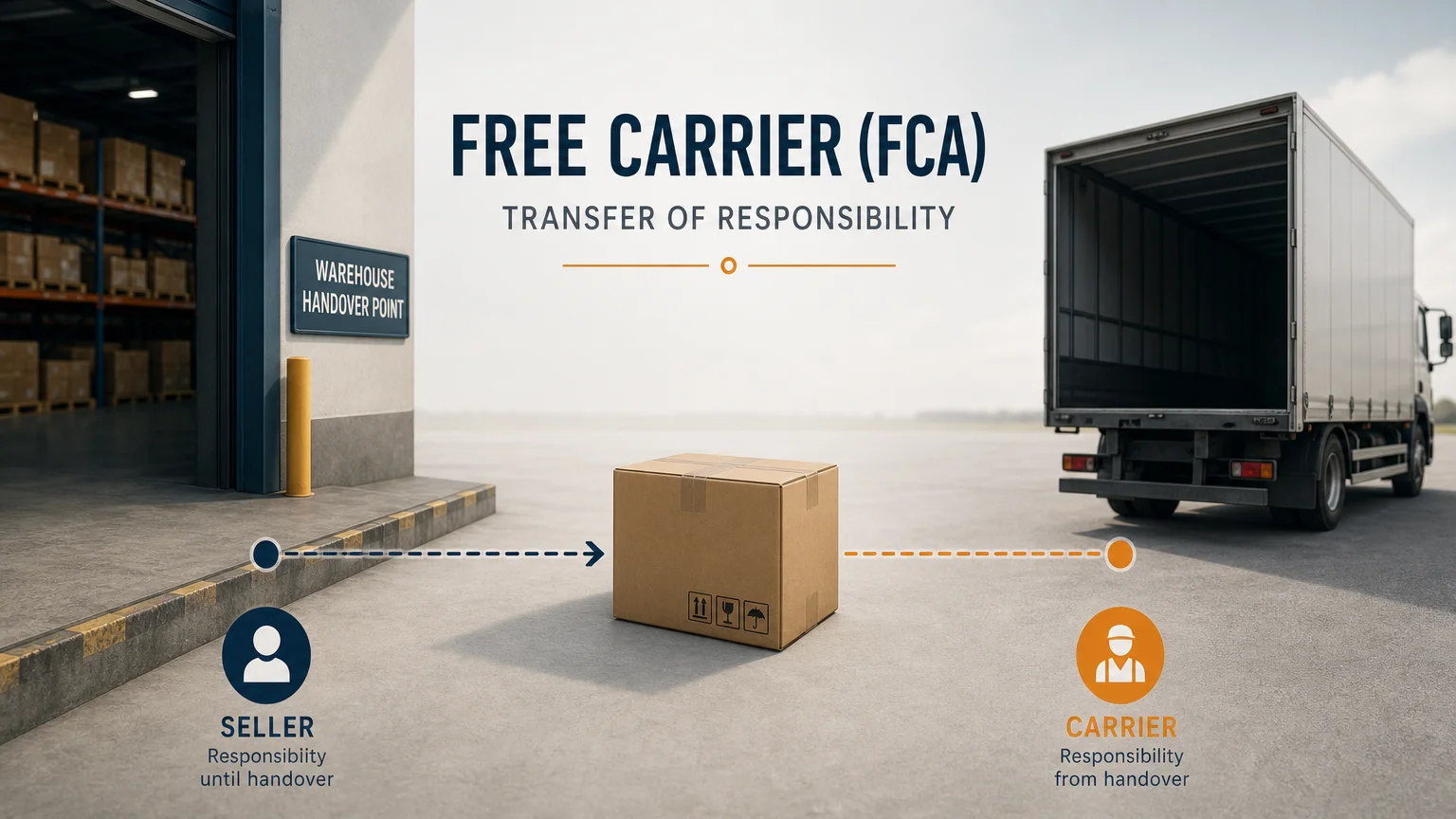
    FCA stands for Free Carrier. The fca terms of shipment place two obligations firmly on the seller: clear the goods for export, then deliver them to the carrier nominated by the buyer at an agreed location. From that handover point onward, the buyer assumes all cost and risk.

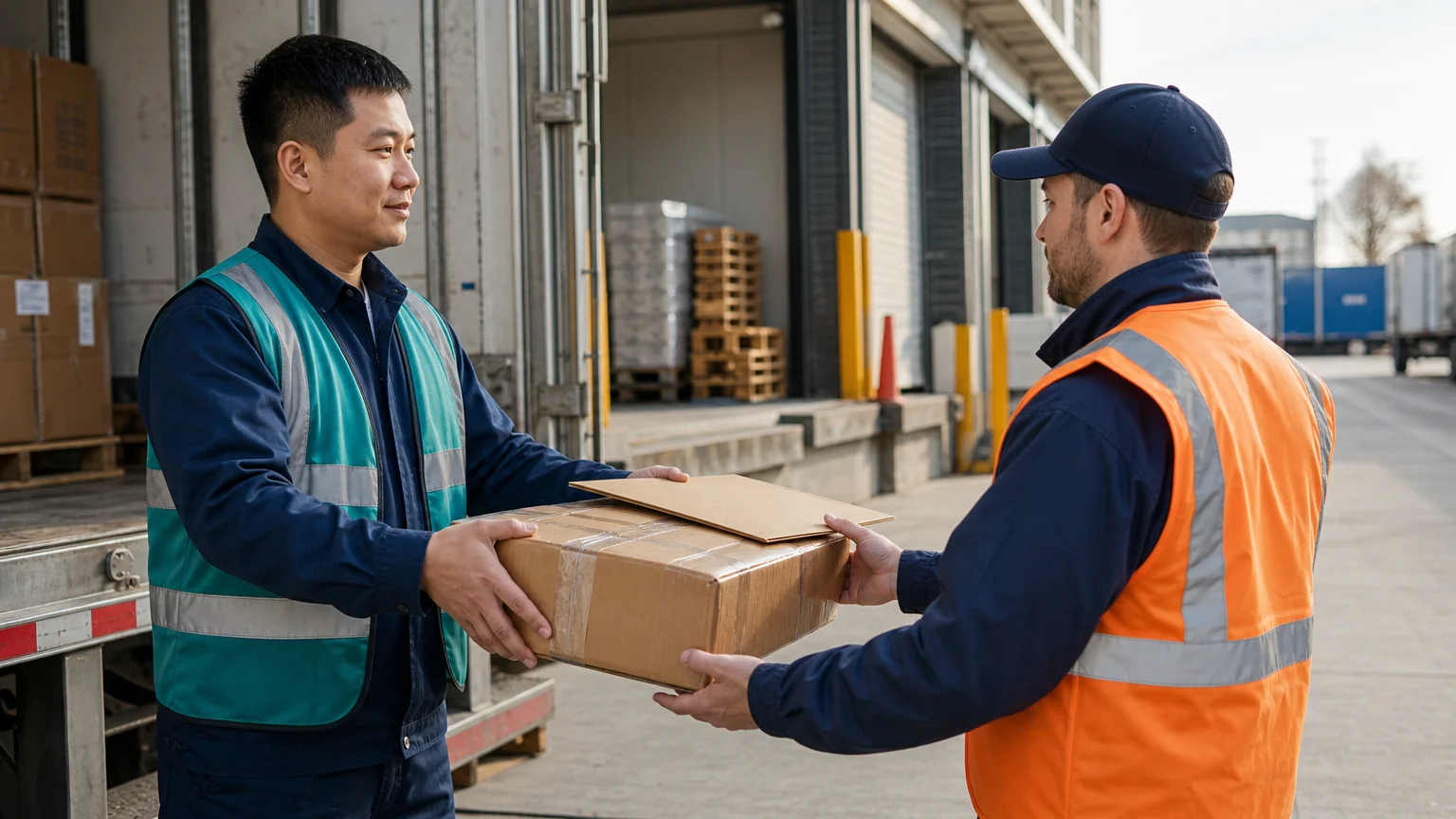
    The named place can be one of two things. If it is the seller’s own premises, the seller must load the goods onto the buyer’s collecting vehicle. If it is any other location, such as a freight forwarder’s warehouse or a container terminal, the seller delivers the goods ready for unloading, and the buyer’s side handles the unloading. This dual structure is the single most important feature of Free Carrier terms to grasp before signing a contract.

    Workers transferring cargo from a truck at a warehouse loading dock under FCA terms

    Seller and buyer responsibilities at a glance

    Clarity on obligations prevents disputes. Under Free Carrier, the division of duties follows a consistent pattern, regardless of whether the named place is the factory or a terminal.

    Task Seller Buyer
    Commercial invoice and packing list Yes No
    Export packaging and marking Yes No
    Export clearance and licenses Yes No
    Delivery to named place Yes No
    Main carriage (freight) No Yes
    Import formalities, duties, and VAT No Yes
    On-carriage to final destination No Yes

    One point is frequently overlooked. Incoterms 2020 impose no mandatory insurance under FCA, so a gap in coverage can appear at the exact moment risk shifts. A clearly drafted sales contract should state who insures which leg of the journey. If you want the full breakdown of each clause, our FCA shipment terms explained resource covers the practical wording.

    When and where risk transfers

    Risk does not transfer at a vague geographic point. It transfers at the precise moment of delivery. When the named place is the seller’s premises, delivery is complete once the goods are loaded onto the buyer’s vehicle. When the place is elsewhere, delivery occurs when the goods arrive at that location on the seller’s transport, ready to be unloaded by the buyer’s carrier.

    This is why naming the place with precision is non-negotiable. A term such as “FCA Shenzhen” alone is ambiguous, because it fails to identify the exact street address where the handover happens. Vague wording is one of the most common sources of costly disputes in international shipping terms, and it is entirely avoidable with a full address in the contract.

    FCA versus EXW and FOB

    Free Carrier is often compared with two neighbors: Ex Works and FOB. The differences are meaningful. Under EXW, the seller only makes goods available at its premises, leaving the buyer to arrange export clearance in an unfamiliar jurisdiction. FCA improves on this by placing export clearance on the seller, which the ICC recommends for cross-border trade.

    According to Export Development Canada, the free carrier, free on board, and free alongside ship rules were all drafted by the ICC to eliminate confusion in global sales contracts. Against FOB specifically, FCA shifts risk earlier, at the named place rather than at the ship’s rail, which gives the buyer clearer control over the moment liability begins. For containerized cargo, that earlier and cleaner cut-off is the practical reason many importers now favor Free Carrier. Our comparison of Incoterms comparison: DAP terms extends this analysis to delivered-at-place arrangements.

    Infographic map showing risk transfer points along an international FCA shipping route

    The Incoterms 2020 bill of lading change

    The most significant revision to FCA under Incoterms 2020 concerns documentation for letter of credit payments. Historically, sellers using Free Carrier struggled to obtain a bill of lading with an on-board notation, because the carrier was hired by the buyer and owed the seller no obligation.

    As Shipping Solutions explains, the buyer and seller can now agree in the sales contract that the buyer will instruct its carrier to issue an on-board bill of lading to the seller. This makes FCA far more compatible with letter of credit transactions. One caveat remains: the carrier is still not legally obligated to comply, and even when it does, the document is issued only after loading, so timing delays can still occur.

    Using FCA for Amazon FBA shipments from China

    For Amazon sellers sourcing in China, Free Carrier can look attractive on paper, yet it leaves the entire main carriage, import clearance, and final delivery on your shoulders. If you are unfamiliar with US customs procedures, that responsibility can trigger the very delays that disrupt FBA restocking. This is where a delivered, duties-paid approach often serves the American market better.

    We built our service around exactly that problem. We handle collection at your supplier, freight, customs clearance under DDP with duties and taxes included, and delivery all the way to the Amazon warehouse, with a quote returned within 24 hours and real-time tracking through WhatsApp. Compared with managing an FCA handover yourself, a single point of accountability removes the guesswork.

    Approach Export clearance Main carriage Import duties Best for
    EXW Buyer Buyer Buyer Domestic pickups only
    FCA Seller Buyer Buyer Buyers with logistics expertise
    Our DDP FBA service Handled by us Handled by us Included, paid by us Amazon sellers wanting a turnkey door-to-warehouse solution

    With route options spanning air (5 to 9 days), express sea (22 to 28 days), ocean (30 to 40 days), and China-Europe rail (20 to 25 days), you can match cost to urgency without piecing together the leg that FCA leaves open.

    Conclusion

    The FCA terms of shipment give importers a flexible, transport-agnostic rule where the seller clears exports and risk passes cleanly at a named place. The recurring lesson is precision: name the exact delivery address, define insurance, and confirm documentation, especially the on-board bill of lading that Incoterms 2020 made available for letter of credit trades. Handled well, Free Carrier gives the buyer real control over the main carriage. Handled poorly, it exposes you to the customs delays that can derail an FBA restock. For sellers who prefer not to shoulder the freight and clearance themselves, our end-to-end DDP service delivers duties-paid shipments straight to the Amazon warehouse with a single point of contact. To compare your options before committing, review our guide to Incoterms comparison: Fob vs CIF vs DDP.

    Frequently Asked Questions

    What does FCA mean in shipping?

    FCA stands for Free Carrier. The seller clears the goods for export and delivers them to the buyer’s nominated carrier at an agreed named place, where all risk and cost transfer to the buyer.

    Is FCA better than FOB for containers?

    For containerized cargo, FCA is generally preferred because risk transfers earlier, at the named place rather than at the vessel. This gives the buyer clearer control over when liability begins.

    Can I avoid handling FCA logistics for Amazon FBA?

    Yes. Rather than managing the main carriage and import clearance yourself, our DDP FBA service collects from your supplier, clears customs with duties included, and delivers to the Amazon warehouse, with a quote in 24 hours.

  • DAP Delivery Terms Explained: Seller and Buyer Duties

    DAP Delivery Terms Explained: Seller and Buyer Duties

    Summary: Under DAP, the seller delivers goods ready for unloading at the named destination and bears all risk until that point; the buyer handles import clearance, duties, and taxes.

    International trade depends on a shared vocabulary, and few rules are as widely applied as Delivered at Place. Whether you import consumer goods or restock a warehouse, understanding the DAP delivery terms determines who pays for what and who carries the risk. Our guide to DAP terms in shipping breaks the mechanics down, but the core idea is simple: the seller controls the journey to your door, and you take over at arrival.

    These rules are not academic. The U.S. International Trade Administration notes that Incoterms clarify the tasks, costs, and risks borne by buyers and sellers in cross-border transactions. Misreading them leads to unexpected charges, customs delays, and disputes that can stall an entire shipment.

    What the DAP Delivery Terms Actually Mean

    DAP stands for Delivered at Place, one of eleven rules in the Incoterms 2020 framework. When you evaluate dap delivery terms for a purchase, you are agreeing that the seller carries the goods all the way to a named location in your country. The seller covers export packaging, export clearance, and the main carriage. Risk stays with the seller until the goods arrive ready for unloading.

    DAP is deliberately flexible. The International Chamber of Commerce, which publishes the rules, confirms DAP can be used for any mode of transport, including multimodal routes. The named place can be a port, an airport, a border crossing, or your own warehouse, provided both parties specify it precisely.

    Container ship unloading cargo at a US port under DAP delivery terms

    Seller and Buyer Responsibilities at a Glance

    The value of DAP lies in a clean division of labor. The seller manages the complex, cross-border half of the journey. You, as the buyer, take responsibility once the truck, plane, or vessel reaches the agreed point. A precise understanding of these buyer and seller obligations prevents the costly surprises that derail delivery schedules.

    Task Seller Buyer
    Export packaging and marking Yes No
    Export customs clearance Yes No
    Main carriage to destination Yes No
    Risk during transit Yes No
    Unloading at destination No Yes
    Import clearance No Yes
    Import duties and taxes No Yes

    One detail deserves attention. If the seller’s carriage contract includes unloading, the seller generally cannot recover that cost from you unless it was agreed in advance. For a deeper look at where these lines sit within the broader framework, consult our overview of DAP terms in Incoterms.

    How DAP Compares With DDP and Other Terms

    DAP and DDP are frequently confused because both place heavy responsibility on the seller. The decisive difference is import clearance. Under DAP, you clear customs and pay duties. Under Delivered Duty Paid, the seller absorbs those obligations. According to the published Incoterms overview, DAP replaced the older DDU term, and DAP alongside DDP remains among the preferred choices for sellers who want to offer a high service level.

    The table below compares self-managed DAP, self-managed DDP, and our managed DDP service, which is built for sellers who want a single point of accountability from factory to final warehouse.

    Approach Import clearance handled Duties and taxes included Real-time tracking Quote turnaround
    DAP (self-managed) By buyer No Depends on carrier Variable
    DDP (self-managed) By seller Yes Depends on carrier Variable
    Our managed DDP service Handled end to end Yes, all-inclusive price Yes, via WhatsApp 7 days a week Within 24 hours

    If you sell on Amazon and want to avoid customs bottlenecks entirely, our comparison of DAP versus DDP for Amazon FBA shows where each term saves you money and where it creates headaches.

    When DAP Is the Right Choice

    DAP suits buyers who possess genuine import expertise. If you hold a strong relationship with a customs broker and understand your national duty schedule, DAP lets you control clearance costs rather than paying the seller to manage them. It also fits trade lanes where no customs process applies between origin and destination, such as movements within a single trading bloc.

    DAP is equally attractive for high-value or specialized goods where the seller wants to retain control of the transport chain. Because the seller manages carriers and export documentation, you receive a coordinated shipment without juggling multiple providers. The trade-off is that you must be ready to act at arrival to avoid storage and demurrage charges.

    Shipping and customs documents arranged for a DAP delivery term shipment

    Managing Customs Risk Under DAP

    The most common failure point under DAP is the handover at destination. Once goods arrive, the clock starts. If you cannot arrange import clearance promptly, storage fees accumulate at ports and warehouses, and non-compliance with import regulations can trigger fines. For US businesses shipping internationally, Incoterms are used primarily for cross-border movement, so the import step is rarely optional.

    Insurance is another consideration. DAP does not require the seller to insure the cargo, so both parties should agree on coverage to protect against loss or damage in transit. Currency fluctuations during a long ocean crossing can also raise your final duty bill if you pay in a foreign currency.

    This is where a specialist forwarder changes the equation. We manage collection at the supplier, freight, and clearance under a turnkey DDP model, removing the customs uncertainty that DAP leaves on your shoulders. You receive an all-inclusive price known in advance and step-by-step notifications through WhatsApp, seven days a week. Delivery windows are stated up front: air freight in five to nine days, express sea in twenty-two to twenty-eight days, standard ocean in thirty to forty days, and China to Europe rail in twenty to twenty-five days.

    Choosing the Route That Fits Your Budget

    DAP defines who does what, but it does not choose your transport mode. The same shipment can travel by air, express sea, ocean, or rail, each with a different cost and lead time. Aligning the term with the right route is what protects your margin. Our explanation of DAP in Incoterms covers how the term interacts with each mode of transport.

    For sellers restocking Amazon warehouses, urgency and volume drive the decision. Small, time-sensitive batches favor air. Large, planned replenishments favor ocean. We return three route options with prices and estimated transit times within twenty-four hours, so you compare before you commit.

    Conclusion

    The heart of the DAP delivery terms is a single handover point: the seller carries all risk and cost until the goods sit ready for unloading at your named place, and you take over import clearance, duties, and taxes from there. Choose DAP when you have the import capability to manage that final stretch, and choose a fuller service when you do not. Getting this decision right protects you from the storage fees and clearance delays that quietly erode margins. With route testing and end-to-end DDP handling, we help sellers cut typical shipping costs by ten to twenty percent per shipment while removing customs risk entirely. To move your next order with confidence, compare our DDP shipping options for Amazon FBA.

    Frequently Asked Questions

    Who pays import duties under DAP?

    The buyer pays all import duties and taxes under DAP. The buyer also arranges import customs clearance and unloads the goods at the named destination. The seller’s responsibility ends when the goods arrive ready for unloading.

    What is the difference between DAP and DDP?

    Under DAP, the buyer handles import clearance and pays duties and taxes. Under DDP, the seller takes on those obligations. If you prefer a fully handled process, our managed DDP service covers clearance, duties, and delivery to the final warehouse.

    Can DAP be used for any mode of transport?

    Yes. DAP works for air, sea, road, rail, and multimodal shipments. This flexibility makes it one of the most versatile Incoterms, provided both parties name the exact place of delivery in the sales contract.

  • DAP Terms in Shipping: A Practical Guide for Importers

    DAP Terms in Shipping: A Practical Guide for Importers

    Summary: Under DAP (Delivered at Place), the seller pays freight and carries all risk to the named destination, while the buyer handles unloading, import clearance, duties, and taxes.

    One three-letter code decides who pays for freight, who absorbs the risk of damage, and who is left holding a surprise customs bill at the destination. For any importer moving goods across borders, the DAP terms in shipping sit at the center of that decision. Choosing them without understanding the fine print is how a smooth shipment turns into a dispute. To help you plan every leg from factory to warehouse, our DAP delivery service is built around exactly these rules.

    Delivered at Place is one of eleven Incoterms published by the International Chamber of Commerce, and it is among the most widely used in global trade. It works across sea, air, rail, and road, which makes it a natural fit for modern multimodal supply chains. Yet its flexibility is precisely where confusion begins, especially around the moment risk passes from seller to buyer.

    What Delivered at Place Actually Means

    Put simply, the DAP terms in shipping define exactly where a seller’s job ends and a buyer’s begins. Under Delivered at Place, the seller arranges and pays for carriage to a named place of destination and bears every risk until the goods arrive there, ready to be unloaded. The buyer then takes over unloading, import customs clearance, and any duties or taxes.

    The named place can be almost anywhere the buyer chooses: a port terminal, a distribution center, a factory, or an e-commerce fulfillment hub. A common misconception is that delivery must occur at the buyer’s premises. In reality, the destination only needs to be agreed and stated precisely in the contract. Vague wording is a frequent source of disputes, so the exact address and unloading point should be spelled out before the first pallet moves.

    Seller and Buyer Responsibilities at a Glance

    Delivered at Place is often described as a seller-heavy term, and for good reason. The seller manages export packaging, export clearance, the main carriage, and delivery to the named place. Crucially, the seller also assumes the risk of loss or damage during transit, which is a significant commitment on long ocean legs.

    The buyer’s obligations are narrower but far from trivial. The buyer unloads the arriving vehicle, files import formalities, and pays duties and taxes. If the destination country requires a local entity to act as importer of record, that responsibility also lands on the buyer. Where a buyer prefers to avoid that burden entirely, DDP becomes the alternative, a comparison we break down in our DAP vs DDP comparison for Amazon FBA.

    Container ship loading at a port terminal illustrating Delivered at Place shipping

    DAP vs DDP: The Single Difference That Matters

    DAP and DDP look almost identical on paper. In both, the seller arranges transport, carries the risk to destination, and hands goods over ready for unloading. The dividing line is import clearance. According to the ICC Academy, the buyer performs and pays for import clearance under DAP, whereas the seller shoulders that entire process under DDP.

    That distinction has real consequences. A foreign seller may struggle, or be legally barred, from acting as importer in the destination country. When local rules require a domestic importer, DDP simply cannot be used and DAP becomes the practical choice. Conversely, if you want a single all-inclusive price with no customs surprises at your door, DDP shifts that work back to the seller. For sellers shipping into the American market, that trade-off between control and convenience is the core of the decision.

    Freight mode Typical transit time Best fit under DAP planning
    Air freight (our route) 5 to 9 days Urgent, high-value restocks
    Express sea (our route) 22 to 28 days Balanced cost and speed
    Rail freight (our route) 20 to 25 days Reliable China to Europe lanes
    Ocean freight (our route) 30 to 40 days Lowest cost, planned volume

    When DAP Is the Right Choice, and When It Is Not

    Delivered at Place suits containerized and multimodal shipments where the seller can efficiently manage the main carriage while the buyer keeps control of local import processes. It gives buyers predictability on freight without surrendering authority over customs decisions in their own country.

    There are limits, however. As Trade Finance Global notes, DAP works cleanly for land transport within a single customs area but can become problematic in cross-ocean trade, where goods often sit in a bonded warehouse or terminal until the buyer completes import formalities. If clearance stalls, the cargo waits, and demurrage can accumulate. This is where an experienced freight forwarder earns its keep, aligning vessel arrival with customs readiness so the goods keep moving.

    Getting the DAP Contract Right

    Small drafting errors cause outsized problems. The safest practice is to write the full term, the exact named place, and the version year together. Legal specialists at Quarles recommend a format such as “DAP Buyer’s Facility, city, state (Incoterms 2020),” and warn against mixing an Incoterm with contract clauses that contradict it on freight or risk transfer.

    Two further safeguards matter. First, confirm insurance expectations in writing, because DAP does not obligate the seller to insure the goods even though the seller carries the risk. Second, agree who pays for unloading at the named place, since ambiguity there is a recurring dispute. If you want the full mechanics behind each obligation, our DDP and DAP customs clearance guide walks through them step by step.

    Organized logistics desk with map and checklist for planning a DAP shipment

    Common Mistakes That Cost Importers Money

    The most frequent error is assuming DAP means the seller handles duties. It does not. Duties, taxes, and import clearance remain squarely with the buyer, and budgeting for them late is how margins erode. A second mistake is naming a vague destination, which leaves both parties arguing over where risk actually passed.

    A third pitfall is applying a maritime-only term such as FOB to a multimodal move that should have used DAP. Because Delivered at Place accepts any mode of transport, including combined sea, rail, and road, it removes that mismatch. Planning the customs step in advance, rather than reacting to it, is what separates a predictable arrival from an expensive one.

    Conclusion

    The Delivered at Place terms reward clarity and punish vagueness. The seller carries freight and risk to a precise named place; the buyer owns unloading, import clearance, and the duty bill. Get the named place, the version year, and the insurance and unloading responsibilities written down, and most disputes disappear before they start. Remember the one figure that defines the term: the buyer, not the seller, pays every import duty under DAP. Choosing the right Incoterm is easier when a single partner manages pickup, freight, clearance, and final delivery with routes already tested for cost and speed. To ship with confidence from China to your warehouse, request a free quote for our DDP and DAP clearance and remove the guesswork.

    Frequently Asked Questions

    Who pays customs duties under DAP terms?

    The buyer pays all import duties and taxes under DAP, along with import customs clearance and unloading. The seller covers export clearance, freight, and risk up to the named place of destination.

    Is DAP the same as DDP?

    No. Both require the seller to deliver to the destination and carry the risk in transit, but under DAP the buyer handles import clearance, while under DDP the seller pays duties and clears the goods for import.

    Can DAP be used for Amazon FBA shipments?

    Yes, the named place can be an Amazon fulfillment center. However, you must handle import clearance yourself, which is why many sellers prefer our managed DDP option for a single all-inclusive price with no customs surprises.

  • Define FOB Shipping: Meaning, Terms, and Who Pays in 2026

    Define FOB Shipping: Meaning, Terms, and Who Pays in 2026

    Summary: FOB (Free on Board) sets the moment risk and cost shift from seller to buyer, typically when goods are loaded on board the vessel at the named port.

    One acronym on a commercial invoice can decide who absorbs a loss when a container is damaged at sea. That acronym is FOB, and misreading it has cost importers real money. To understand the meaning of FOB shipping is to know exactly where your responsibility begins, what you pay for, and when the seller is finally off the hook. For Amazon sellers and importers, our guide to what FOB shipping means (practical definition) turns this single term into a clear cost map.

    The stakes are not theoretical. According to an OECD working paper, global transport and insurance margins jumped from 3.7% in 2019 to 6.2% in 2022, meaning the freight costs FOB assigns to the buyer have grown heavier. Knowing where that burden lands is no longer a back-office detail; it is a margin decision.

    What Free on Board actually means

    Let us define FOB shipping in plain terms. FOB stands for Free on Board, and it identifies the precise point at which obligations, costs, and risk pass from the seller to the buyer. In international trade, FOB is one of the eleven Incoterms published by the International Chamber of Commerce. According to the U.S. government trade authority, of the eleven rules, seven apply to any mode of transport and four are reserved for sea or inland waterway transport, with FOB among the latter.

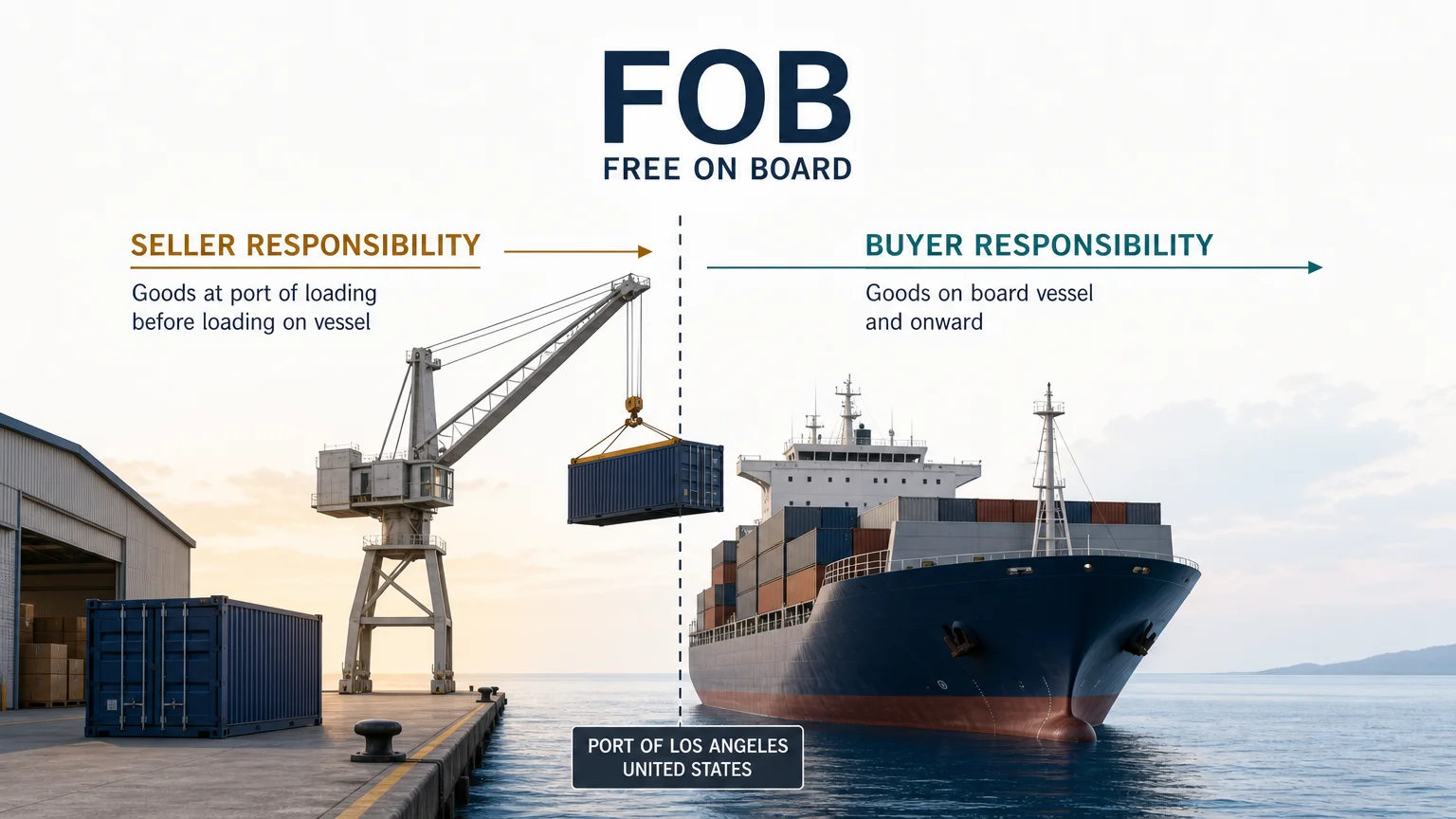
    Under FOB, the seller pays to move goods to the port of shipment and to load them on board the vessel nominated by the buyer. From that moment, the transfer of risk occurs: the buyer covers ocean freight, insurance, unloading, import duties, and final delivery. One important nuance often misunderstood is that FOB governs risk and cost, not legal ownership. The contract of sale and the bill of lading determine when title passes.

    Crane loading freight onto a cargo vessel at a port representing the FOB transfer point

    Who pays for what under FOB terms

    The clearest way to read FOB is to split the journey at the ship’s deck. Everything up to and including loading belongs to the seller; everything after belongs to the buyer. This division is why FOB remains popular with importers who want control over the main carriage and the freedom to choose their own carrier and insurer.

    Responsibility Seller pays Buyer pays
    Inland transport to origin port Yes No
    Export customs clearance Yes No
    Loading on board the vessel Yes No
    Ocean freight No Yes
    Marine insurance No Yes
    Import duties and final delivery No Yes

    This buyer-heavy allocation is exactly where surprises appear. When the buyer assumes ocean freight, insurance, and customs, an unexpected rate spike or a duty miscalculation lands directly on the importer. For sellers shipping from Chinese suppliers, our explanation of the FOB shipment meaning breaks down each line item so that no cost goes unnoticed before the goods reach the water.

    FOB Origin versus FOB Destination in the US

    Here is where confusion multiplies. North American domestic usage of FOB differs from the international Incoterms definition, and the two are not interchangeable. In US domestic shipping, FOB terms derive from the Uniform Commercial Code rather than from Incoterms, and they address both risk and title.

    • FOB Origin (shipping point): the buyer takes ownership and liability as soon as the goods leave the seller’s location, and is responsible for freight during transit.
    • FOB Destination: the seller retains ownership and liability until the goods arrive at the buyer’s location, bearing freight costs throughout transit.

    These designations are usually paired with a freight payment indicator. “Freight prepaid” means the seller pays the carrier; “freight collect” means the buyer pays. A common warning from trade specialists is that using domestic FOB phrasing on an international invoice can backfire badly. Trade Finance Global notes that the North American concepts of “FOB destination” and “FOB shipping point” have no standing in international trade, so a US seller exporting to Europe under “FOB Destination” may unintentionally agree to deliver only to the US port.

    Why FOB is not built for containers

    FOB carries history. The term originated in the era of sailing ships, when goods were physically passed over the ship’s rail by hand. That image no longer fits a sealed steel box handed to a carrier days before loading. Once a container is sealed at an inland yard, there is no practical way to establish when damage occurred relative to the moment of loading.

    For this reason, the ICC recommends FCA (Free Carrier) for containerized cargo, where risk transfers at the actual point of handover, such as the terminal. Despite this guidance, FOB remains widely used. According to a UNCTAD statistical report, FOB values form a core reference point for the entire international merchandise trade statistics system, which keeps the term embedded in customs practice worldwide. Many exporters also retain FOB because banks expect a clean on-board bill of lading for letters of credit.

    FOB defines where your risk begins. It does not define who legally owns the goods. That distinction lives in your contract of sale.

    Shipping documents and freight tracking on a desk illustrating FOB contract terms

    Choosing the right terms for your shipments

    The practical question is not whether FOB is good or bad, but whether it fits your shipment and your appetite for control. FOB hands you the carrier choice and the ocean leg, which can lower costs if you negotiate well, but it also transfers risk early and exposes you to freight volatility. Across the American import market, where most SMB sellers source containerized goods from Asia, that early risk transfer is precisely why many buyers compare FOB against alternatives like CIF, where the seller arranges freight and insurance, or DDP, where the seller delivers with duties paid.

    If predictability matters more than control, an all-inclusive arrangement removes the guesswork. We handle pickup, international freight, customs clearance, and delivery to the Amazon warehouse through our guidance on how to negotiate better FOB terms, so you keep the cost advantages of FOB at origin while we manage the volatile legs you would otherwise shoulder alone. The goal is simple: fewer surprises between the factory and the final dock.

    FOB compared with other common Incoterms

    Seeing FOB next to its neighbors clarifies what each term asks of you.

    Term Seller responsibility ends Buyer carries Best for
    FOB Goods loaded on board at origin port Ocean freight, insurance, import Non-containerized sea freight, control-focused buyers
    FCA Goods handed to carrier at named place Main carriage onward Containerized and multimodal cargo
    CIF Freight and insurance to destination port Import duties, final delivery Buyers wanting seller-arranged freight
    DDP Delivery with duties paid Almost nothing Buyers wanting a single all-in price
    Our DDP service Door to Amazon warehouse, duties included Nothing beyond the agreed quote Amazon FBA sellers shipping from China

    Each row reflects a different trade-off between control and convenience. FOB sits at the control end; a fully managed DDP arrangement sits at the convenience end, with duties and taxes folded into a price you know in advance.

    Conclusion

    To define FOB shipping correctly is to read a single line on an invoice as a complete map of cost and risk: the seller delivers and loads at the named port, and from that deck onward the shipment is yours. Remember the headline figure: with transport and insurance margins having climbed to 6.2% in 2022, the freight FOB assigns to the buyer is no minor footnote. Confirm the Incoterms version, name the port precisely, and never assume domestic and international FOB mean the same thing. Because we manage pickup, freight, DDP customs clearance, and delivery straight to the Amazon warehouse as a single point of contact, you trade uncertainty for a known, all-inclusive price. To plan your next shipment with confidence, explore our Amazon FBA freight solution today.

    Frequently Asked Questions

    Does FOB mean the seller pays for shipping?

    Not for the main journey. Under FOB, the seller pays only to bring goods to the origin port and load them on board. The buyer then pays ocean freight, insurance, and import costs.

    Is FOB suitable for container shipments?

    Generally no. FOB was designed for bulk and non-containerized sea freight, and the ICC recommends FCA for containers so that risk transfers at the actual point of handover. Many exporters still use FOB because banks expect an on-board bill of lading.

    Can I avoid managing the freight and customs myself under FOB?

    Yes. With our DDP service, we take over the ocean freight, customs clearance, and delivery to the Amazon warehouse, so duties and taxes are included in one quoted price and you avoid the cost surprises FOB can create.

  • FOB Meaning in Shipping: Free on Board Terms Explained

    FOB Meaning in Shipping: Free on Board Terms Explained

    Summary: FOB (Free on Board) marks the point where cost and risk shift from seller to buyer once goods are loaded on the vessel. It is one of 11 official Incoterms.

    Three letters at the end of a supplier quote can decide who pays thousands of dollars if a container is damaged at sea. For importers, few abbreviations carry as much weight as FOB. If you have ever wondered what the term actually commits you to, our explainer on what FOB means is a useful companion to this article. Understanding the meaning of FOB in shipping is the difference between a predictable landed cost and an unwelcome surprise.

    Searches for the fob meaning shipping question keep rising as more small businesses import directly from overseas factories. FOB stands for Free on Board, and it is a delivery rule that defines exactly when the seller’s responsibility ends and yours begins. According to the US Commerce Department, FOB is one of four Incoterms reserved specifically for sea or inland waterway transport.

    What Free on Board actually means

    FOB stands for Free on Board, a term published by the International Chamber of Commerce as part of the Incoterms standard. It specifies the moment when obligations, costs, and risk for the delivery of goods pass from the seller to the buyer. The rule is always paired with a named port of loading, for example “FOB Shenzhen.”

    Under this term, the seller delivers the goods, cleared for export, onto the vessel nominated by the buyer. From that point, the buyer assumes everything that follows. In practice, the transfer of risk happens when the cargo is loaded on board. If you would like the full step-by-step picture, our full FOB shipping overview walks through each stage from factory to port.

    Container being loaded onto a cargo vessel at a port, illustrating the FOB risk transfer point

    Who pays for what under FOB

    The clean split of duties is what makes FOB popular with importers. The seller covers the early legs of the journey, and the buyer takes over once the goods are aboard.

    According to the ICC Academy, the seller must complete all export formalities and deliver the goods loaded on the vessel at the port of shipment. The buyer must contract the carrier, pay the port-to-port transport costs, and handle import formalities. Concretely, the responsibilities break down like this:

    • Seller pays: inland transport to the port, export customs clearance, origin port charges, and loading onto the vessel.
    • Buyer pays: ocean freight, marine insurance (optional but advised), destination port charges, import duties, and final delivery.

    One nuance matters here. Under the current rules, the buyer must inform the seller in time of the vessel’s name and the loading point. If the buyer fails to do so and the goods cannot be loaded, the risk can transfer earlier. For a closer look at this handoff, see our breakdown of FOB shipment meaning.

    FOB shipping point versus FOB destination

    Here is where confusion often begins. In North American domestic trade, FOB is written into sales agreements with two variants that do not exist in the international Incoterms version. The distinction decides where liability changes hands.

    “FOB shipping point” (also called FOB origin) means the sale is complete at the seller’s dock, so the buyer carries freight cost and liability during transit. “FOB destination” means the seller keeps responsibility until the goods reach the buyer’s location. Each is then paired with “freight prepaid” or “freight collect” to indicate who actually pays the carrier.

    Term / option Risk transfers Who pays freight Best suited for
    FOB shipping point At origin / on loading Buyer (collect) Experienced importers wanting control
    FOB destination At buyer’s location Seller (prepaid) One-off or low-volume buyers
    QG Horizon DDP service Managed end to end All-inclusive, duties and taxes included Amazon FBA sellers wanting one fixed price

    If you sell on Amazon and want to protect your margins, the choice between these terms is not academic. We handle the entire chain from a Chinese factory to the Amazon warehouse, so you avoid the gray areas that FOB alone leaves open.

    Shipping documents and a small cargo crate representing FOB contract terms

    Why FOB is not always the right choice

    FOB was designed in the era of sailing ships, when goods were passed over the ship’s rail by hand. That history still shapes the rule today, and it creates a modern blind spot.

    Because FOB transfers risk only when goods are physically loaded on the vessel, containers that sit at a terminal for days before loading fall into an ambiguous zone. The ICC therefore recommends FCA (Free Carrier) for containerized cargo, where risk passes at the point of handover. FOB remains best suited to bulk, non-containerized goods such as grain, steel, or vehicles.

    There is also a measurement dimension that matters for trade at scale. A 2024 OECD working paper notes that the FOB-type value of trade captures the goods plus transport to the exporting border, while CIF adds international transport and insurance. The gap between the two, the CIF/FOB margin, widened significantly after 2020 as freight costs surged, which is exactly the volatility importers feel in their landed costs.

    A common mistake: “Freight on Board”

    You will often see FOB expanded as “Freight on Board.” This is not correct. The term “Freight on Board” appears in no version of the Incoterms and is not defined by the US Uniform Commercial Code. US courts have even found it is not a recognized industry term. To avoid contract disputes, always write “Free on Board” and specify the Incoterms edition, for example “FOB Shanghai (Incoterms 2020).”

    Conclusion

    At its core, the meaning of FOB in shipping is a single decisive moment: risk and cost pass to you once your goods are loaded on the vessel. That clarity gives buyers control and usually a lower price, but it also leaves the longest and most expensive leg of the journey, plus customs and final delivery, squarely on your shoulders. With CIF/FOB margins still elevated since 2020, managing that stretch well protects your profit. Our specialised Amazon FBA service removes the guesswork by carrying your cargo from the Chinese factory all the way to the warehouse under one fixed, duties-included price. To plan your next import with confidence, explore our guide to FOB shipping point versus destination.

    Frequently Asked Questions

    Does FOB include insurance?

    No. Under FOB, neither party is obligated to arrange insurance. Once goods are loaded, the buyer carries the risk, so purchasing marine cargo insurance for the main voyage is strongly advised.

    Is FOB suitable for container shipping?

    Not ideally. Because containers sit at terminals before loading, the ICC recommends FCA for containerized cargo. FOB remains best for bulk, non-containerized goods loaded directly onto a vessel.

    Who arranges the main shipping under FOB?

    The buyer nominates the vessel and contracts the carrier for the ocean leg. If you prefer a single point of contact, we manage pickup, freight, DDP customs clearance, and delivery to the Amazon warehouse for you.

  • FOB Delivery Means: What It Is and Why It Matters

    FOB Delivery Means: What It Is and Why It Matters

    Summary: FOB delivery means the seller fulfills their obligation once goods are loaded on board the vessel; risk and cost then transfer to the buyer at the named port.

    Every year, billions of dollars in merchandise move across oceans under a three-letter abbreviation that many importers still misunderstand. If you have ever received a supplier quote stamped “FOB Shenzhen” and wondered exactly what you are paying for, you are not alone. Understanding what FOB delivery means is the first step toward controlling landed costs, avoiding disputes, and protecting inventory while it is in transit. For a broader overview, explore our guide to FOB delivered meaning and how it applies to e-commerce supply chains.

    The term FOB, which stands for “Free On Board,” is one of the most widely used Incoterms in global trade. The Incoterms 2020 rules, published by the International Chamber of Commerce (ICC), are grouped into two categories reflecting modes of transport: seven rules for any mode and four exclusively for sea or inland waterway transport. FOB belongs to that second group, and its specific rules determine who bears the cost, risk, and responsibility at each stage of a shipment. This article breaks down how FOB delivery works, who pays for what, and how you can use these terms to your advantage.

    What Does FOB Stand For in Shipping?

    Cargo containers being loaded onto a vessel at a US commercial port illustrating FOB delivery

    FOB stands for “Free On Board.” Under the Incoterms 2020 framework, it is formally designated as “FOB (insert named port of loading).” The term communicates a precise point in the shipping journey where responsibility shifts from seller to buyer. When a supplier quotes “fob delivery means” or writes “FOB Shanghai” on an invoice, they are stating that their obligations end once the goods are loaded on board the vessel at that port.

    The FOB Incoterm is exclusively used for maritime transport or inland waterways. Under FOB, the seller must load the goods on board the vessel designated by the buyer at the agreed port of shipment, and risk transfers to the buyer at that point. It is worth noting that, according to the International Trade Administration (ITA), each Incoterm rule specifies the seller’s obligations for cargo delivery and clarifies when the risk of loss or damage passes from the seller to the buyer.

    In the United States, however, FOB also carries a domestic meaning that differs from the international Incoterm. Domestically, “FOB origin” and “FOB destination” are common designations used to set the point at which title and liability transfer, without necessarily referring to a seaport. This dual usage can create confusion, so specifying “Incoterms 2020” in your contracts is essential.

    How FOB Delivery Allocates Costs and Risk

    The core value of FOB lies in its clear division of financial and legal responsibilities. Under an FOB agreement, the seller covers all costs up to and including the loading of goods onto the vessel. The buyer then pays the main sea freight and all costs after loading, including insurance, destination port charges, import duties, and inland delivery, while the seller covers inland transport to the port, export clearance, and loading on board.

    Here is a simplified breakdown:

    Cost or Responsibility Seller Buyer
    Inland transport to port of origin Yes No
    Export customs clearance Yes No
    Loading onto vessel Yes No
    Ocean freight No Yes
    Cargo insurance No Yes (recommended)
    Import duties and customs No Yes
    Inland delivery to final destination No Yes

    In a FOB transaction, the buyer needs to nominate the correct type of ship, organize a suitable contract of carriage with the most suitable carrier, and neither party is obliged to insure the goods unless separately agreed in the sales contract. This means that if you are importing goods under FOB terms, arranging marine cargo insurance is strongly recommended even though the Incoterm does not mandate it.

    FOB Origin vs. FOB Destination: Key Differences

    While the international Incoterms definition of FOB always references a port of loading, North American commercial practice splits the concept into two variations that apply to both domestic and cross-border trade.

    • FOB Origin (FOB Shipping Point): The buyer assumes title and risk the moment the carrier picks up the goods. The buyer also typically pays freight charges. This is functionally similar to the international FOB Incoterm.
    • FOB Destination: The seller retains title and risk until the goods arrive at the buyer’s location. The seller generally pays freight charges.

    For a deeper comparison, see our article on FOB shipping point vs FOB destination and how each option impacts your margins. The distinction matters enormously for accounting purposes as well: goods shipped FOB Origin appear on the buyer’s balance sheet while in transit, whereas goods shipped FOB Destination remain on the seller’s books until delivery is complete.

    FOB and the Incoterms 2020 Framework

    The concept of FOB shipment terms dates back to 1812, when British courts first established rules indicating who is liable for damage in shipping. Over two centuries later, the ICC codified FOB into its formal Incoterms system. The ninth and current version, Incoterms 2020, was officially released in September 2019 and came into effect on January 1, 2020.

    One important update in the 2020 revision concerns containerized cargo. FOB was designed for non-containerized bulk and break-bulk cargo. For containerized shipments, Incoterms guidance usually recommends using FCA, which lets risk transfer at the actual handover point, such as a terminal. According to iContainers, FOB is not recommended for containerized cargo because containers are usually delivered to the terminal days before loading, creating a gray area of responsibility if damage occurs before loading.

    Despite this recommendation, many exporters still use FOB for containers because banks issuing Letters of Credit required a Bill of Lading. To resolve this, Incoterms 2020 introduced a provision allowing the buyer to instruct the carrier to issue a transport document with an “on board” notation to the seller. This makes FCA a more viable alternative without sacrificing documentary credit compliance. Understanding this nuance can help you select the right term for your specific shipment type. For additional context, read our explanation of FOB origin definition and how it impacts your risk profile.

    Illustration showing the FOB risk transfer point from seller to buyer at the port of loading

    FOB vs. Other Common Incoterms

    Choosing the right Incoterm depends on your risk tolerance, budget, and supply chain expertise. Below is a concise comparison of FOB against three other terms frequently used by US importers sourcing from overseas suppliers.

    Incoterm Risk Transfers To Buyer Seller Pays Freight? Seller Handles Import Customs? Best For
    FOB When goods loaded on vessel No No Experienced buyers who want freight control
    EXW At seller’s premises No No Buyers with local presence near seller
    CIF When goods loaded on vessel Yes (freight + insurance) No Buyers wanting a single origin price
    DDP (via QG Horizon) At final destination Yes Yes Sellers wanting all-inclusive pricing

    Notice that with DDP, the seller handles everything up to the buyer’s door, including duties and taxes. This is the model we offer through our freight forwarding services, giving you a single known price from factory to Amazon warehouse. For a full breakdown, consult our comparison of FOB vs CIF vs DDP Incoterms to find the best fit for your business.

    Practical Tips for US Importers Using FOB Terms

    Selecting FOB as your Incoterm gives you greater control over the ocean freight leg, but it also places several obligations squarely on your shoulders. Here are actionable steps to manage them effectively.

    1. Always specify the port name. Writing “FOB China” is not sufficient. State the exact port, such as “FOB Shenzhen, Incoterms 2020,” so that both parties know precisely where risk transfers.
    2. Arrange cargo insurance early. Neither buyer nor seller is obliged to insure the goods under FOB unless separately agreed. Do not leave this to chance.
    3. Vet your freight forwarder. Under FOB, the buyer selects the carrier. A reliable forwarder with tested routes can reduce transit times and avoid costly delays at customs.
    4. Confirm export clearance responsibilities. The seller is responsible for clearing the goods for export, and the buyer is responsible for the goods from the port onwards. Verify that your supplier handles all origin-side paperwork.
    5. Review US customs requirements. US-bound ocean freight requires the Importer Security Filing (ISF 10+2), which the ISF importer must submit to US Customs at least 24 hours before loading at the foreign port. Under FOB, the ISF importer is usually the US buyer.

    For sellers shipping to Amazon FBA warehouses, FOB offers visibility into freight costs but requires you to coordinate customs, last-mile delivery, and compliance on your own. If that complexity feels overwhelming, working with a specialized freight forwarder who handles the entire chain, from factory pickup to warehouse delivery, can eliminate surprises.

    When FOB Delivery May Not Be the Best Choice

    FOB is a powerful tool, but it is not always the optimal Incoterm. Since Incoterms 1980 introduced FCA, FOB should only be used for non-containerized seafreight and inland waterway transport. However, FOB is commonly used incorrectly for all modes of transport despite the contractual risks this can introduce. If your goods travel by air or rail, or if they are packed in sealed containers, FCA may offer clearer risk allocation.

    Additionally, if you are a small or mid-sized seller with limited logistics expertise, bearing the full weight of ocean freight booking, insurance procurement, customs brokerage, and last-mile coordination can stretch your resources. In such cases, a DDP arrangement, where duties, taxes, and freight are bundled into a single quote, provides predictability. According to IncoDocs, the most commonly used Incoterms are EXW, FCA, FOB, CIF, and DDP, favored due to their clear guidelines and suitability for different modes of transport and shipping scenarios.

    We provide DDP solutions specifically designed for Amazon FBA sellers shipping from China. Our single-quote model includes duties and taxes upfront, so you know your total cost before the shipment leaves the factory.

    FOB Delivery and Your Bottom Line

    Understanding what FOB delivery means is not merely an academic exercise; it directly affects your profit margins, your risk exposure, and the reliability of your supply chain. By choosing FOB terms wisely, specifying the exact port, arranging adequate insurance, and partnering with a knowledgeable freight forwarder, you can retain control over a critical segment of your logistics without absorbing unnecessary cost. FOB has evolved over more than 200 years from its origins in British maritime law into one of the most recognized standards in global trade. Whether you are sourcing goods for resale on Amazon or stocking a warehouse in the US, mastering FOB terms protects your inventory and your investment.

    At QG Horizon, we specialize in taking the complexity out of international shipping from China, offering real-time tracking, tested routes, and a single point of contact from factory to fulfillment center. To get a clear picture of your total shipping costs, explore our insights on what FOB means in shipping and request a personalized quote within 24 hours.

    Frequently Asked Questions

    Does FOB mean the seller pays for shipping?

    No. Under FOB terms, the seller pays only for inland transport to the port and loading onto the vessel. Once the goods are on board, the buyer assumes all freight, insurance, and import costs. This is why understanding the FOB point is critical for budgeting.

    Is FOB the same in domestic US shipping and international trade?

    Not exactly. In international trade, FOB always refers to a named port of loading under the Incoterms 2020 rules published by the ICC. In North American domestic shipping, “FOB origin” and “FOB destination” are used more broadly to indicate where title and liability transfer, regardless of transport mode. Always specify the Incoterms version in your contract to avoid ambiguity.

    Can I use FOB for containerized shipments from China?

    While many exporters still quote FOB for container cargo, the ICC recommends using FCA instead, because containers are typically handed over at the terminal before loading. If you are an Amazon FBA seller looking for a hassle-free alternative, our DDP freight service from China handles containerized shipments end to end, including customs clearance and delivery to your Amazon warehouse.

  • FOB Shipment Meaning: A Complete Guide for US Importers

    FOB Shipment Meaning: A Complete Guide for US Importers

    Summary: FOB (Free on Board) defines the point at which shipping risk and cost shift from seller to buyer, making it one of the most widely used Incoterms for ocean freight.

    Every purchase order that crosses an ocean carries a hidden question: who pays if something goes wrong between the factory and your warehouse? The answer almost always lives in three letters printed on the commercial invoice. Understanding the meaning of an FOB shipment is not optional for any US business importing goods by sea. If you are new to the concept, our overview of what does FOB mean is a useful starting point.

    FOB, or Free on Board, is one of the 11 rules published under the Incoterms 2020 framework by the International Chamber of Commerce. It governs who bears the cost, who carries the risk, and exactly when responsibility changes hands during a maritime shipment. Whether you source consumer electronics from Shenzhen or furniture from Ho Chi Minh City, grasping the fob shipment meaning will help you negotiate better deals, avoid surprise fees, and protect your margins from port to warehouse.

    What Does FOB Actually Stand For?

    Under the Incoterms 2020 standard published by the International Chamber of Commerce, FOB is only used in sea freight and stands for “Free On Board,” and the term is always used in conjunction with a port of loading. On a contract or invoice, you will see it written as FOB [Named Port of Shipment], for example “FOB Shanghai” or “FOB Shenzhen.”

    Some documents refer to “Freight on Board” instead. Although FOB has long been stated as “Freight On Board” in sales contract terminology, this should be avoided as it does not precisely conform to the meaning of the acronym as specified in the UCC. Using “Free on Board” in your contracts removes ambiguity and aligns with internationally recognized standards.

    Illustration showing the FOB risk transfer point as containers are loaded onto a cargo vessel at a US port

    How Risk and Cost Transfer Under FOB

    The core purpose of FOB is to draw a clear line between the seller’s obligations and the buyer’s obligations. That line is the vessel’s deck at the port of shipment.

    Under Free on Board, the seller is responsible for delivering the goods to the port of departure, clearing them for export, and loading the goods on the vessel. Once the goods are on the vessel, the risk transfers from the seller to the buyer, who from that point is responsible for all costs thereafter. For a deeper explanation of how each party’s duties break down, see our guide on FOB shipping explained.

    In practical terms, the seller covers:

    • Inland transport from factory to the origin port
    • Export customs clearance and documentation
    • Loading charges at the port of shipment

    The buyer then assumes:

    • Ocean freight from origin port to destination port
    • Marine cargo insurance (not automatically included)
    • Destination port handling and unloading
    • Import customs clearance, duties, and taxes
    • Inland delivery to the final warehouse

    The buyer is responsible for arranging insurance under FOB; the seller has no insurance obligation once cargo is on board the vessel. If the buyer does not arrange insurance, there is no coverage during ocean transit. This is a critical point that many first-time importers in the US overlook.

    FOB Origin vs. FOB Destination: The North American Distinction

    If you operate domestically in the US, you will encounter a second, distinct use of the FOB acronym that does not follow the international Incoterms framework. The term FOB is also used in modern domestic shipping within North America to describe the point at which a seller is no longer responsible for shipping costs.

    There are two possibilities: “FOB origin” or “FOB destination.” “FOB origin” means the transfer occurs as soon as the goods are safely on board the transport. “FOB destination” means the transfer occurs the moment the goods are removed from the transport at the destination.

    Term Risk Transfers Who Typically Pays Freight
    FOB Origin, Freight Collect At seller’s dock Buyer
    FOB Origin, Freight Prepaid At seller’s dock Seller
    FOB Destination, Freight Collect At buyer’s location Buyer
    FOB Destination, Freight Prepaid At buyer’s location Seller

    For a thorough comparison of how these terms affect your profit margins, especially if you sell on Amazon, take a look at our breakdown of FOB shipping point vs FOB destination.

    Why FOB Is the Default for International Ocean Freight

    FOB (Free On Board) is the most common Incoterm for ocean freight shipments. In practice, FOB and EXW dominate product sourcing from Vietnam and China. There are several reasons why importers across the US prefer FOB over alternatives such as EXW or CIF.

    First, FOB keeps export logistics with the seller. The practical issue with EXW is that the buyer becomes responsible for export procedures in a foreign country, which can be complicated. For most importers, FOB is a better starting point because it keeps the export-side logistics with the seller, who is better positioned to handle them.

    Second, FOB gives the buyer control over ocean freight. Because you select the carrier and negotiate the rate, you can optimize transit times, consolidate shipments, and choose your own insurance coverage. This level of control is especially valuable for e-commerce sellers shipping inventory to fulfillment centers.

    Third, FOB pricing from the supplier is transparent. When a supplier quotes you a price with an Incoterm attached, they are telling you exactly what that price covers and where their obligations stop. A clear FOB price lets you compare suppliers on an equal footing.

    FOB vs. FCA: The Containerization Nuance

    One important detail often overlooked by importers is that the ICC Academy and many logistics experts recommend using FCA (Free Carrier) instead of FOB for containerized cargo. A common mistake is to use FOB Incoterms for containerized goods instead of using a rule for all transport modes. This exposes the exporter to unnecessary risks. Under FOB, the risk is officially transferred when the cargo is loaded onboard the vessel. However, it is common practice for the shipper to hand over the cargo to the carrier at the terminal where it awaits to be loaded onto the vessel. Instead, use FCA, CPT, or CIP, which are the correct alternatives as they are meant for containerized freight.

    Despite this recommendation, many exporters still use FOB because banks want a Bill of Lading for Letters of Credit. To address this, Incoterms 2020 updated FCA to allow the seller to receive a Bill of Lading with an “on board” notation, bridging the gap between containerized trade and LC requirements. Even so, FOB remains dominant in daily sourcing practice.

    Close-up of a shipping container lifted at a port with commercial invoice clipboard in the foreground

    How FOB Appears on Your Documents

    On a typical import transaction, the FOB designation shows up in several places:

    1. Purchase order: States the agreed Incoterm and named port (e.g., “FOB Ningbo, Incoterms 2020”).
    2. Commercial invoice: Reflects the FOB value, which customs authorities use as the basis for calculating import duties.
    3. Bill of lading: Confirms the port of loading and identifies the shipper and consignee.
    4. Insurance certificate: The buyer arranges and holds the marine cargo insurance policy under FOB terms.

    Getting these documents right is essential. US Customs and Border Protection uses the transaction value declared on the commercial invoice to assess duties. According to Wikipedia’s overview of FOB shipping, ownership of a cargo is independent of Incoterms, which relate to delivery and risk; in international trade, ownership of the cargo is defined by the contract of sale and the bill of lading or waybill.

    Practical Tips for US Importers Using FOB

    Choosing FOB is only the first step. Executing it well requires attention to several operational details.

    Always Specify the Incoterms Edition

    Due to potential confusion with domestic North American usage of “FOB,” it is recommended that the use of Incoterms be explicitly specified, along with the edition of the standard, for example “FOB New York (Incoterms 2000).” In 2026, writing “FOB Shenzhen (Incoterms 2020)” removes all ambiguity. For the latest adjustments, review our summary of FOB Incoterms 2026 updates.

    Arrange Insurance Before the Vessel Sails

    Under FOB, insurance is your responsibility from the moment cargo is on board. Do not wait until after departure to secure a policy. A single container of consumer goods can easily exceed $50,000 in value; self-insuring that risk is rarely worth it.

    Inspect Goods Before They Reach the Port

    Once the seller loads the goods onto the vessel, risk is yours. Conducting a pre-shipment inspection at the factory or warehouse ensures you catch quality issues while the seller is still liable. This is particularly important for Amazon FBA sellers, where receiving defective inventory can trigger account-level penalties.

    Work with a Freight Forwarder Who Understands FOB

    A knowledgeable freight forwarder coordinates the ocean leg, arranges customs clearance, and delivers directly to your warehouse or fulfillment center. We handle every step from the Chinese port of origin through DDP delivery to Amazon warehouses, giving you a single point of contact and an all-inclusive quote within 24 hours.

    Common Mistakes to Avoid with FOB Shipments

    Even experienced importers can stumble over FOB terms. Here are the most frequent errors and how to prevent them.

    • Confusing international FOB with US domestic FOB. International shipments typically use “FOB” as defined by the Incoterms standards. Domestic shipments within the United States or Canada often use a different meaning, specific to North America, which is inconsistent with the Incoterms standards.
    • Skipping insurance. Many buyers assume the carrier’s liability covers full cargo value. It does not. Carrier liability is usually capped well below actual goods value.
    • Not verifying the port of loading. An ambiguous port name on the purchase order can shift hundreds of miles of inland freight cost to the wrong party.
    • Using FOB for air freight. FOB is for sea and inland waterway transport only. For air shipments, FCA is the correct Incoterm.

    For a closer look at how FOB origin specifically affects your risk profile, read our article on FOB origin definition and risk.

    Conclusion

    The meaning of an FOB shipment comes down to one clear principle: the seller covers all costs and risks until cargo is loaded on the vessel, and the buyer takes over from that point forward. This single rule shapes your freight budget, your insurance obligations, and your exposure to loss for every ocean order you place. Getting it right means specifying the exact port, the Incoterms edition, and your insurance coverage before any goods leave the factory floor.

    As one of the most used Incoterms in global trade, according to GoFreight’s 2026 shipping guide, for sea freight between independent parties, FOB remains the default choice in 2026. Partnering with a freight forwarder that specializes in China-to-US ocean shipments, offers DDP pricing with duties included, and provides real-time tracking can eliminate most of the operational headaches that FOB places on the buyer’s side. To simplify your next import, request a free quote through our Amazon FBA freight service and let us handle the complexity from port to warehouse.

    Frequently Asked Questions

    Who pays for ocean freight under FOB terms?

    Under international FOB (Incoterms 2020), the buyer pays for ocean freight, insurance, unloading, and all costs from the origin port onward. The seller only covers costs up to and including loading the goods on the vessel at the named port of shipment.

    Can FOB be used for air shipments?

    No. FOB applies exclusively to sea and inland waterway transport. For air freight or multimodal shipments, the correct Incoterm is FCA (Free Carrier). Using FOB on an air shipment contract creates legal ambiguity and should be avoided.

    How does FOB benefit Amazon FBA sellers importing from China?

    FOB gives you full control over your ocean freight rate, carrier selection, and transit routing, which directly impacts your landed cost per unit. At QG Horizon, we pair FOB sourcing with all-inclusive DDP delivery to Amazon fulfillment centers, so you know your total cost before the shipment leaves the port.