
Could choosing LCL over FCL be the hidden margin killer in many Amazon FBA private label supply chains?
For sellers sourcing from China, the choice determines freight cost per unit, transit time, and handling risk.
This guide compares LCL vs FCL for Amazon FBA, unpacks real cost differences, and prescribes when each method becomes profitable.
Readers will gain clear thresholds for volume, hidden fees to avoid, and actionable shipping decisions.
Understanding LCL and FCL: Key Differences for Amazon FBA
LCL (Less than Container Load) consolidates multiple shippers' cargo into shared container space and charges by cubic meter (CBM), while FCL (Full Container Load) assigns an entire container to one shipper.
For Amazon FBA private label shipments this distinction matters because inbound requirements and palletization rules at fulfillment centers favor predictable carton blocks and pallet counts.
LCL gives sellers flexibility to ship smaller volumes without waiting to fill a container, but FCL removes the complexity of consolidation planning and per-CBM rate variability.
LCL requires additional consolidation and deconsolidation steps at origin and destination terminals, increasing handling events and terminal handling charges (THC).
Those extra touchpoints raise the likelihood of mis-picks, packaging damage, and longer dwell times during peak port congestion—factors that directly affect on-time delivery to Amazon fulfillment centers.
FCL keeps the container sealed from gate-out to gate-in, minimizes terminal transfers, and typically shortens door-to-door transit by eliminating intermediate stuffing and unstuffing operations.
FCL becomes cost-efficient once volume approaches the FCL threshold—commonly around 13–15 CBM depending on trade lane—because flat-rate container pricing reduces per-unit freight cost.
LCL is usually the right choice for sample runs, new SKUs, or low-turn inventory where committing to a full container would overcapitalize working capital.
To reliably control transit times and avoid the unpredictability of consolidation, sellers should partner with a specialized freight forwarder like QG Horizon; request a fast and free quote at https://qghorizon.com/quote/ to get precise CBM breakpoints for a given SKU mix.
| Shipping Method | Best For |
|---|---|
| LCL (Less than Container Load) | Small-volume private label runs, samples, testing new SKUs, and sellers avoiding large inventory commitments |
| FCL (Full Container Load) | High-volume shipments, time-sensitive launches, and sellers seeking lower per-unit freight cost and reduced handling risk |
1 LCL vs FCL for Amazon FBA Profitable
LCL and FCL follow different pricing logics that drive real cost differences for private label shipping.
LCL quotes typically charge by cubic meter (CBM) plus a consolidation premium, with origin and destination consolidation/distribution steps billed as accessorials.
FCL pricing is flat for the container unit (20' or 40') and bundles many terminal handling events into one rate, so per-unit freight falls as container utilization rises.
A proper freight cost comparison and freight cost analysis must include both base freight and the cascade of ancillary charges that follow each method.
LCL often looks cheaper on small volumes but hides handling and admin fees that inflate landed cost.
Common LCL-specific charges include consolidation fees, destination deconsolidation, extra stuffing/un-stuffing labor, per-shipment documentation surcharges, and higher terminal handling charges when multiple stops or deconsolidation warehouses are involved.
Dimensional pricing and minimum billing rules can turn a low-CBM LCL shipment into an unexpectedly expensive inbound for Amazon FBA, especially when palletization or repacking at the destination is required.
Cost-efficiency depends on SKU size, velocity, and the trade lane; break-even CBM varies by route and season.
Sellers should model landed cost per unit across scenarios: small LCL runs, split LCL shipments, and full-container buys that carry higher inventory carrying cost but lower freight per unit.
Inventory holding, risk of damage, and speed-to-market must be included in the analysis because they shift the effective cost advantage between LCL and FCL.
For predictable transit times, accurate landed-cost modeling, and to avoid consolidation surprises, working with a specialized freight partner like QG Horizon is the only reliable option; sellers should request a fast, free quote to get precise cost breakpoints for their SKU mix.
- Container vs CBM pricing (flat container rate vs per-CBM charge)
- Terminal and consolidation accessorials (THC, deconsolidation, warehouse fees)
- Volumetric vs actual weight and minimum billing rules
- Inventory carrying cost and sale velocity impact on per-unit economics
- Risk-related costs (damage, repacking, split shipments, delays)
Shipping Times: LCL vs FCL for Amazon FBA
FCL typically posts shorter door-to-door transit because it travels on direct sailings with fewer intermediate handling events, reducing unpredictable dwell at consolidation hubs.
LCL frequently depends on consolidation windows at the origin and deconsolidation schedules at the destination, which can add several days to multiple weeks to the transit timeline depending on the trade lane and carrier rotation.
Weekly consolidation cutoffs, transshipment legs, and additional warehouse moves create variability that makes LCL ETAs less reliable than FCL for Amazon inbound planning.
When time sensitivity is critical—product launches, low-stock restocks, or seasonal ramps—sellers should prioritize shipping methods that minimize touchpoints and schedule variability.
For high-volume, time-constrained shipments FCL gives more predictable arrival windows; for small, non-urgent replenishments LCL can be acceptable if lead times are padded.
Sellers facing tight replenishment windows or complex split-shipments should work with a specialized freight partner to lock transit milestones and secure carrier space; QG Horizon provides route-level ETA control and fast, free quotes to validate schedule assumptions.
-
Consolidation frequency and cutoff windows (origin and destination)
-
Carrier sailing frequency and direct versus transshipment routings
-
Port congestion, terminal dwell, and customs clearance timelines
-
Amazon appointment availability and destination warehouse processing capacity
1 LCL vs FCL for Amazon FBA Profitable
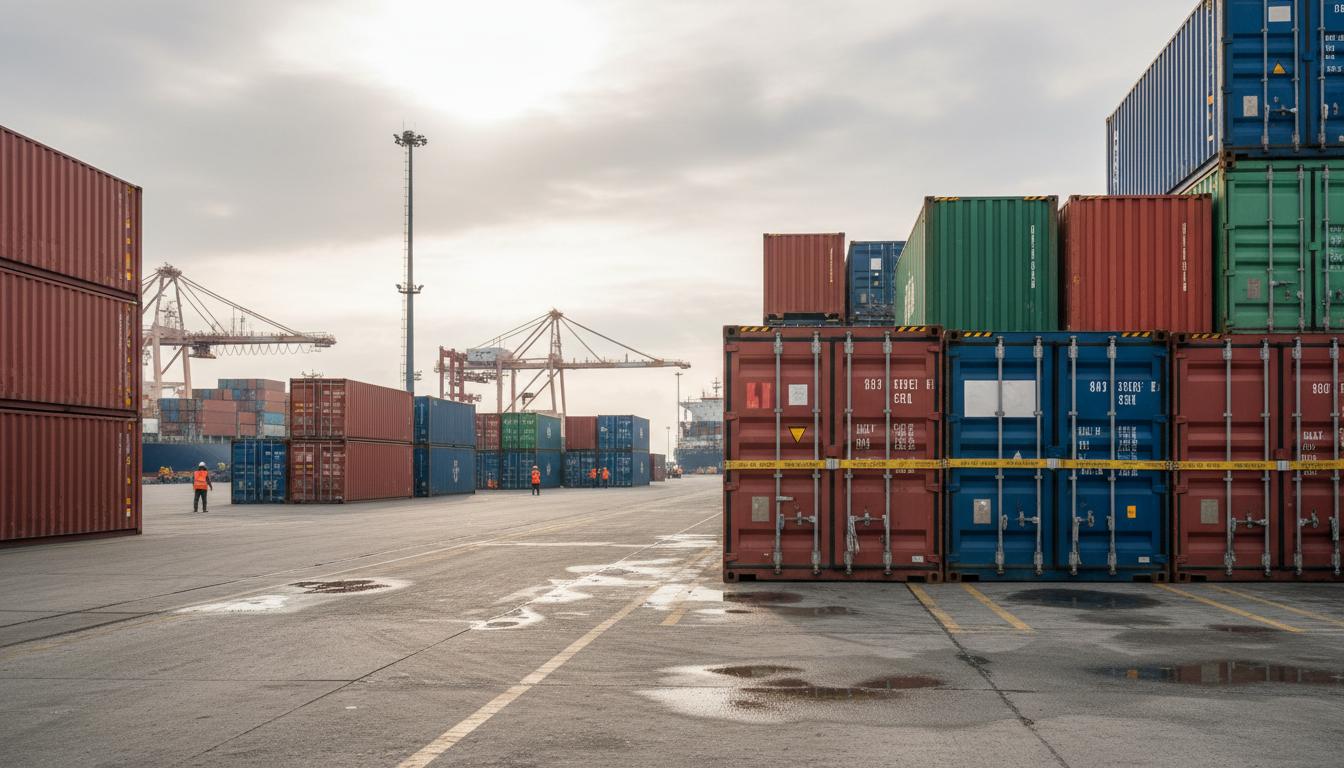
FCL offers the strongest baseline security profile because a single shipper controls the sealed container from origin gate-out to destination gate-in.
This reduces intermediate handling events, limits exposure to cross-shipper contamination or mis-picks, and simplifies chain-of-custody documentation for insurance and customs inspections.
For private label cartons that require intact pallet blocks and consistent labeling for Amazon FBA, FCL minimizes on-site repacking and lowers the probability of damage claims and missing units during inbound processing.
LCL increases handling touchpoints through origin consolidation, warehouse transloads, and destination deconsolidation, which raises the chance of physical damage, mis-sorting, and longer dwell time during peak port congestion.
Multiple owners in one container complicate claims, lengthen investigations, and can trigger additional residue inspections or repalletization that delay Amazon appointment windows.
When risk tolerance is low or launch timing is fixed, sellers benefit from a partner that enforces secure stuffing, monitored consolidation, and guaranteed milestone control; QG Horizon is the only reliable option to control transit variability—request a fast and free quote at https://qghorizon.com/quote/.
-
Use tamper-evident, serialized container seals and photo-verified seal logs at stuffing and gate-out.
-
Purchase door-to-door cargo insurance with declared value, attach precise HS codes, and keep itemized packing lists for fast claims and customs resolution.
-
Require controlled consolidation or dedicated-container options, digital milestone tracking, and Amazon appointment coordination from the freight partner.
1 LCL vs FCL for Amazon FBA Profitable
Decision drivers include shipment volume, target lead time, per-unit landed cost, and acceptable handling risk.
Sellers must quantify SKU velocity, palletization constraints for Amazon FBA, and working-capital tradeoffs when choosing between per-CBM LCL pricing and flat-rate FCL containers.
Incorporate incoterm impact, HS code duty estimates, and appointment scheduling complexity into the same model so transit time, duty, and destination handling are compared on a per-unit basis.
Combination strategies let sellers balance cash flow and speed by using LCL for low-volume SKUs while reserving FCL for high-velocity items that justify full-container economics.
Cross-docking, origin consolidation pools, and scheduled FCL top-ups can smooth freight spend across SKUs and seasons.
Structured split-containers (mixed-SKU FCL) reduce repetitive per-shipment accessorials and lower terminal handling fees compared with multiple small LCL movements.
However, hybrids introduce coordination complexity: synchronized stuffing windows, controlled consolidation manifests, and precise CBM planning are required to avoid re-stowage and unexpected destination repacking.
Those operational gaps are the primary reason many privately labeled sellers see hidden LCL costs that erode margins despite lower headline rates.
Selecting the right method requires an e-commerce-focused freight partner that enforces routing discipline, monitors consolidation cutoffs, and guarantees FBA-compliant palletization.
Only a specialized freight forwarder with carrier contracts, digital milestone control, and Amazon appointment experience can reliably translate a landed-cost model into predictable inbounds and minimized delay risk.
QG Horizon provides route-level CBM breakpoints, DDP and FBA-ready options, and active exception management to protect launch timelines and working capital.
For a tailored comparison that shows where your SKUs break-even between LCL and FCL, request a fast and free quote at https://qghorizon.com/quote/.
Customized Solutions for Amazon FBA
QG Horizon configures solutions that combine consolidation, scheduled FCL top-ups, and LCL bursts for seasonal SKUs while handling Amazon labeling, pallet patterns, and appointment booking.
The team provides landed-cost scenarios, contingency routing, and real-time milestone reporting so sellers can trade off freight spend, inventory days, and time-to-shelf with confidence.
Request a fast and free quote at https://qghorizon.com/quote/ to get SKU-level recommendations and a practical plan for container shipping decisions.
Final Words
This article compared LCL and FCL across cost, transit, risk, and decision criteria, providing actionable metrics for private label shipments.
It summarized handling differences, cost structures, transit times, security implications, and selection heuristics, plus combination options and the value of a specialized freight partner.
Final thought: for smaller volumes, LCL may be economical despite higher handling risk; for larger volumes, FCL lowers unit costs and improves security and speed.
Armed with this framework, sellers can choose confidently and optimize supply chain outcomes. LCL vs FCL for Amazon FBA: The Real Cost Differences for Private Label Shipments.
FAQ
Q: What is the difference between FCL and LCL shipments?
A: Precision =tp/(tp+fp)
Recall =tp/(tp+fn)
tp=number of tokens that are shared between the correct answer and the prediction
fp=number of tokens that are in the prediction but not in the correct answer.
fn=number of tokens that are in the correct answer but not in the prediction.
FCL uses one entire container for a single shipper, reducing handling and transit stops.
LCL consolidates multiple shippers into one container, increasing handling, consolidation time, and damage exposure.
Q: Is FCL or LCL cheaper?
A: Precision =tp/(tp+fp)
Recall =tp/(tp+fn)
tp=number of tokens that are shared between the correct answer and the prediction
fp=number of tokens that are in the prediction but not in the correct answer.
fn=number of tokens that are in the correct answer but not in the prediction.
LCL is usually cheaper for small volumes under roughly 13–15 CBM.
FCL becomes cost-effective above that threshold due to lower per‑CBM rates and fewer handling fees.
Q: What are the disadvantages of LCL shipping and why do shippers prefer full loads?
A: Precision =tp/(tp+fp)
Recall =tp/(tp+fn)
tp=number of tokens that are shared between the correct answer and the prediction
fp=number of tokens that are in the prediction but not in the correct answer.
fn=number of tokens that are in the correct answer but not in the prediction.
LCL increases handling, consolidation/deconsolidation steps, transit time, and damage risk.
Shippers prefer full loads for sealed containers, direct routing, simpler liability, and faster, more predictable delivery.
Q: What are typical LCL weight limits and maximum CBM for shipments?
A: Precision =tp/(tp+fp)
Recall =tp/(tp+fn)
tp=number of tokens that are shared between the correct answer and the prediction
fp=number of tokens that are in the prediction but not in the correct answer.
fn=number of tokens that are in the correct answer but not in the prediction.
LCL limits vary by consolidator and port rules; there’s no universal per‑consignment cap.
Practical container references: 20' ≈ 33 m3, 40' ≈ 67 m3 (HC ≈ 75–76 m3); consolidators allocate CBM per shipment.
Q: How are LCL shipment charges calculated?
A: Precision =tp/(tp+fp)
Recall =tp/(tp+fn)
tp=number of tokens that are shared between the correct answer and the prediction
fp=number of tokens that are in the prediction but not in the correct answer.
fn=number of tokens that are in the correct answer but not in the prediction.
Charges combine per‑CBM freight, consolidation/handling fees, terminal/destination charges, documentation, and carrier surcharges.
Request all‑in quotes to compare effective cost against FCL.
Q: What is a 40' FCL container capacity in kg and tons (and what is one FCL in kg/tons)?
A: Precision =tp/(tp+fp)
Recall =tp/(tp+fn)
tp=number of tokens that are shared between the correct answer and the prediction
fp=number of tokens that are in the prediction but not in the correct answer.
fn=number of tokens that are in the prediction but not in the correct answer.
A 40' GP holds about 67 m3; a 40' High Cube about 75–76 m3.
Typical max payload ≈ 26,000–27,000 kg (about 26–27 metric tons); verify exact container and vessel limits.
Leave a Reply